



News:
Spotlight Content
Posted: December 20, 2016
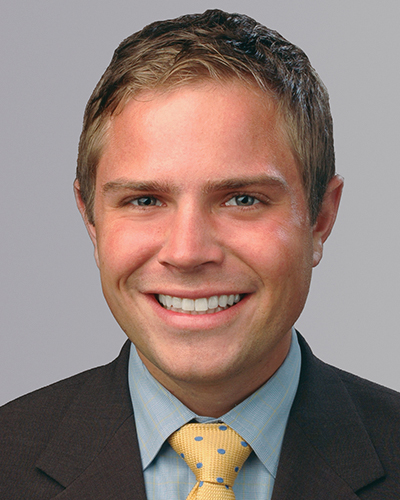
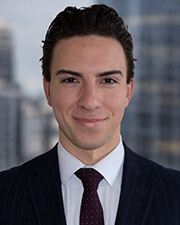
2016 Year in Review: Steven Soutendijk, Cushman & Wakefield
Cushman & Wakefield
Company Name: Cushman & Wakefield
What was your most notable project, deal, transaction or professional achievement in 2016?
The completion of a 56,000 s/f flagship lease with Under Armour at the General Motors Building (767 Fifth Ave.). I expect, given the prominence of the location and the quality of the physical space, that when they open in 2019 the Under Armour Fifth Ave. flagship will be one of the most impressive stores in the world.
What project, transaction, market trend or product had the greatest impact on your industry this year?
The general disruption in the retail marketplace has given both retailers and landlords a slight pause. Velocity and rents have decreased and everyone is starting to adjust to new realities.
How will you be supercharging your productivity in 2017?
Cushman & Wakefield continues to adopt new technologies to make us more productive for the firm and for our clients. Whether it’s an electronic, cloud-based agency reporting system like VTS/Hightower, or a sales-based CRM like Salesforce, the way we as brokers use technology both in our office and on our mobile devices will determine our productivity for 2017 and the years going forward.
What emerging trends will drive investment and development in 2017?
Large-scale retail development in Manhattan, like the upcoming Hudson Yards project and Brookfield’s Manhattan West, will have food and beverage offerings as a central component to creating critical mass. I believe high-quality dining options, across all price points, will persuade savvy shoppers to head out to these developments to spend money, rather than shopping online from their couches.
Tags:
Spotlight Content
MORE FROM Spotlight Content
Participate in Developing New York Featuring Westchester County - November 24, 2026
Choose how you’d like to participate in this edition of NYREJ’s Developing New York series featuring Westchester County.


.png)

Quick Hits


Columns and Thought Leadership

CRE Guide Featured Company: Merritt Environmental Consulting Corp.
Merritt Environmental Consulting Corp. (MECC) was established in June of 2009 after being part of a larger engineering firm for almost 20 years. The focus of the company is to assist lending institutions, attorneys, real estate investors, and property owners with environmental concerns. Today, MECC has offices in New York, Florida, and Vermont and has grown into a regional consulting firm serving clients along the East Coast.

From vacancy to vitality: How adaptive reuse is reshaping Long Island’s CRE landscape - by Andrea Tsoukalas Curto
Adaptive reuse has become one of the most important conversations in commercial real estate today. Long Island has a large inventory of aging retail, office and industrial
2026 Developing Long Island: ERG Commercial Real Estate launches its new Retail Leasing division
North Hempstead, NY ERG Retail Leasing is the dedicated leasing division of ERG Commercial Real Estate, an established full-service commercial real estate brokerage for over 35 years.

2026 Developing Queens: Long Island Board of Realtors advances commercial growth and advocacy in Queens
The Long Island Board of Realtors (LIBOR) Commercial Network continues to play a key role in advancing opportunities and strengthening the commercial real estate landscape across Queens. Through targeted programming and global outreach