


 (2).gif)
News:
Spotlight Content
Posted: December 20, 2016
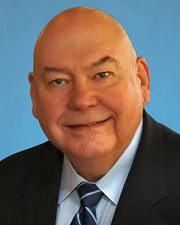
2016 Year in Review: Elliot Vermes, redIQ
 Elliot Vermes, redIQ
Name & Title: Elliot Vermes, Founder and Chief Executive Officer
Company Name: redIQ
What was your most notable project, deal, transaction or professional achievement in 2016?
Our platform facilitates the exchange and analysis of multifamily operating data, allowing CRE professionals to take a deeper dive into the key financial information for investment opportunities. While we rolled out significant enhancements to our product over the course of the year, our most notable achievement was rebranding the company with a new corporate identity. By adopting the redIQ name, which stands for “real estate data intelligence,” we emphasized our ability to convert data sets into actionable intelligence. The reception to our new name has been very positive and many major real estate players are using redIQ because of the efficiencies it creates. The result of the pivot has been a doubling of our client base and a tripling of our revenue since the beginning of the year.
What project, transaction, market trend or product had the greatest impact on your industry this year?
Multifamily investment has remained very strong in 2016. In order to remain competitive, firms needed to evaluate a much larger volume of transactions. redIQ was able to provide a productivity tool that enabled our clients to review a greater number of deals with their existing resources. Another important trend for 2016 was the continued adoption of commercial real estate technology, as CRE executives continued the trend of looking to tech products to help them improve their operations.
How will you be supercharging your productivity in 2017?
We are currently in discussions to raise a sizable funding round, which will enable us to expand our management team and enhance our productivity. We are also in discussions to launch a couple of strategic partnerships in 2017, which should increase the value we can provide.
What emerging trends will drive investment and development in 2017?
One of the biggest question marks in today’s market is what sort of impact the incoming administration will have on real estate, particularly the lending environment. Depending on what legislation is put in place, these policies could ripple across the real estate sector, impacting both investment and development.
Tags:
Spotlight Content
MORE FROM Spotlight Content

Participate in Developing New York Featuring Westchester County - November 24, 2026
Choose how you’d like to participate in this edition of NYREJ’s Developing New York series featuring Westchester County.



.png)

Quick Hits


Columns and Thought Leadership

2026 Developing Queens: Long Island Board of Realtors advances commercial growth and advocacy in Queens
The Long Island Board of Realtors (LIBOR) Commercial Network continues to play a key role in advancing opportunities and strengthening the commercial real estate landscape across Queens. Through targeted programming and global outreach

2026 Developing Long Island: ERG Commercial Real Estate launches its new Retail Leasing division
North Hempstead, NY ERG Retail Leasing is the dedicated leasing division of ERG Commercial Real Estate, an established full-service commercial real estate brokerage for over 35 years.

CRE Guide Featured Company: Merritt Environmental Consulting Corp.
Merritt Environmental Consulting Corp. (MECC) was established in June of 2009 after being part of a larger engineering firm for almost 20 years. The focus of the company is to assist lending institutions, attorneys, real estate investors, and property owners with environmental concerns. Today, MECC has offices in New York, Florida, and Vermont and has grown into a regional consulting firm serving clients along the East Coast.

From vacancy to vitality: How adaptive reuse is reshaping Long Island’s CRE landscape - by Andrea Tsoukalas Curto
Adaptive reuse has become one of the most important conversations in commercial real estate today. Long Island has a large inventory of aging retail, office and industrial