



News:
Brokerage
Posted: June 19, 2009
2009 Buffalo area apartment market report
Sales activity in the Buffalo area apartment market slowed in 2008 compared to previous years with about 1,100 investment grade apartment total units sold in the city of Buffalo and the surrounding suburbs of Erie and Niagara Counties, down from up to 2,000 in previous years. The majority of the sales are garden apartments in the Erie County suburbs and average apartment complex pricing there was down slightly at $40,000 per unit versus $42,000 in 2007 and Niagara County sales averaged $32,000 per unit versus $34,000 the year before. Year to year changes in average price of a few thousand dollars are not significant considering the relatively small number of apartments that change hands compared to a total market population of over 60,000 units. Apartment average sale prices in the city of Buffalo proper rose to $40,000 reflecting the sale of the 72-unit brick prewar apartment building at 905 Delaware Ave. for $72,000 per apartment; other city sales averaged $33,000 versus $32,000 in 2007.
Mortgage funding for the $1 million to $3 million apartment complex of 40 or more units, a substantial portion of the area inventory, is readily available. Private cash-rich investors and small business owners continue to provide the needed equity. Institutional buyers were not active here and the conservative lending practices of the local banks never allowed a speculative run-up to develop. With conduit loans here few, the area should remain immune to the CMBS refinancing debacle expected to develop this year in the commercial real estate industry in other markets. Price and value remain in balance here, not in a need of a correction.
Apartment occupancy rates in the region remain in the 95% range with some owners reporting higher vacancy levels than the year before, rent growth remains in the 2%-3% range. The little volatility in apartment vacancy rates combined with the immediate flexibility provided by the short term nature of apartment leases allows owners and managers to react quickly to changes in local market conditions and adjust rent rates quickly to maintain occupancy. Apartment values are supported by this consistent income as compared to other classes of commercial real estate. The multifamily business as a whole benefits from the restrictions in sub prime mortgage lending with fewer tenants leaving to buy houses; however, the large scale single family foreclosure problems prevalent elsewhere have bypassed this area and home prices have shown increases in the last year.
Since 2006, top of the market sales have shown cap rates in the 7% to 8% range. The 905 Delaware sale mentioned earlier closed at a reported 7.3% cap. The cap rate, a measure of the first year yield of the investment, is the best indication of the health of the market and true gauge of buyer motivation. Strong investor demand in recent years has driven pricing to these record levels. Any weakening in cap rates as sales close through 2009 will be watched carefully as evidence of the anticipated shift in buyer sentiment. Balanced against this will be the pent up demand from those anxious buyers sitting on the sideline the last few years waiting for "distress deals" to develop.
Buyer confidence has definitely been shaken in the current environment; the real economy of WNY is weakening but not breaking down. Although the apartment market and multifamily industry in this area have yet to show the effects of the credit crisis, market activity began slowing considerably starting in last year's fourth quarter. Prices should remain stable in the coming year but transaction volume should fall as few sellers seem willing to discount their price to meet the reduced expectations of buyers.
Brian Heine is a licensed real estate broker, Buffalo, N.Y.
Tags:
Brokerage
MORE FROM Brokerage
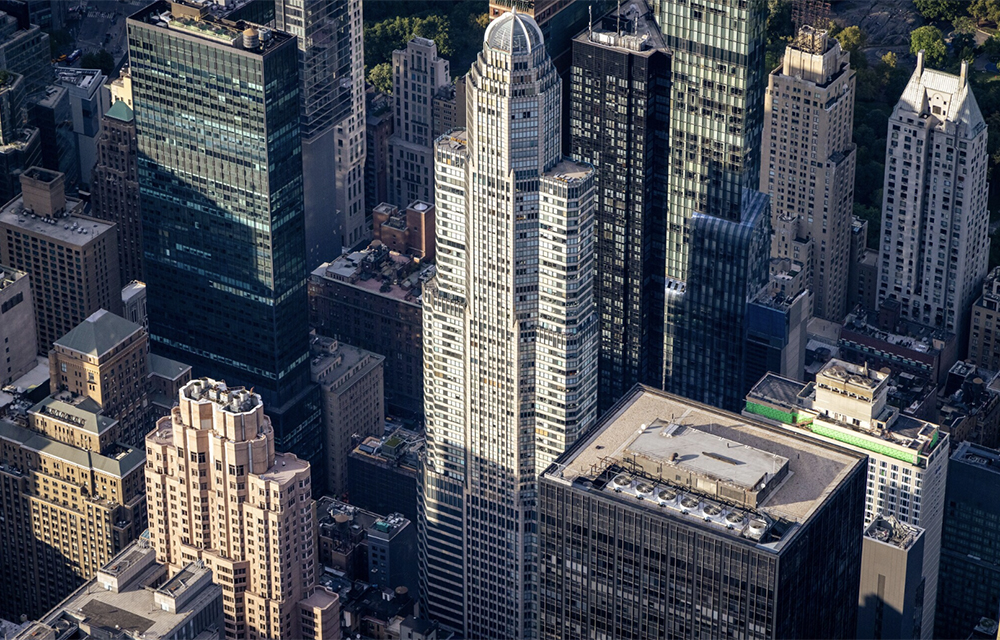
REALM, DelShah Capital and A.M. Properties acquire 377,000 s/f CitySpire office condominium
Manhattan, NY REALM, in partnership with DelShah Capital and A.M. Properties, acquired CitySpire, a 377,000 s/f office condominium comprising 24 floors within the 70-story tower at 156 W 56th St. in Midtown. Adjacent to Central Park with transit access and amenities, CitySpire is a Class A office asset located in one of the city’s most sought-after office corridors.




Quick Hits


Columns and Thought Leadership

A fresh start - by Shallini Mehra and Amit Doshi
For the past several years, the New York City multifamily housing market has been defined by disruption. The combined impact of the HSTPA rent laws and a sharply higher interest rate environment has fundamentally reduced

The death of the generic offering memorandum: What buyers expect in 2025 - by Kimberly Zar Bloorian
There was a time when an offering memorandum (OM) was pretty bare bones, some photos, a few bullet points on income, and a rent roll thrown in at the back. That used to get the job done. Not anymore. In 2025, buyers are sharper, faster, and more selective. They’re looking

Tri-state capital migrates nationally amid regulation pressure - by Reese Weaver
New York tri-state multifamily investors are increasingly reallocating capital to less-regulated markets across the U.S. as rent control and legislative risk erode returns at home. With over 60% of New York City’s rental housing stock classified as rent-stabilized, the traditional value-add model — buying under-performing buildings,

The anticipated effect of Basel III and ISO 20022 implementation on commercial real estate - by Michael Zysman
July 1, 2025 is the deadline for US banks to begin to adopt Basel III banking standards and July 14, 2025 is the deadline for U.S. banks to adopt ISO 20022 messaging standards. Both will have a significant effect on the banking and commercial real estate (CRE) finance sectors.