



News:
Brokerage
Posted: October 20, 2014
Letter of Intent - The New Focus for Office
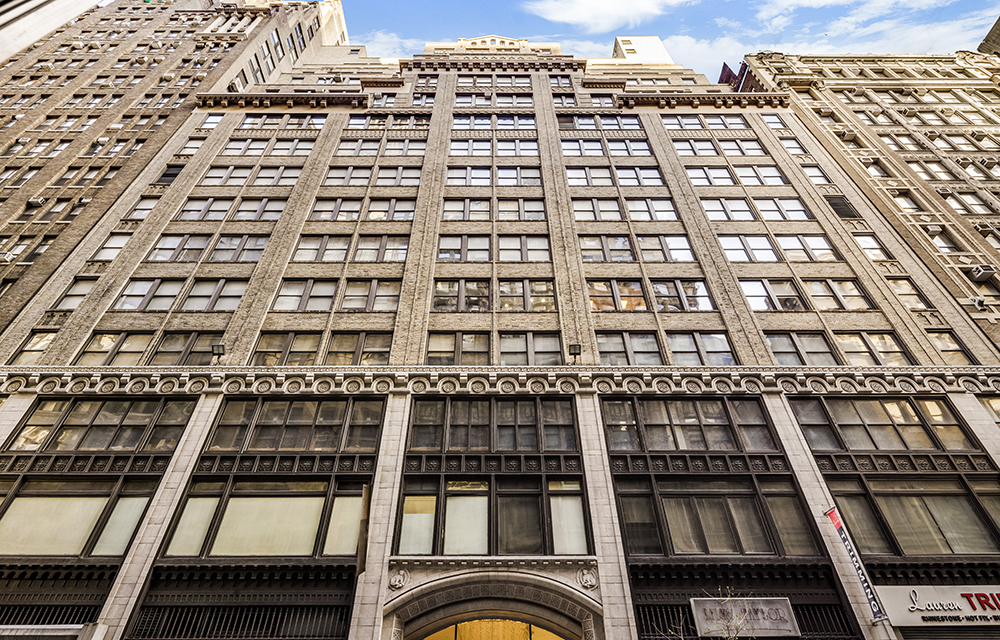
As worlds collide in New York City and suits brush up against dressed down start-up professionals and technology companies, office owners both here and Brooklyn are taking advantage of the movement, and creating space within their buildings specifically tailored to this new breed of tenant. The tech boom in New York is clearly visible, and has created quite a buzz amongst the city's largest commercial landlords, hoping to attract these companies with seemingly endless dollars from their respective backers, most of whom want large, airy, light spaces to conduct their business. These high paying tenants, although it may not seem so at first glance, are very, very picky, and their occupancy doesn't come cheap.
According to the New York Building Congress, Alteration & Renovation values for the office market had a 66% increase to $2.1 billion from 2012 to 2013. The numbers for the first half of this year are already $1.2 billion, poised to overtake last year's record amounts. While some of the work in the sector represents modernization and upgrades to systems, the recent increases in investment are also a direct result of changing office user demands and increased competition from recently constructed office buildings.
The new trend among tenants in sectors such as technology, media, design, and the Internet world, are to have open feeling, creative spaces that are efficient and flexible. Although these spaces are usually substantial in size, the office space dedicated per worker is considerably smaller, allowing landlords to take a deep look at the utilization of their space and create a compelling argument to renovate their existing space into the "creative/shared workspace" environment; a different business model, but one to put real energy into. There are a handful of very successful groups out there succeeding in this venture, and more are grabbing their coattails and enjoying the ride to the top. In speaking with a landlord recently, they command $42 per s/f for their traditional midtown office loft space, but $85 per s/f when utilized as a creative/shared space.
The business model has been laid out, and the floodgates are open. If landlords want to compete with the newly constructed buildings in Manhattan and Brooklyn, and get similar pricing on a lower cost basis, open up your buildings to the next generation of tenants.
Lee Silpe is the senior analyst at Berko & Associates, New York, N.Y.
Tags:
Brokerage
MORE FROM Brokerage

Residential real estate consultancy and brokerage firm Nancy Packes, Inc. rebrands as NPI
Manhattan, NY The NYC-based premier residential real estate consultancy and brokerage firm, Nancy Packes Inc., has rebranded as NPI. Helmed by Seth Rosner, most recently the firm’s managing partner and now president, the company has been intricately involved in hundreds of Tri-State new developments and conversions, spearheading the full project life cycle, from assessment/pre-dev.




Quick Hits
 (2).gif)

Columns and Thought Leadership

Hunt CRE question and answer: Choosing a real estate agent - by David Hunt
First, we will only work with one agent exclusively. The primary reason is that we want that agent to legally represent our client’s interests. In New York State, a real estate agent has a fiduciary

The art of investing in real estate - by Thomas Donovan
Real estate investing is as much an art as it is a skill. No one can time the market, or the factors that drive it, perfectly. Location, zoning, size, transportation, and neighborhood density give you a baseline for

Hunt commercial real estate question and answer: Fortune 500 wisdom - by David Hunt
Yes, there are lessons to be learned from the largest companies in America when comes to managing your real estate. But the decision to buy or lease real estate may not be one of

New York’s streets are full again, and the retail numbers prove it - by Noam Aziz
Walk down any New York block this year and you can feel it. The sidewalks are crowded, the storefronts are lit, and the energy that defines this city is back at full volume.
.gif)