


News:
Owners Developers & Managers
Posted: February 5, 2010
What to look for when choosing a video surveillance security system
Cameras
Cameras, CCTV, closed circuit television, video surveillance. All of these terms indicate the industry that along with other security devices, make up a security system.
Back in the day when I started in this industry there was not much to choose from and the pricing was rather high and the choices were rather slim. There were very few types of cameras and very few housings to choose from. Cameras really looked like cameras, and architects and engineers despised the look because it didn't fit in with their décor of the building (it's still far from a perfect match). Most security integrators were only proficient in one discipline: cameras, alarm systems or CCTV.
Years ago names like Sanyo, Panasonic and RCA were the leading players in the industry, now there are entire sections at trade shows just limited to manufacturers from Taiwan, Korea, Japan etc...
Times have changed and every new space and building, mall, and stadium has a plethora of cameras in all shapes, sizes and forms, not to mention analogue and IP cameras and the newest buzzword thought of where to record these cameras, NVRs DSVRs and combinations of both in the hybrid world.
There isn't enough print on this page to give you ample guidance on how to select your video system. But there is one thing to remember that holds true in most products commercially sold today: there is nothing new under the sun. This translates to most of the technology behind the cameras and storage devices are similar to most video manufacturers that "borrow" the chip technology from SONY.
If you are a building owner you want cameras to view your property inside and out 7 days a week, 24 hours a day in sun, snow rain and nighttime.
Where do you begin
* Lay out their building plans on a table and figure out what areas around the building inside and out; you need to see what's happening.
* For each of the areas make a notation and we will get back to it later.
* When we record the video who in the building would want to see the video.
Now go back to the areas of notation and identify if the lighting is adequate, good or poor etc...
How do you determine that? The human eye with corrected vision can see about 70 to 80 feet clearly. That's about home plate to almost first base. Can you see that in those areas where you need surveillance?
Now we have some basic parameters, a quantity of cameras and a quantity of viewing areas.
Now some other questions
* Is someone going to be monitoring these cameras constantly?
* How long does this video need to be stored for future recall?
If you are not planning on storing the video, save your money. A camera system with no storage is worthless and in our litigious society, a big liability. If there is an incident and you can't provide the replay of that area, someone will own your building via a lawsuit
The use of dummy cameras is an insult to your client base and again another good way of losing your holdings through a court of law.
* Are you looking for facial recognition or license plate recognition or is it0 adequate to just know that there are intruders in the area?
* Take notice of the construction of those areas; dropped ceiling, ceiling tiles, supine ceilings, concrete etc...
Andy Goldstone is V.P. strategic sales for IDESCO Corporation, New York, N.Y.
MORE FROM Owners Developers & Managers
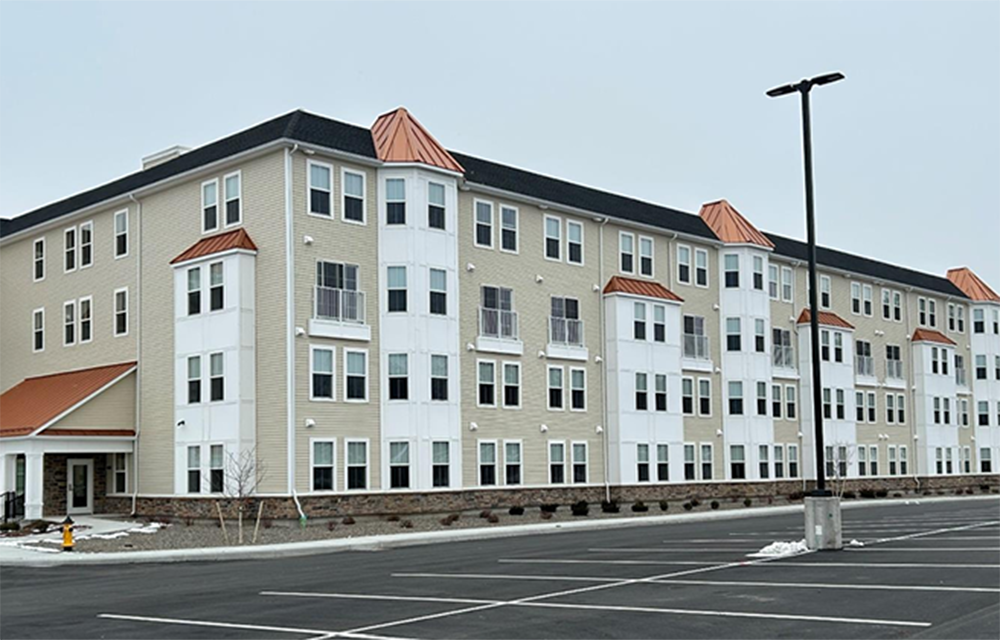
New York State Homes and Community Renewal finish $32 million affordable development
Union, NY New York State Homes and Community Renewal commissioner RuthAnne Visnauskas have completed the Homesteads on Grand, a $32 million, 72-unit mixed-use affordable and supportive development in Johnson City, Broome County.


Quick Hits
 (2).gif)

Columns and Thought Leadership

New York City’s historic rent freeze now rests with the courts - by Ron Cohen
New York City’s first-ever two-year rent freeze is now in the hands of a state Supreme Court judge, and the decision could reset income for owners of roughly one million rent-stabilized apartments housing some 2.4 million residents.

Hunt Commercial Real Estate Q&A: Location, location, location? - by David Hunt
In working with our clients, we break down our search objectives into two categories. The first category involves the specific needs of your business such as warehouse height, amount of office space and number of loading
NYC's Community Opportunity to Purchase Act is back - and multifamily owners should pay attention - by Ron Cohen
New York City’s Community Opportunity to Purchase Act (COPA) is back, and this latest version could have a much better chance of becoming law. The proposal would give qualified nonprofit organizations

Don’t leave severance damages behind - by Sebastian Jablonski
When the government takes a portion of a landowner’s property, most assume just compensation stops at the value of the land taken. However, in partial takings, that is only half of the equation.
September Promotion
