



News:
Spotlight Content
Posted: June 25, 2012
Weiner to head Greiner-Maltz Investment Properties
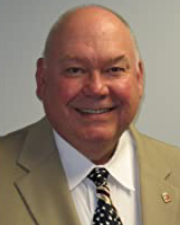
Long Island City, NY According to Greiner-Maltz, it has expanded its commercial real estate company by establishing Greiner-Maltz Investment Properties, a new firm specializing in all types of commercial investment sales throughout the five boroughs and Long Island. Swain Weiner, who for the past 10 years served as vice president of sales at Massey Knakal, has joined the new firm as president and partner of Greiner-Maltz Investment Properties.
This partnership will showcase Swain's knowledge, ability, integrity, and aggressiveness in the sales process, complementing the reputation of Greiner-Maltz.
What sets Greiner-Maltz Investment Properties apart in the marketplace is its unique ability to offer prospective sellers the entire Greiner-Maltz sales staff of over 20 brokers. Every broker will have an understanding of each property and the ability to assist in the sale of each listing. This, along with the firm's strategic marketing and maximum market exposure will offer property owners the most support available in the industry today!
"We feel that the combination of Swain Weiner and Greiner-Maltz will be a force to be reckoned with in the industry," says John Maltz, President of Greiner-Maltz and Partner of Greiner-Maltz Investment Properties. "This synergy can only benefit our sellers with the highest sales prices in the marketplace."
For more information on any properties in the NY, NJ, or LI Metropolitan area please call Swain Weiner at either 718-786-5050 or 646-319-1084, via email at [email protected], or visit our Website at www.greinermaltz.com.
About Greiner-Maltz
Since 1953 Greiner-Maltz has been engaged exclusively in the leasing, selling, appraising and managing of industrial and commercial property in Manhattan, Brooklyn, Queens, Long Island, and New Jersey. The firm has three offices which are actively managed by John and Richard Maltz in New York, William Greiner in Long Island, and Raymond Musalo in New Jersey.
Tags:
Spotlight Content
MORE FROM Spotlight Content

Participate in Developing New York Featuring Westchester County - November 24, 2026
Choose how you’d like to participate in this edition of NYREJ’s Developing New York series featuring Westchester County.



.png)

Quick Hits


Columns and Thought Leadership

CRE Guide Featured Company: Merritt Environmental Consulting Corp.
Merritt Environmental Consulting Corp. (MECC) was established in June of 2009 after being part of a larger engineering firm for almost 20 years. The focus of the company is to assist lending institutions, attorneys, real estate investors, and property owners with environmental concerns. Today, MECC has offices in New York, Florida, and Vermont and has grown into a regional consulting firm serving clients along the East Coast.

2026 Developing Long Island: ERG Commercial Real Estate launches its new Retail Leasing division
North Hempstead, NY ERG Retail Leasing is the dedicated leasing division of ERG Commercial Real Estate, an established full-service commercial real estate brokerage for over 35 years.

From vacancy to vitality: How adaptive reuse is reshaping Long Island’s CRE landscape - by Andrea Tsoukalas Curto
Adaptive reuse has become one of the most important conversations in commercial real estate today. Long Island has a large inventory of aging retail, office and industrial

2026 Developing Queens: Long Island Board of Realtors advances commercial growth and advocacy in Queens
The Long Island Board of Realtors (LIBOR) Commercial Network continues to play a key role in advancing opportunities and strengthening the commercial real estate landscape across Queens. Through targeted programming and global outreach