



News:
Long Island
Posted: September 5, 2017
The Commercial Classroom: Politics and real estate - by Edward Smith
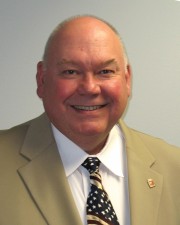
Smith Commercial Real Estate
This column is offered to help educate agents new to commercial and investment brokerage and serve as a review of basics for existing practitioners.
Politics and Real Estate
I have voted in many Presidential elections. Up to Election Day I strongly advocate my chosen candidate; but after the election I supported whoever won. Each day now in the news and social media, the latest election seems to be continuing with strong feelings and rhetoric being expressed by so many people. Congress seems more divided than ever.
Clients are still continuously asking their agents “Who did you vote for?,” “What’s your position on…?” This creates a new communication challenge to those of us in real estate. We know we must develop trust with our clients which means being transparent and honest, but will the answer to those types of questions rub the client the wrong way. If we answer, “I don’t talk politics or religion” they may not like that answer either.
I recently read an article in the Realtor Magazine, “How divisive public discourse is affecting business relationships—and what you can do about it,” by Graham Woods, which addresses these issues.
Part of the article was basically a caution to agents not to personally participate in social media positions that could affect their image. I quote:
“Real estate pros are public ambassadors for their communities, so they should remember that they are representing their business and neighborhoods at all times and on all forums—even if their intent is to ‘switch’ to their personal persona,” said Marki Lemons-Rhyal, a Chicago-based real estate coach who teaches social media ethics. “You shouldn’t be a practitioner and shouldn’t have a license if you think, ‘I’ll say whatever I want to say,’” she says. “You don’t get to take your real estate hat off. If you get online and rant and rave, that sends the message that you won’t work with a certain type of client.”
You may be thinking, this is America and we all have a right to free speech, which we do. But in our business what we say, especially on public media, can have consequences.
That last sentence of the quote, I find most concerning, “…that sends the message that you won’t work with a certain type of client.” At best, you’re losing potential business, but could this also be considered a form of discrimination?
Discrimination is defined as making a distinction in favor of or against, a person or thing based on the group, class, or category to which that person or thing belongs rather than on individual merit.
I won’t work with you because you’re a Republican, or a Democrat, or because you support President Trump or you don’t. Sounds like that could be considered discrimination to me. Should “political views” be the next protected class?
Real estate practitioners sometimes have to walk away from potential business. In our business some potential clients are prejudice; they want to sell their building or house, but tell us “I won’t sell to ______.” (people from a certain country, color or religion) We cannot list their property under those circumstances.
Politics is being discussed everywhere today, on the media, in your office and with clients and customers. You are entitled to your views and opinions, but you must decide if you wish to share them. What messages are your actions delivering?
Edward Smith, Jr., CREI, ITI, CIC, GREEN, MICP, CNE, is a commercial real estate consultant, instructor and broker at Smith Commercial Real Estate, Sandy Hook, CT.
Tags:
Long Island
MORE FROM Long Island

Suffolk County IDA supports expansion of A&Z Pharmaceuticals
Hauppauge, NY The Suffolk County Industrial Development Agency (IDA) has granted preliminary approval of a financial incentive package that will assist a manufacturer in expanding its business by manufacturing more prescription (Rx) pharmaceuticals in addition to its existing over-the-counter




Quick Hits
