



News:
Construction Design & Engineering
Posted: March 12, 2012
The best practices for successful design-build
With the announcement last month by the New York State Thruway Authority and New York State DOT of qualified bidders for the new Tappan Zee Hudson River Crossing Project, this important and much needed project is one step closer to being realized as New York's first design-build contract for capital infrastructure projects under legislation signed by Governor Cuomo in December of 2011. The new design-build law offers New York an opportunity to accelerate projects related to the state's physical infrastructure by integrating project approach and providing a single source of responsibility from design through construction, saving the state precious time and resources.
Design-build is an alternative tool available to several New York State entities - including the Thruway and Bridges authorities, DOT, Office of Parks, Recreation and Historic Preservation, and the Department of Environmental Conservation - for infrastructure projects with a cost of $1.2 million or more, and to privately funded projects as well. It does not replace the traditional design-bid-build delivery system, which has served the owner and public well in assuring that constructed facilities meet project requirements, but offers an option on a case-by-case basis. When design-build is utilized, the American Council of Engineering Companies of New York (ACEC New York) endorses a two-step procedure and implementation process, sometimes referred to as the bridging method, as the one that best protects the interests of the owner, design professional, contractor, and the public.
Step 1: Selection of Owner's Design Consultant
Prior to selecting a design-build team, a registered design professional should be retained to represent the owner throughout the entire project as the owner's design consultant. Selected on the basis of qualifications and experience, the owner's design consultant would prepare a preliminary design and bridging contract documents, developed to a level that provides sufficient design concepts such that the owner can receive competitive, fixed-price proposals for the full project from the design-build teams.
Step 2: Selection
of Design-Build Team
All proposing design-build teams should include a registered independent design-build professional, who is named in the proposal and retained for the duration of the design-build project to provide design services, documentation and review. This design-build professional would be responsible for expanding the design in the bridging contract documents to the final design level needed by the contractor in order to construct the project and meet the owner's expectations.
Selection of the design-build team should follow a two-phase qualifications-based selection (QBS) process. Phase I of the selection process is a request for qualifications (RFQ), which would then be used to develop a shortlist of design-build teams that meet the qualifications and experience criteria set forth in the RFQ. In Phase II of the process, shortlisted teams would respond to the owner's request for proposals (RFP) and submit a project scope, approach and cost proposal for the project, upon which a final selection would be made considering the best value to the owner. Once the design-build team is selected, it cannot be changed, without permission of the owner, for the duration of the project.
ACEC New York strongly recommends that the basis for evaluating best value design-build proposals should be both clearly articulated by the owner in the RFP and used in making the award. In addition, as Phase II services performed by the designer may be relied upon by the contractor in preparation of his proposal, the designer should be compensated for these services by the lead entity. To offset the cost of preparing detailed proposals in Phase II, a financial stipend should be specified in the RFQ and paid by the owner to those shortlisted teams who are not selected for the project.
To preserve and enhance the quality of the project and ensure the owner's design intent is achieved, the design-build team should coordinate all design and construction efforts for the duration of the project. Provisions and procedures must be implemented to facilitate full and open communication among all parties, including the design-build team, the owner's design consultant and the owner of the design-build project, for maximum efficiency and coordination of effort.
MORE FROM Construction Design & Engineering
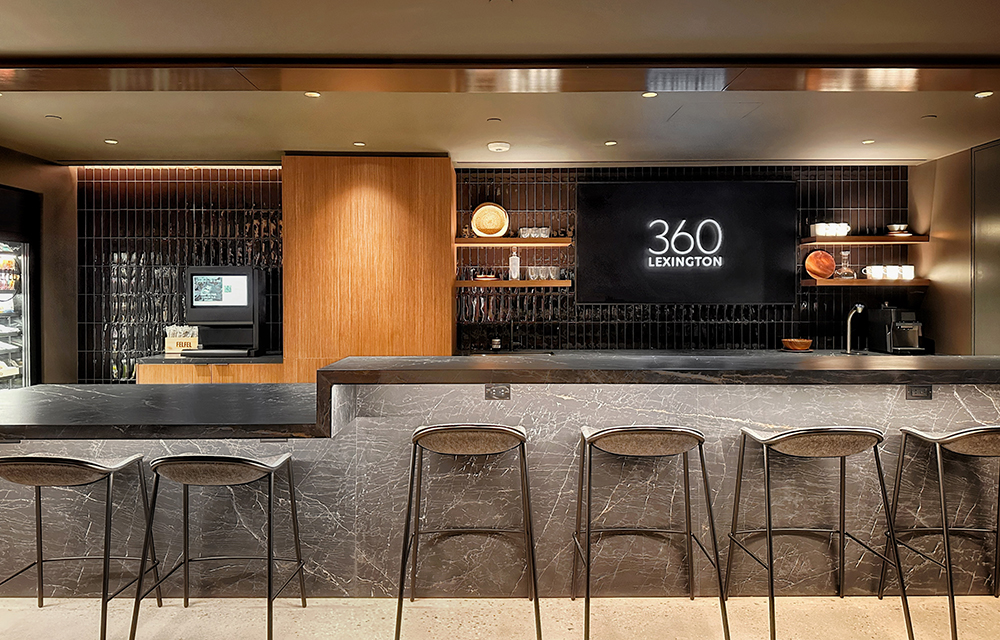
AmTrustRE and MdeAS Architects complete modernization of 360 Lexington Ave. in Midtown
Manhattan, NY AmTrustRE has completed a comprehensive modernization at 360 Lexington Ave. Led by New York-based architecture firm MdeAS Architects, the project reimagines the 268,000 s/f office building as a modern, hospitality-driven workplace designed to meet the evolving needs of tenants.



Columns and Thought Leadership

The Façade is no longer just a finish. It’s a risk strategy. - by Bentley Zhao
Twelve-billion-dollar weather disasters have already hit the U.S. through the first half of 2026, causing at least $31.9 billion in damage, according to Climate Central, the nonprofit that now maintains the disaster database NOAA discontinued.

We support green construction. Just not this kind - by Tammy Smith
Most people think of St. Patrick’s Day as a fun footnote on the calendar. In construction logistics, however, it’s a full-scale operational variable — especially if your work touches major metro areas with major parades and, let’s call it what it is, enthusiastic celebrants.

Premium experiences, proven returns: The New revenue playbook for sports venues - by Terry McIntyre
Investing in the Fan Experience as a Revenue Strategy The sports and entertainment venues that bet on premium experiences years ago are now seeing those investments pay off in packed seats, increased revenue, and industry recognition.
