
2026 AIANY + ASLA-NY Transportation + Infrastructure Design Excellence Award winners
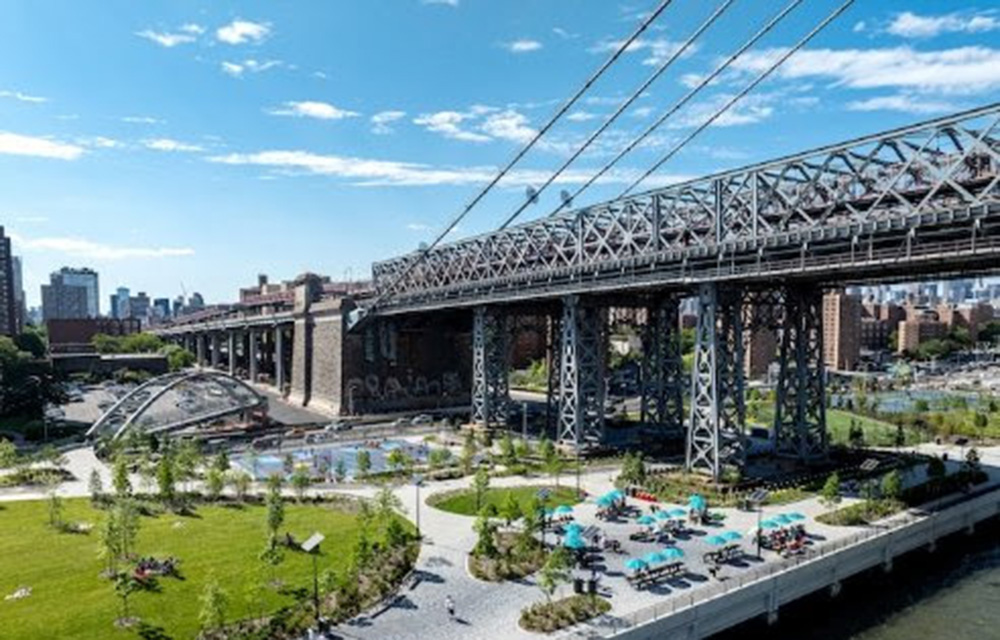
Manhattan, NY AIA New York and ASLA-NY, alongside AIA Austin, AIA Miami, AIA Los Angeles, and ASLA Illinois, have named the winners of the 2026 AIANY + ASLA-NY Transportation + Infrastructure Design Excellence Awards. Thirteen projects were selected by an independent jury of architects, landscape architects, and planners, with the Best in Competition honor awarded to the East Side Coastal Resiliency (ESCR) project by Bjarke Ingels Group, Mathews Nielsen Landscape Architecture, and ONE Architecture & Urbanism.
The selected projects represent transportation and infrastructure work designed by registered architects, landscape architects, planners, and students. Each project was evaluated based on its commitment to sustainability, community engagement, and civic architecture.
“The jury chose to award Best in Competition to the ESCR project in acknowledgement of the transformational nature of the work,” said jury member Nicholas Pettinati, RLA, “and the significant impact it has had on Lower Manhattan communities as well as on the resilience planning and construction landscape in New York City and the region.”
This year, architects and landscape architects submitted 56 entries across five categories: Open Space, Planning, Projects, Structures, and Student Work; awards were conferred in all categories. Entries within those categories were eligible for recognition as Honors (the highest level of achievement), Merits (distinguished achievement), or Citations (exemplary achievement on specific project aspects).
Seattle’s Waterfront Park by Field Operations, LMN, Miller Hull Partnership, and Schemata Workshop earned the Honor award in the Open Space category for the expansive collaboration that took place over its 15-year creation process. “Set within the really breathtaking vista, across the bay with Mount Rainier [in the front] and the city [in the rear], this is really Seattle’s new front porch, supporting public access, civic programs, biodiverse habitat, and unique experiences,” said jury member Lee Altman, AIA, LEED AP. “Within this complex, and I’m sure very challenging process, the project team still emphasized the importance of working with local Indigenous communities to inform the design. They developed a mode of cultural storytelling to celebrate art as part of the public realm and reuse or reclaim materials that harken back to the maritime and industrial core of Seattle.”
In the Student category, Carnegie Mellon University Master of Architecture students Andrew Long, Ella Maxwell, and Rupal Singh won an Honor award for their Eco Scaffold: The Future of JFK proposal. “By establishing clear and ambitious parameters, the project was able to look beyond today’s technological realities and envision a truly inspiring and creative future for JFK airport,” said Pettinati. “Using a range of visualization techniques and supported by thorough ecological research, the project paints an irresistible picture of an innovative transportation future grounded in a restored and productive landscape.”
Award recipients were announced and celebrated at the Winners’ Event on Tuesday, May 5 via Zoom
Lee Altman, AIA, LEED AP, Principal, SCAPE Landscape Architecture DPC
Cristina Ungureanu, AICP, Mobility Corridors, LA Metro
Jennifer McConney-Gayoso, AIA, Principal, Studio Mc+G Studio Architecture Inc.
Nicholas Pettinati, RLA, Deputy Director of Urban Design, NYC Department of Transportation
Lisa Storer, Assoc. AIA, LEED AP BD+C, SITES AP, ENV SP, Senior Vice President, Architecture and Design, Austin Transit Partnership
WINNERS Best in Competition
East Side Coastal Resiliency
Location: New York, NY
Architect: Bjarke Ingels Group
Landscape Architect: Mathews Nielsen Landscape Architecture
Designer: ONE Architecture & UrbanismOpen Space
Honor
Seattle’s Waterfront Park
Location: Seattle, WA
Design Lead, Landscape Architecture, Urban Design: Field Operations
Restroom Architect: Hoshide Wanzer Architects + Interiors
Seattle Aquarium Ocean Pavilion, Architect: LMN
Café Pavilion on Overlook Walk, Architect: Miller Hull Partnership
Union Street Pedestrian Bridge, Architect: Schemata Workshop
Merit
Presidio Tunnel Top
Location: San Francisco, CA
Design Lead, Landscape Architecture, Urban Design: Field Operations
Architecture and Facilities: EHDD
Citation
P.S. 306/M.S. 331 Climate-Adaptive Schoolyard
Location: Bronx, New York
Landscape Architect: Studio HIP Landscape Architecture
Student Award
Honor
Eco Scaffold: The Future of JFK
Location: Queens, New York
Master of Architecture Candidates, Carnegie Mellon University: Andrew Long, Ella Maxwell, Rupal Singh
Merit
Re: Reasonable Modification Request
Location: New York, NY
Master of Architecture Candidate, Yale University: Caroline Ho
Structures
Honor
Penn Station East End Gateway and Long Island Rail Road Concourse Renovation
Location: New York, NY
Architect: Skidmore, Owings & Merrill
Project Management, Communications, Electrical, Mechanical, Plumbing, Structural Engineer Below Grade, Vertical Transportation, Designer of Record: AECOM
Civil Engineer and Architect (Back-of-House): HNTB
Architect (NYCT Areas): Sowinski Sullivan
Line 5 Eglinton
Location: Toronto, Canada
Line-wide Architectural Lead: Arcadis
Associate Architect: Daoust Lestage Lizotte Stecker Benech
Associate Architect: DIALOG
Associate Architect: NORR
Citation
Renfrew Bridge
Location: Renfrewshire, Scotland
Lead Designer for the Movable Bridge: Hardesty & Hanover
Planning
Merit
Repairing the Innerbelt: A Playbook for Highway Removal in Post-Industrial Cities
Location: Akron, Ohio
Planning and Urban Design: Sasaki
Planning and Urban Design (Local Partner): City ArchitectureCitation
Flatiron and NoMad District Plan: Linking Parks, Transit, and People
Location: New York, NY
Planner and Urban Designer: OSD (Office of Strategy + Design)
Projects
Honor
KlimaKover: An Adaptable, Autonomous Cooling Shelter to Mitigate Urban Heat
Location: New York, NY
Architect and Sustainability Consultant for KlimaKover: Henning Larsen
Memory Landscapes: Three Speculative Proposals for the Transformation of Japanese Tsunami Infrastructure to Public Space
Location: Japan
Architect: Robert Hutchison Architecture