
Legion Investment Group unveils luxury condominium development at 550 West 21st St.
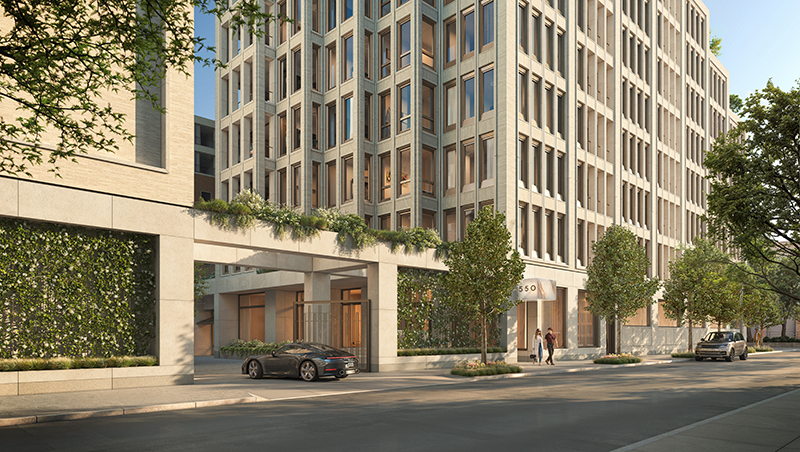
West Chelsea, NY Legion Investment Group has launched 550 West 21st St., a new luxury condominium development rising on the last remaining waterfront site. Designed by Thomas Juul-Hansen, the 22-story building of hand-laid Italian brick and limestone is positioned between Hudson River Park and the High Line, where the density and cultural richness of the city gives way to open sky, Greenway pathways, and the waterfront park below. The development sits at the center of New York City’s gallery district, just moments from Chelsea Piers, Chelsea Market, the Meatpacking District, the West Village, and Hudson Yards.
Sales at 550 West 21st St. are expected to launch this year and will be exclusively led by Corcoran Sunshine Marketing Group. Residences will begin at $2.5 million and completion is slated for late-2027.
“At 550 West 21st St., we set out to create a building aligned with the creative spirit of West Chelsea while designing for the level of livability and precision that today’s most discerning buyers expect. More than 75% of residences will have private outdoor space and two-thirds of the homes feature views of the Hudson River. The remaining residences will enjoy equally compelling views to the northeast over the historic district and the Midtown Manhattan skyline, and to the southwest down the length of the river,” said Victor Sigoura, founder and CEO of Legion Investment Group.
“Our goal was to create a building defined by integrity — where the highest quality materials and construction meet a deeply considered functionality, resulting in a timeless presence in West Chelsea,” said Thomas Juul-Hansen.
At street level, the building’s limestone base runs the full length of the ground floor, anchoring the façade to the sidewalk and unifying the arrival sequence from east to west. A brick gatehouse structure rises at the eastern edge, framing the motor court gates, while greenery spills over the limestone above the opening, softening the threshold between street and court. A trellis along the sidewalk face adjacent to the gate is visible from the street and experienced again from within the court as residents pass through. To the west, the pedestrian entry is marked by an alabaster awning projecting from the building face, its warm glow serving as a beacon that orients residents toward home. Cerused stone art panels set beneath the ground floor windows complete the composition, adding a quieter layer of craft that runs the length of the base.
Once inside, the motor court opens into a landscaped courtyard anchored by a central grove of birch trees and a series of tiered planting beds that step along the perimeter, layering dense greenery and seasonal plantings at varying heights to create a sense of enclosure and calm. A fountain sits at the near edge of the court, its presence felt from the street before residents arrive. Bronze detailing at the gates and entry surround ties the full sequence together, carrying the warmth of the building’s material palette from the sidewalk to the front door. Private parking is available within the building for residents.
Above the base, the building reveals a second dimension entirely. As the tower rises, a series of setbacks carve out private loggias and terraces across a significant proportion of residences, extending living space outward toward the water. The façade steps back with each setback, softening the building’s profile against the sky and opening views in three directions. At the upper floors, the building commands an unobstructed panorama: the Hudson stretching south toward New York Harbor, Little Island and Hudson River Park below, and the New Jersey Palisades beyond. Glass railings at the loggias and terraces preserve the view corridor uninterrupted, while the building’s brick and limestone exterior continues to the crown, maintaining the warmth and consistency of the material palette at every elevation.
Legion Investment Group is recognized for delivering architecturally rich, thoughtfully designed developments in prime neighborhoods defined by culture, character, and rich histories. Each site is deliberately chosen — often adjacent to historic districts and green spaces — reinforcing the enduring appeal and strong demand that serve as the foundation of their developments.