
Doorway to foodservice efficiency: How automatic doors help restaurants stay competitive in today’s market
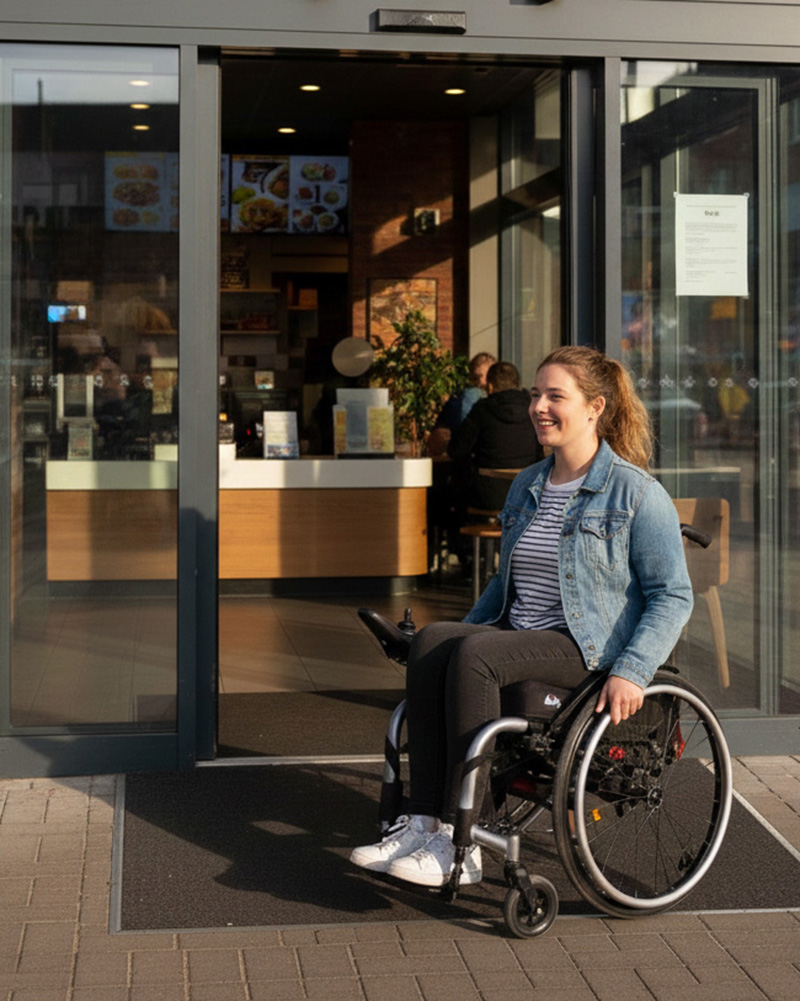 New York, NY Delivery apps like DoorDash, UberEats, and GrubHub have changed the restaurant business forever. They increase sales but also squeeze margins with commissions ranging from 15-30%. Meanwhile, a shrinking labor pool and the rise of kitchen automation has many kitchens doing more with fewer people. For foodservice operations looking to remain profitable, now more than ever, efficiency is the name of the game. An often overlooked facilitator of this efficiency is … automatic doors.
Automatic doors at restaurant entrances keep foot traffic running smoothly, as eat-in customers, takeout orders, and delivery drivers all vie for access. In a fast-paced foodservice environment, every second counts. Automatic doors help contribute to operational efficiency by getting people in and out as seamlessly as possible.
Quick service restaurants are also adding automatic doors to new “walk-through” drive-thru concepts. It replaces the standard window with a full doorway, through which team members can walk directly from the kitchen to waiting vehicles.
Beyond their efficiency applications, automatic doors also improve overall accessibility, promote hygiene, and spur positive feelings about a brand.
Foodservice also has a clear opportunity to improve entry accessibility — especially for older adults and people with disabilities — because customer expectations for touch-free, low-effort entry are already established across other public gathering places. In a comprehensive survey conducted by the American Association of Automatic Door Manufacturers (AAADM), respondents said the presence of automatic doors serves as a gauge of how much building owners and businesses care about them, and 98.9% of consumers who expressed a preference between automatic and manual doors preferred automatic doors.
In other words, the accessibility upgrade most people want is also one they interpret as a visible sign of hospitality and respect. And in the restaurant context specifically, consumer research has found that 64% would consider visiting a restaurant sooner if it installed automatic doors, underscoring how much friction a manual entrance can add to the dining experience.
As restaurants continue to navigate tighter margins, evolving service models, and higher customer expectations, seemingly small choices can have an outsized impact. Automatic doors are a strategic investment to remain competitive in an increasingly demanding market.
For more information about AAADM, visit https://www.aaadm.com/.
The American Association of Automatic Door Manufacturers (AAADM) is a trade association of manufacturers of automatic pedestrian door systems. AAADM was founded in 1994 with the following mission: to increase awareness of automatic doors and accessibility needs; to increase education, training and professionalism among installers and service providers; and to generally promote the safe use of automatic doors.
Each year on March 19, AAADM celebrates National Automatic Door Day to raise awareness about the many benefits of automatic doors, including providing access to those with physical challenges and helping to prevent germs by eliminating the need to touch door handles.