
Urban Standard Capital launches ‘White Knight’ gap financing with $100 million
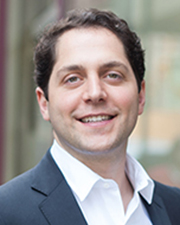
New York, NY Real estate private equity firm Urban Standard Capital (USC) has released a new strategy to deploy $100 million in gap financing, or rescue capital, including senior stretch financing, mezzanine and preferred equity for borrowers facing a financing gap.
USC, which has over $600 million of real estate equity and debt investments, is known as the “certainty bid” in the middle market, one of few firms with committed, discretionary balance sheet capital.
The firm’s founder and CEO Seth Weissman said USC is offering the gap financing to borrowers who are unable to fully replace their existing debt due to higher interest rates and restrictive debt ratios and covenants.
“Our strategy is simply to be a friendly, ‘white knight’ capital source,” said Weissman. “Our gap financing program is focused on distressed balance sheets, not distressed properties, with the objective of right sizing the existing senior loan to meet current market underwriting in order to give the sponsor additional runway to stabilization.”
Weissman said banks need to reduce their existing loan balances to conform with current rates, values and other underwriting criteria. A building with Net Operating Income (NOI) of $500,000 per year can no longer support the same amount of senior debt at interest rates that have increased by ~50%.
Early last year, it provided a $52 million loan for a 14-unit condo building at 199 Chrystie St. and has become one of the most active lenders in the Hamptons and South Florida.
Additionally, USC expanded into Texas, Alabama, and Colorado last year with the intention of further expansion this year.
“Some banks are pulling back on real estate lending altogether as they assess the market,” said Weissman who said he is increasingly noticing financing gaps between 20% to 30% in capital stacks because of rising interest rates that needs to be filled by new equity or alternative financing.
“Our capital fills the gap between what was previously financing and what is available in the current market,” said Weissman. “Borrowers with near term maturities need to address this gap and address it quickly.” Weissman said some banks are dealing with issues on their existing portfolios after originating loans to borrowers at lower rates without a plan to grow net operating income. “Now rates are higher, but operating income has remained the same, leading to financing shortfalls,” he said. According to Weissman, alternative lenders, or private lenders, like USC are seeking to position themselves as a source of capital by offering mezzanine or preferred equity. Some borrowers are also looking for short-term bridge loans until the market stabilizes. “Investors are getting capital calls across the board,” said Weissman. “They have a choice – put in the all the fresh capital required or work collaboratively with us to fill all or part of the required capital.”