
Where do we start to reduce our real estate tax bill? The answer is school districts - by Ralph Perna
Newmark Grubb Knight Frank
Recently, I paid the second half of my home real estate taxes, and became anxious as I reviewed the various sections of the tax bill.
I am sure the following article will raise some eyebrows, but I believe this is an important subject that must be addressed.
Long Island, 106 miles east to west and 16 miles north to south or approximately 1,700 square miles, doesn’t seem a lot to work with, but yet ranks high in various categories when compared to regions across the country. We have a fine educational system, the second largest industrial park in the country (i.e., Hauppauge Industrial Park (with over 1,300 companies and 55,000 employees), and great beaches and recreational areas. Long Island has one of the nation’s highest average household incomes and is the second most expensive place in the country to raise a family next to Washington, D.C. The region has among the highest real taxes in the country. Let’s not forget Long Island was a bedroom community that witnessed a migration at the end of World War II. The rapid growth required infrastructure, roads, schools, police and fire protection, and government. Not only have we achieved the second highest cost to raise a family in the country, along with the LL I average income according to Newsday is $56,670 per year, but the growth for the future generations could be on the road towards a decline, given the region’s high cost of living. So where do we begin to take control and reduce our cost-of-living to reasonable levels? The answer is school districts.
The school tax portion of the real estate tax bill consists of 65% to 70% of the total tax bill. School teacher salaries are among the highest in the country, but the bigger issue is the administration. School superintendent salaries are completely out of control. In addition, there are far too many layers of unnecessary assistance and too many layers of what I believe is unnecessary rank-and-file. Imagine 147 school officials on Long Island with each district having the same layers of administration. Over the years, there has been discussion of school district consolidation and for some reason it never went further than just discussion. There was one exception, which I believe was in the East End of Long Island where an attempt was being made at consolidation. Not only would consolidation be a tremendous savings of administration costs, but it would also generate significant savings relating to buying power for supplies purchased though a central buying system and associated economies of scale.
School boards outline the budgets and then the budget is sent for a vote by the public. Unfortunately, the voters do not have many choices. If the budget does not pass, we have a reduction in services such as school programs and transportation of students. This is, however, what should happen. There should be a diligent re-evaluation and reduction of all the salaries of overpaid administrators followed by the elimination of unnecessary layers of administration such as assistant superintendents and assistant principals, to name a few. This is where the reductions should come from, not from valuable programs and services that benefit our students.
Maintaining our extensive industrial and office base, as well as employment in future jobs remains key to Long Island’s future. Area companies are often granted a reduction in real estate taxes to maintain competitiveness in their marketplace, and to increase employment. These tax reductions however, don’t come from school district taxes. Instead, the entire reduction is taken from the county and town coffers. Why is it that 65% to 70% of our real estate taxes come from school districts and they do not participate in any reduction to help maintain employment and create jobs on Long Island?
I believe the time has come for a committee to be formed and begin to initiate the consolidation of the school districts between Nassau and Suffolk counties. The cost savings must come from the top where there is ample unnecessary expense and where the students would in any way, shape or form be penalized.
Stay tuned.
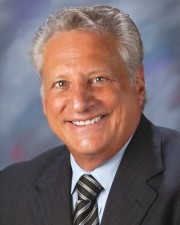
Ralph Perna is the executive managing director at Newmark Grubb Knight Frank, Melville, N.Y.