
Lease your way to energy efficiency: Readily available from a variety of reliable sources - by George Crawford
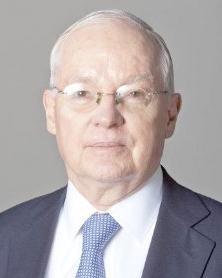 George Crawford, Green Partners
No one disputes the fact that energy savings related retro-fits will reduce costs. And often they include excellent opportunities to initiate projects with good paybacks. Invariably, however, there are usually other competing projects waiting in line for their own funding allocations.
Most buildings plan their projects in advance and trying to jump the line, even for a special project with a quick payback, is problematic. Projects with or without a payback require upfront funding, which utilizes building cash resources. Jumping the line, even for a project with an extraordinary payback, will result in delays for other projects. Take a boiler retro-fit or a roof replacement as examples. These are typical of the types of projects that must be carefully scheduled both as to timing and building funding availability. A jumping the line approach to their scheduling just wouldn’t work.
There is, however, an alternative to the single “project pipeline” approach, which will be the focus of this article.
Think in terms of your dividing your projects into two separate categories. The first category includes General Building Improvement projects such as a new roof or interior upgrades - projects that do not increase in cash flow.
The second category would include projects that improve cash flow, usually through the reduction of energy consumption.
So for the purposes of this article, the “project pipeline” has now been divided into two categories:
1. General Building Improvement
2. Projects which improve cash flow.
The General Building Improvement projects would continue to be scheduled and funded as before. However, projects with paybacks would now be structured to fund themselves. With the implementation of this strategy, these “cash flow” projects would no longer be dependent on building funding and therefore independent of the General Building project pipeline.
Now we need to go from here to there. We need to convert the positive cash flow from the Category 2 projects to the actual funding required for project implementation.
Our recommended funding solution is equipment leasing. An equipment lease will provide 100% of the up-front funding required for implementation (purchase and installation). The “debt service” consists of fixed monthly payments for a term of two to five years. At the end of the lease term, the equipment or the LED product (in the case of a LED retro-fit) is purchased for $1.
Besides the fact that “energy saving” lease financing has become readily available from a variety of reliable sources, the advantage of lease financing includes the fact that it is a lease and not a loan and therefore does not conflict with restrictive covenants related to loans and mortgages.
For more information, we reached out to the M-Core Credit Corp. with regard to the practicality of lease financing - which M-Core has been providing for over twenty years. Michael Weisberg, principal of M-Core advises that the “Financing process is simple, smooth and straight forward. As an example, the one page lease financing application for coops and condos consists of the name and address of the building, their bank and a copy of their annual statement – as provided to their shareholders or condo owners. Applications for other types of buildings are similar. The approval process is fast – usually three to five business days.” He further advises that “Financing a project such as LED lighting makes sense as the project provides sufficient savings that will more than offset the related financing costs. The project not only pays for itself, but can provide free cash flow to the building.”
An actual example of a lease arrangement for a LED retro-fit follows:
The scope of this project for a two building multifamily complex involves the replacement of all existing common area and garage lighting with LED. The existing lighting consists of a variety of fluorescent lighting products. The cost of the retro-fit, with installation, totals $55,840 (before Con Ed rebates). The monthly electric utility savings is $2,737.08. The project lease financing provides an upfront payment to the vendor(s) of $55,840 – equal to the full cost of the project. The building selects their monthly lease payment schedule. With a 24 month schedule, the monthly payment would be $2,574.22 – which closely matches the savings. If the maximum five-year schedule is selected, the monthly payments would be $1,183.81 - less than 50% of the monthly savings realized. At the conclusion of the lease payments, the purchase price is $1.
Additional advantages that lease financing companies, such as M-Core Credit (m-corecredit.com), can bring to your project is their expertise. Your second pair of eyes is their 20 years of financing experience in the energy retro-fit field. With their 20 years, chances are that any project that you bring to them, they will have seen many times before.
Get started with your own lease financing. Send Michael an email ([email protected]) with your questions and see how simple the process can be.
George Crawford is the principal of Green Partners, New York, N.Y.