The Commercial Classroom: Becoming a commercial real estate agent
October 13, 2015 - Brokerage
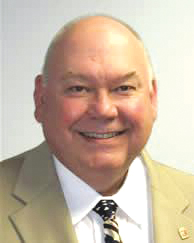
Edward Smith, Jr., Smith Commercial Real Estate
History has shown that real estate has cycles; values increase to a market saturation point and then sharply decline. The latest cycle peaked in 2007 and it took to 2013 for commercial real estate to start heading upward again. So timing to enter this exciting field is perfect.
There are four major requirements to become a successful commercial agent: financial, training, prospecting and networking.
When starting out in commercial real estate you need to be financially prepared to pay your household expenses for at least six months, sometimes more. Deals take time to close and you need to cover you expenses until commissions start coming in. In the beginning focus on leasing as most business moves are time sensitive and prone to close faster than sales.
You will also need to invest in your business. If you are a residential agent evolving to commercial, you are used to placing your listings on your MLS. You should place your commercial listings there too, but your MLS only reaches your local market. Everyone needs to get additional exposure of your exclusive listings to customers and other commercial agents by subscribing to some of the national listing services. This is essential and expensive; you may also need to pay for some training.
Commercial real estate is very different from residential real estate. Agents need to be properly trained to avoid liability issues and loss of potential profits. It is also a violation of the National Association of Realtors (NAR) Code of Ethics to do commercial or investment transactions without proper training. “Realtors shall not undertake to provide specialized professional services concerning a type of property or service that is outside their field of competence...” Whether you are a realtor or not this is sound advice.
Training may be provided in commercial and investment real estate by the brokerage firm you decide to work for. Education must be an ongoing process as the industry and markets are constantly changing. Commercial courses are given by boards of real estate and colleges. There are Commercial and Investment Real Estate Certification (CIREC) Programs available, and NAR offers extensive courses to earn the Certified Commercial Investment Member (CCIM) designation.
Success requires patience and tenacity. A daily habit of prospecting is required. Pick a geographic area to begin, with the goal of meeting every building owner and tenant in the area, and catalog this information on your computer. Remember we are in the “people” business and contacts lead to information and referrals. You need to become known as “the commercial expert” in your market and you can only do this by visiting business and building owners in the field every day.
Network, meet business people by joining the organizations where your “target” clients and customers are; Chamber of Commerce, service clubs i.e. Lions, Rotary, Kiwanis, or any other business organizations in your area.
Not all commercial listings get posted on the Internet. Meet as many other agents doing commercial work as possible and set up address groups of them in your computer. Blast your new listings out to these contacts and also your client requirements; they may have the property you need. If there are commercial agents organizations in your area join them, network as often as you can.
Edward Smith, Jr., CREI, ITI, CIC, GREEN, MICP, CNE, is a commercial real estate consultant, instructor and broker at Smith Commercial Real Estate, Cambridge, N.Y.
