



News:
Construction Design & Engineering
Posted: March 7, 2011
President's message: Celebrating the spaces between buildings
AIAArchitects design buildings, right? It's true, we are responsible for the architecture of the city. But our buildings could not be without the spaces between buildings - the streets, parks, and plazas that give our buildings context. Especially in a city as dense as New York, those spaces are precious.
In the past few years, those spaces have changed, and for the better. Broadway has "gone pedestrian" for a number of midtown-blocks, making foot traffic the priority. New urban plazas in Times Square and Herald Square have created more public space. New York City's Department of Transportation has plans to create even more neighborhood plazas throughout the city, working towards the goal of having all New Yorkers live within ten minutes (walking) of quality open space. It takes more than city agencies to make this work. DOT is partnering with selected not-for-profit and community organizations to create these plazas, and to keep them safe, vibrant, hubs for the community. Beyond the co-organizers, the DOT also needs community support. What is more important for real estate values - a six lane wide street, or open space/park every ten blocks?
Using those same streets, we've also offered new options for the way we get around, and for the better. New York has two hundred miles of new bike lanes, and thousands of new cyclists. (DOT has the goal of 1,800 bike lane miles by the year 2030.) Biking is healthy, and should be promoted. It's good to see that the DOT is making cyclists safer by giving them more dedicated lanes. The sometimes-antagonist relationship between cyclists and the city can be solved with more education, thoughtful design and increased enforcement. In addition the City Council has passed a package of bills known as TrafficStat which will greatly improve the way the city reports and responds to pedestrian and bike-related accidents.
We would like to commend the design of these new bike lanes. In places like the Meatpacking District, separate lanes are marked with planters, giving the industrial streetscape a touch of green. In many new lanes, the former parking lane is now for bikes, and parking has been moved in one lane, making more sidewalk area and narrower streets. For older New Yorkers - and New York City is graying - having a shorter walk across Ninth Avenue makes getting out of the apartment and around the neighborhood that much easier. Plus, even if you're not a bike rider, more bikes and less cars means less pollution spewing onto our sidewalks - a tenet of an idea called "green mobility."
Both plazas and bike lanes are important for another reason: Active Design. The New York Chapter of the American Institute of Architects and the Department of Health and Mental Hygiene have been working for most of a decade to promote active living in the urban environment. In 2010, these ideas came together in the Active Design Guidelines, penned by NYC's Departments of Design and Construction, Health, Transportation, City Planning, and Office of Management and Budget, with the Mayor's Office for People with Disabilities, the Mayor's Office of Long-Term Planning and Sustainability, the Department of Buildings, Parks and Recreation, the School Construction Authority, Housing Preservation and Development, and the Department for the Aging. With a grant from the Center for Disease Control and Prevention, we're trying to scale New York's efforts into a national model, while still focusing on promotion at home. Indoors, architects can encourage users to "take the stairs" but there are so many more opportunities out of doors to promote active living. Walkable cities, bikeable streets, and attractive public spaces are key to this. Danish urbanist/architect Jan Gehl, from whom I borrowed this column's title, has been a worldwide influence on the movement for more livable cities. He's consulted for New York's Departments of City Planning and Transportation, and I'm glad to see the city has taken his suggestions, and further taken the initiative to make New York a better metropolis.
My presidential theme for 2011 is "design for a change." I'd like to make New York a more sustainable, healthier place. Commissioner
Sadik-Khan's initiatives for more bike lanes and public plazas are some of the best examples of "designing for change" that I've seen, and should be heartily commended, and supported. I know that the architectural community believes in a greener, greater, New York City, and creating a more active city with more usable public space will bring us closer to that goal.
Margaret Castillo, AIA, LEED AP, is the 2011 president of the N.Y. chapter of the AIA, New York, N.Y.
MORE FROM Construction Design & Engineering
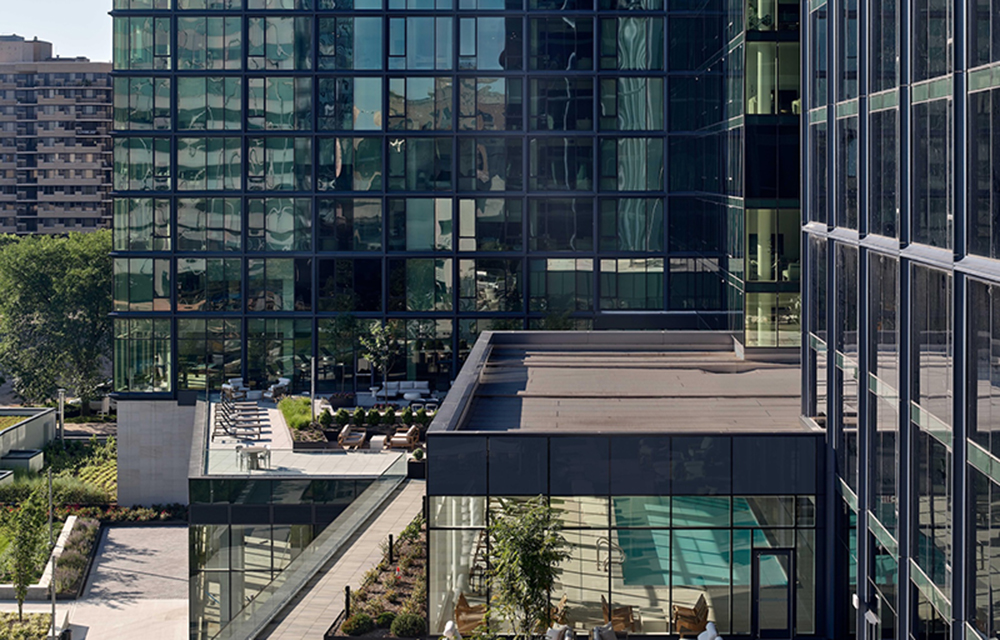
MdeAS Architects celebrates completion of AVE Hamilton Green - adjacent residential towers
White Plains, NY MdeAS Architects, a New York-based architecture firm celebrated for modern design and redefining districts, public spaces, buildings, and interiors, celebrates the completion of AVE Hamilton Green. Comprised of 5 Cottage and 25 Cottage




Quick Hits

Columns and Thought Leadership

We support green construction. Just not this kind - by Tammy Smith
Most people think of St. Patrick’s Day as a fun footnote on the calendar. In construction logistics, however, it’s a full-scale operational variable — especially if your work touches major metro areas with major parades and, let’s call it what it is, enthusiastic celebrants.
Premium experiences, proven returns: The New revenue playbook for sports venues - by Terry McIntyre
Investing in the Fan Experience as a Revenue Strategy The sports and entertainment venues that bet on premium experiences years ago are now seeing those investments pay off in packed seats, increased revenue, and industry recognition.

September Promotion
