



News:
Spotlight Content
Posted: March 25, 2008
President's message: At the Center for Architecture
In the December issue I wrote about our 2008 theme Architecture: Designs for Living and programs planned for the Center for Architecture. The theme reflects the broad range of building types and urban design that shape our communities and city. It is also our response to the Mayor's initiatives for PlaNYC.
In January, I described the start of 2008 Center for Architecture programs of which The Bank of America Tower at One Bryant Park exhibition opening on January 22 was a high point and drew an overflowing audience. In February several programs are of special interest.
On February 11, the second of the monthly Public Lecture Series-New Justice / New York --presented a new vision for the criminal justice system as articulated by Scott Sigal, Deputy Criminal Justice Coordinator for Community Courts; Marty Horn, Commissioner, Department of Corrections; and David Burney, FAIA, Commissioner, Department of Design and Construction. Two of the three legs of criminal justice - policing and the courts—have been modernized, but much remains to be done for detention facilities. It was recognized that a sustainable justice system with the capacity to rehabilitate and serves all our communities must be an integral part of PlaNYC.
On February 25, the winners of the 2008 Design Awards for architecture, interiors, and projects were presented in an evening symposium. Three juries composed of leading U.S. and international architects met during the day and presented the results of their deliberations that evening. It is a wonderful opportunity not only to see the winning designs, but to learn why jurors from around the world choose them.
On February 26, our Global Dialogues series opened with Building China: Five Projects/Five Stories Exhibition. The exhibition, which occupied most of the Center, showcased design directions by a new generation of architects that have emerged in contemporary China. The opening was followed by programs presenting designs by New York Architects working in China.
The AIA Grassroots Leadership and Legislative Conference took place in Washington, D.C. on February 19-23. The conference, which brings together AIA leadership from around the country, initiated the election cycle for national office. This year our own George Miller, FAIA, managing partner of Pei Cobb Fried, ran for president. As vice president, Miller oversaw the AIA150 legacy program that celebrated founding of the AIA in 1857 and is a past president of the New York Chapter. Under Miller's leadership, New York looks forward to a growing engagement in national affairs.
March theme programs included the third Public Lecture Design Directions in Banking & Finance on March 10 that included presentations of Bloomberg, Bear Sterns, and other financial headquarters. We hope to see each of you at the Center for Architecture in coming months. Go to www.aiany.org/calendar for program descriptions and to RSVP.
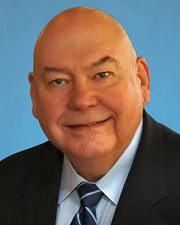
James McCullar, FAIA is the 2008 president of the New York Chapter of the American Institute of Architects, New York, N.Y.
Tags:
Spotlight Content
MORE FROM Spotlight Content

The commercial classroom: 1031 tax-deferred exchanges - by Edwad Smith Jr.
The sale of real estate may trigger capital gains taxes on the net profits of that sale. These taxes may be deferred by participating in a 1031 tax exchange, in essence, by purchasing property(s) to replace the



.png)



Columns and Thought Leadership

From vacancy to vitality: How adaptive reuse is reshaping Long Island’s CRE landscape - by Andrea Tsoukalas Curto
Adaptive reuse has become one of the most important conversations in commercial real estate today. Long Island has a large inventory of aging retail, office and industrial

CRE Guide Featured Company: Merritt Environmental Consulting Corp.
Merritt Environmental Consulting Corp. (MECC) was established in June of 2009 after being part of a larger engineering firm for almost 20 years. The focus of the company is to assist lending institutions, attorneys, real estate investors, and property owners with environmental concerns. Today, MECC has offices in New York, Florida, and Vermont and has grown into a regional consulting firm serving clients along the East Coast.

2026 Developing Queens: Long Island Board of Realtors advances commercial growth and advocacy in Queens
The Long Island Board of Realtors (LIBOR) Commercial Network continues to play a key role in advancing opportunities and strengthening the commercial real estate landscape across Queens. Through targeted programming and global outreach

2026 Developing Long Island: ERG Commercial Real Estate launches its new Retail Leasing division
North Hempstead, NY ERG Retail Leasing is the dedicated leasing division of ERG Commercial Real Estate, an established full-service commercial real estate brokerage for over 35 years.