


 (2).gif)
News:
Spotlight Content
Posted: June 2, 2009
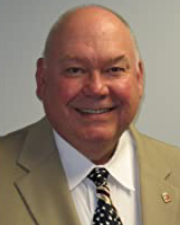
President's message
The Commercial and Industrial Real Estate Brokers, Inc. (CIREB) was established in 1967 by a handful of forward thinking commercial real estate brokers. CIREB has grown to approximately 550 members, and maintains the country's oldest and most advanced multiple listing service. Members of CIREB service New York State's Capital Region and its extended Tech Valley, which stretches from the Canadian border south to Westchester County.
Like all markets throughout the nation suffering through this recession, the Capital Region has seen a measurable impact on the commercial real estate market. Vacancies are up, tenants are asking for concessions and fewer projects are in the planning process. That being said, the Capital Region is faring better than most markets. Office vacancy rates for all classes of office space are slightly over 10%, which is about 4 % better than the national average. Retail vacancies, which normally run about 3% higher than the unemployment rate, are staying below the national average as well.
The Capital Region benefits from a stable economy that is anchored by a large state work force, a rapidly expanding technology sector and a vast collection of colleges and universities that provide a highly educated and diverse workforce.
The Tech Valley region has become known as the place to locate for many innovative, high technology companies. Tech Valley contains more than 1,000 technology companies that have a combined workforce of over 50,000 jobs. The overall economic impact has been estimated at over $5 billion annually. This number is about to rise as GlobalFoundries, Inc., is finally set to commence construction of their $4.2 billion computer chip plant in the Town of Malta in Saratoga County at the Luther Forest Technology Campus. In addition to the job creation and the supply chain benefits, this project will positively impact all facets of our local economy, including housing, retail, service orientated businesses, higher education, medical facilities, entertainment and tourism.
A second major announcement came earlier this month when GE stated their plans to develop a $100 million plant within the Capital District to manufacture heavy-duty sodium batteries that would be used in hybrid freight locomotives, mining, energy or backup data-storage applications. This facility, which should be operational within two years, will employ over 350 workers. A decision on the site should be announced within the next couple of weeks.
Tech Valley is home to over 21 colleges and universities with over 65,000 students. RPI and the University at Albany have been internationally recognized for their research and development and centers for advanced technology. Hudson Valley Community College is building a new off-campus building in the Saratoga Technology + Energy Park (STEP), which is adjacent to the new GlobalFoundries project. This building will enable HVCC to work side by side with the technology companies and create new curriculums that are designed for their specific high tech needs. All of the colleges and universities within Tech Valley are working collaboratively with both each other and the business community to produce a workforce capable of meeting the needs of the 21st century.
This year the Capital Region is celebrating the quadricentennial voyage of Henry Hudson and his founding of the land that is now our Capital City of Albany. Albany's strategic location, where the Mohawk River flows into the Hudson, gave the region its place in history as an early transportation, trade and industrial center. Today, with three major interstate highways, a vastly improved rail system and a year round port, the Capital District remains an ideally positioned market to locate a business.
Please take a minute and visit our website at www.cireb.com. We hope that you consider the Capital District for your real estate needs. We look forward to seeing you.
Tags:
Spotlight Content
MORE FROM Spotlight Content

Participate in Developing New York Featuring Westchester County - November 24, 2026
Choose how you’d like to participate in this edition of NYREJ’s Developing New York series featuring Westchester County.



.png)

Quick Hits


Columns and Thought Leadership

2026 Developing Long Island: ERG Commercial Real Estate launches its new Retail Leasing division
North Hempstead, NY ERG Retail Leasing is the dedicated leasing division of ERG Commercial Real Estate, an established full-service commercial real estate brokerage for over 35 years.

From vacancy to vitality: How adaptive reuse is reshaping Long Island’s CRE landscape - by Andrea Tsoukalas Curto
Adaptive reuse has become one of the most important conversations in commercial real estate today. Long Island has a large inventory of aging retail, office and industrial

2026 Developing Queens: Long Island Board of Realtors advances commercial growth and advocacy in Queens
The Long Island Board of Realtors (LIBOR) Commercial Network continues to play a key role in advancing opportunities and strengthening the commercial real estate landscape across Queens. Through targeted programming and global outreach

CRE Guide Featured Company: Merritt Environmental Consulting Corp.
Merritt Environmental Consulting Corp. (MECC) was established in June of 2009 after being part of a larger engineering firm for almost 20 years. The focus of the company is to assist lending institutions, attorneys, real estate investors, and property owners with environmental concerns. Today, MECC has offices in New York, Florida, and Vermont and has grown into a regional consulting firm serving clients along the East Coast.