



News:
Construction Design & Engineering
Posted: April 22, 2025
PEI Architects designs work space for China Institute of America
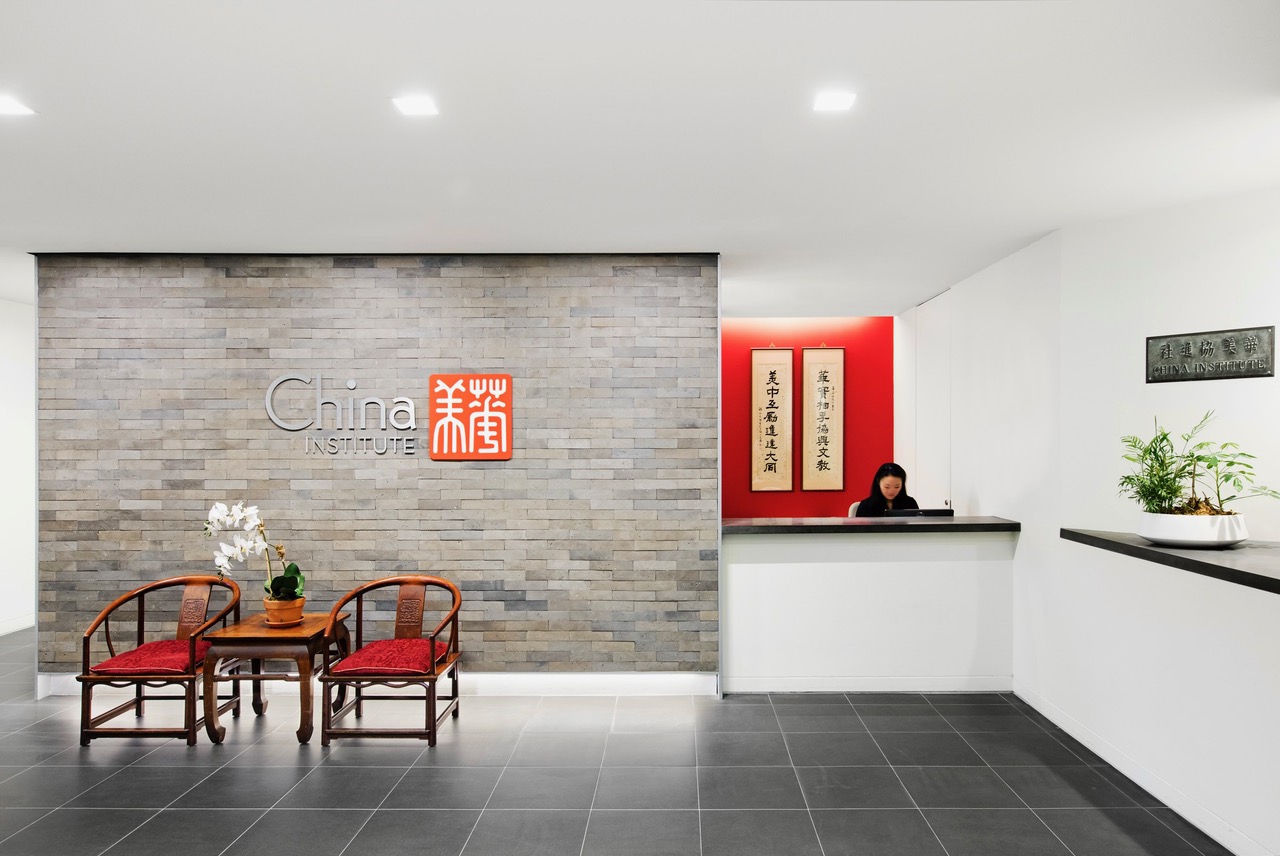
Manhattan, NY PEI Architects has completed the final phase of the firm’s design for China Institute in America in New York City, a memorable and adaptable place for learning about Chinese language, art, literature, cuisine and history.
The China Institute headquarters at 100 Washington St. occupies 30,000 s/f on two floors of a building not far from the World Trade Center Memorial Park. The project allows for an expansion of the institute’s growing Chinese language program, as well as its renowned art gallery exhibitions and lecture series.
PEI Architects’ spaces include an exhibition gallery, a library, classrooms and offices on the second floor. A 16-ft. height multi-use space for exhibitions, lectures and banquets and a demonstration kitchen — housing the first culinary school for haute Chinese cuisine in the United States — are located at ground level.
“Founded in 1926 by a group of American and Chinese educators, China Institute aims to advance a deeper understanding of China through programs in education, culture, business and art,” said Rossana Gutiérrez de Lubetsky, AIA, principal with PEI Architects, adding that this urban cultural hub was established in 1966 and frequently hosts blockbuster art exhibitions and cultural events.
“With a building setback created by a privately owned public open space, or POPOS, and an all-glass façade, the institute now has a stronger street presence, and a more distinguished main entrance,” said Gutiérrez de Lubetsky, whose work includes The Six Dynasties Museum and The Grand Mansion Hotel in Nanjing, China, the Museum of Islamic Art Park in Qatar, and the new Chateau Lynch-Bages winery in Pauillac, FR.
The recent work for China Institute connects the two levels by means of a grand staircase. Throughout, the simple finishes include wood, concrete and white painted surfaces. PEI Architects’ design makes the most of the generous height the space provides by exposing and whitewashing the existing coffered concrete slab, to great effect.
A carefully designed and modern lighting track system is supported by custom-made trapezes hanging from the coffers’ ribs. All of the HVAC system is hidden at the perimeter and above the foyer ceiling at 12’-8" height.
“The ground floor level is completely flexible,” said Gutiérrez de Lubetsky. “Visitors can pass from the exterior’s plaza through a new entrance into the multiuse space where the demonstration kitchen, a commercial kitchen, a tea house counter and supporting program are found at the perimeter.”
MORE FROM Construction Design & Engineering

New York Building Congress forecasts $10 billion jump in NYC construction spending to nearly $80 billion in 2026
Manhattan, NY The New York Building Congress released its 2026–2028 New York City Construction Outlook Report, projecting $79.8 billion in construction spending by the


Quick Hits


Columns and Thought Leadership

Premium experiences, proven returns: The New revenue playbook for sports venues - by Terry McIntyre
Investing in the Fan Experience as a Revenue Strategy The sports and entertainment venues that bet on premium experiences years ago are now seeing those investments pay off in packed seats, increased revenue, and industry recognition.

The façade is no longer just a finish. It’s a risk strategy. - by Bentley Zhao
Twelve-billion-dollar weather disasters have already hit the U.S. through the first half of 2026, causing at least $31.9 billion in damage, according to Climate Central, the nonprofit that now maintains the disaster database NOAA discontinued.

We support green construction. Just not this kind - by Tammy Smith
Most people think of St. Patrick’s Day as a fun footnote on the calendar. In construction logistics, however, it’s a full-scale operational variable — especially if your work touches major metro areas with major parades and, let’s call it what it is, enthusiastic celebrants.
