


 (2).gif)
News:
Spotlight Content
Posted: May 22, 2009
Multifamily buildings remain attractive investments throughout New York City
In spite of the recession, multifamily buildings in New York City remain attractive investments because they deliver a steady cash flow, and local and regional banks are still offering investors financing with interest rates in the low 6% range.
Some differences, however, are lenders are looking for buyers to put up 30% to 40% equity today, compared to 10% to 25% during the boom years, and have debt service coverage ratios of 1.2 to 1.3 compared to 1.05 to 1.15 in 2007. Another difference is the number of multifamily buildings available for sale in Upper Manhattan is about one-third what it was in 2007 because building owners aren't selling unless they have to, even if they're just breaking even.
Those who need to sell due to personal reasons such as retirement, divorce, a death in the family, or to raise extra cash, are selling their buildings for about 10% to 15% less than at the peak of the real estate boom. The good news is that even though prices have dropped slightly, the cap rates for these buildings have increased only slightly because of declining oil prices and low interest rates.
In addition, while the real estate industry is concerned about refinancing billions of dollars in commercial real estate loans in the next few years, we see this as an opportunity for buyers interested in picking up properties.
Also, for buildings with excellent management and good financials, refinancing shouldn't be a problem. Two six-story apartment buildings on East 108th St., illustrate this point. Since the owner bought the asset in 2004, income from the properties has increased from $769,000 to $1.2 million, which represents a 12.5% increase in rent roll each year. As a result, the buildings will be attractive to a lender when it's time to refinance.
Upper Manhattan features a large supply of rent stabilized buildings that guarantee cash flow from steady rents, high occupancy rates, and the potential for higher rents as apartments become vacant. In Upper Manhattan, rent stabilized apartments are $18.67 per s/f versus free market apartments at $27.62 per s/f.
Some concerns facing the rent stabilized market throughout New York City, however, include proposed New York State laws that would limit Major Capital Improvements (MCI) and individual apartment improvement recaptures, restrict rent increases that owners can charge when apartments become vacant, and change the rent threshold for categorizing a unit as free market.
Concerns facing free market buildings include an oversupply of units, which is resulting in some condos going rental, and higher unemployment and pay cuts. The upside for qualified buyers, however, is they can buy condos at a discount compared to two or three years ago.
Upper Manhattan has increased in popularity in recent years as indicated by a jump in population of more than 20,000 between 2000 and 2007, and the addition of more than 6,500 residential units with more than 80% built for ownership.
Newcomers have been attracted by the area's proximity to Midtown, new condominium developments, lower rents and condominium prices, and new and planned services, retail shops, and hotel developments, all of which are making the area a desirable place to live. Overall, the neighborhoods in Upper Manhattan are predominantly residential with balanced residential and retail development concentrated around the main commercial corridors, and are well connected to subway lines, bridges, and bus lines.
Each area of Upper Manhattan has a unique personality, with Morningside Heights and Hamilton Heights influenced by Columbia University and its expansion; Central Harlem gradually becoming an extension of the Upper West Side; East Harlem featuring the characteristics of the East Village and Lower East Side; and Inwood and Washington Heights distinguished by their remarkable architecture.
Overall, we believe both the stability of local multifamily assets and the potential for Upper Manhattan real estate represent some of the best buying opportunities in these challenging times.
This article was adapted from a presentation Shkury delivered to the National Realty Club on May 19.
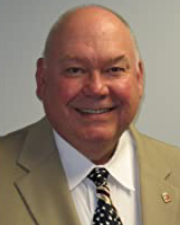
Shimon Shkury, is managing director and partner for Northern Manhattan, the Bronx, and Westchester for Massey Knakal Realty Services.
Tags:
Spotlight Content
MORE FROM Spotlight Content
Participate in Developing New York Featuring Westchester County - November 24, 2026
Choose how you’d like to participate in this edition of NYREJ’s Developing New York series featuring Westchester County.


.png)



Columns and Thought Leadership
2026 Developing Long Island: ERG Commercial Real Estate launches its new Retail Leasing division
North Hempstead, NY ERG Retail Leasing is the dedicated leasing division of ERG Commercial Real Estate, an established full-service commercial real estate brokerage for over 35 years.

From vacancy to vitality: How adaptive reuse is reshaping Long Island’s CRE landscape - by Andrea Tsoukalas Curto
Adaptive reuse has become one of the most important conversations in commercial real estate today. Long Island has a large inventory of aging retail, office and industrial

2026 Developing Queens: Long Island Board of Realtors advances commercial growth and advocacy in Queens
The Long Island Board of Realtors (LIBOR) Commercial Network continues to play a key role in advancing opportunities and strengthening the commercial real estate landscape across Queens. Through targeted programming and global outreach

CRE Guide Featured Company: Merritt Environmental Consulting Corp.
Merritt Environmental Consulting Corp. (MECC) was established in June of 2009 after being part of a larger engineering firm for almost 20 years. The focus of the company is to assist lending institutions, attorneys, real estate investors, and property owners with environmental concerns. Today, MECC has offices in New York, Florida, and Vermont and has grown into a regional consulting firm serving clients along the East Coast.