


News:
Owners Developers & Managers
Posted: February 6, 2009
Lighting upgrades: A bright spot in troubled times
Economic recession, high energy costs, rising unemployment, and wavering market confidence have led to a business environment where cost reduction has become critical. While we all know that there are many ways to reduce a firm's operating expenses, one of the quickest, most impacting, most positive, and least invasive means is through completion of an energy-efficient lighting upgrade. For instance, did you know...?
* A seemingly inconspicuous and often overlooked element within a building's infrastructure, lighting actually accounts for as much as 30-40% of a typical commercial building's energy costs and can be a primary source for significant cost savings in today's competitive market.
* The nation's estimated 5 million commercial, industrial, and institutional buildings consume nearly 900 billion kilowatt-hours of energy and spend over $40 billion a year in electricity bills to operate their lighting systems alone
* The vast majority of the nation's 5 million commercial buildings were built 25 years ago or more and experts estimate that well over half of these structures still contain outmoded lighting systems. Energy-efficient lighting products readily available in the market today can routinely reduce these facilities' lighting costs by 30-50% (delivering 2-3 year paybacks) and total facility expenditures by as much as 20-25%.
Lighting technology has evolved tremendously over the past decade and has resulted in the broad availability of a host of exciting, high-performing, and highly-efficient new lighting products. At the commercial level, for example, efficient new T8 fluorescent lamp and electronic ballast systems can reduce total system wattage by as much as 45% relative to the use of older, less efficient T12 fluorescent lighting systems driven by magnetic ballasts. Compact fluorescent bulbs, LEDs, and lighting controls are also delivering outstanding performance and energy and cost savings to companies nationwide. Overall, the market's range of high quality and green lighting options delivers a more powerful package of efficiency and uncompromised performance than ever before.
The Time Is Now!
If you have ever questioned the impact that a lighting upgrade could have on your company's bottom line, consider these facts:
* If your company's net income as a percentage of sales is 5%, saving $5,000 per year on energy costs is the equivalent of an increase of $100,000 in top-line sales
* A recent survey of hundreds of chief financial officers by the Energy Cost Savings Council found that the majority was either "satisfied" or "very satisfied" with the results of lighting upgrades that they had managed or overseen in their facilities. The upgrades they witnessed had overwhelmingly delivered the energy and cost savings promised.
A wide network of utility professionals, qualified electrical distributors, and energy service companies as well as a variety of government agencies and trade associations are available to assist with upgrade projects. There has never been a better time to reduce your energy costs, improve your facility's lighting quality and ambiance, enhance your property's valuation, and support the environment....plus, as an added bonus, your qualifying upgrade may be eligible for additional tax deduction opportunities recently extended through the federal 2005 Energy Policy Act. Don't wait to capitalize on the benefits that an energy-efficient lighting upgrade can offer your facility!
Susan Bloom is director of corporate communications for Philips Lighting & Advance.
MORE FROM Owners Developers & Managers
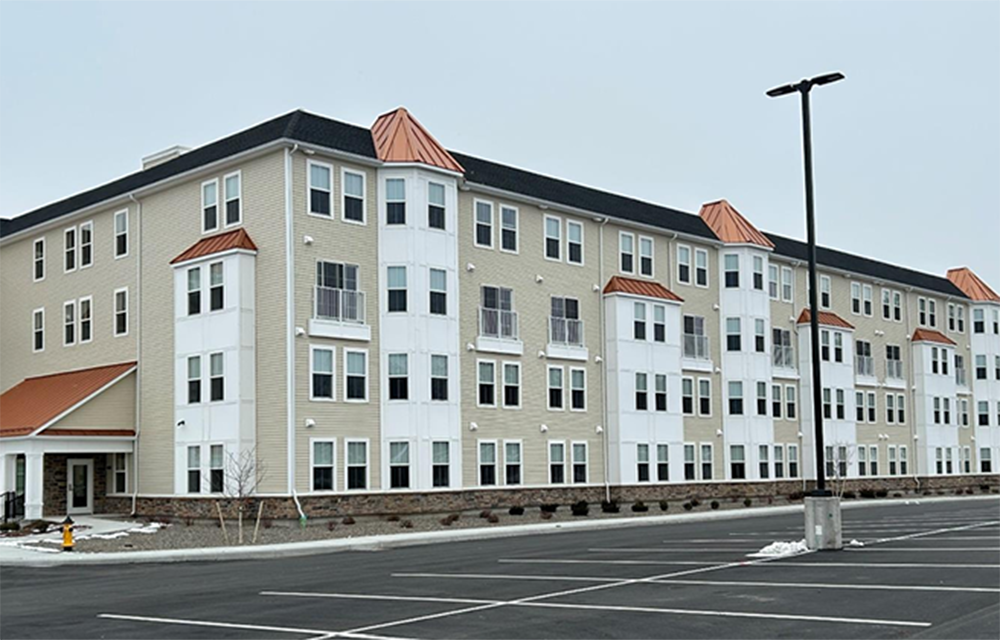
New York State Homes and Community Renewal finish $32 million affordable development
Union, NY New York State Homes and Community Renewal commissioner RuthAnne Visnauskas have completed the Homesteads on Grand, a $32 million, 72-unit mixed-use affordable and supportive development in Johnson City, Broome County.


Quick Hits


Columns and Thought Leadership

Hunt Commercial Real Estate Q&A: Location, location, location? - by David Hunt
In working with our clients, we break down our search objectives into two categories. The first category involves the specific needs of your business such as warehouse height, amount of office space and number of loading

New York City’s historic rent freeze now rests with the courts - by Ron Cohen
New York City’s first-ever two-year rent freeze is now in the hands of a state Supreme Court judge, and the decision could reset income for owners of roughly one million rent-stabilized apartments housing some 2.4 million residents.

Don’t leave severance damages behind - by Sebastian Jablonski
When the government takes a portion of a landowner’s property, most assume just compensation stops at the value of the land taken. However, in partial takings, that is only half of the equation.
NYC's Community Opportunity to Purchase Act is back - and multifamily owners should pay attention - by Ron Cohen
New York City’s Community Opportunity to Purchase Act (COPA) is back, and this latest version could have a much better chance of becoming law. The proposal would give qualified nonprofit organizations
September Promotion
