


 (2).gif)
News:
Spotlight Content
Posted: May 21, 2019
Hempstead Industrial Development Agency consents to sale of two office buildings in Garden City for $91 million
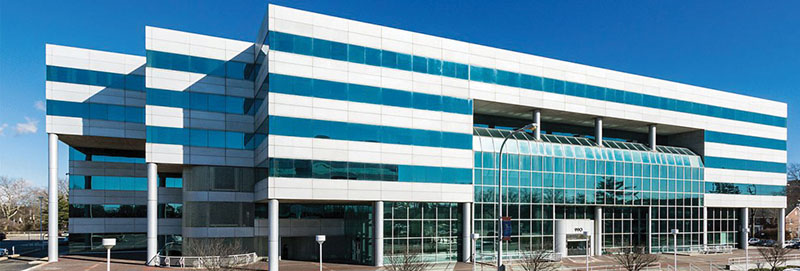
Garden City, NY According to Fred Parola, executive director of the town of Hempstead Industrial Development Agency (IDA), the agency has consented to the sale of two office buildings to a Brooklyn-based real estate investment firm and also agreed to transfer benefits packages previously granted to the seller of the buildings.
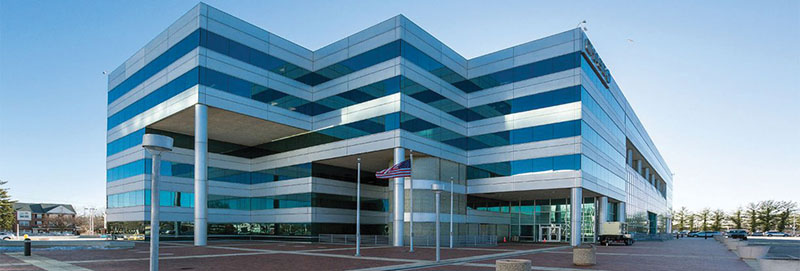
The IDA consented to the $50 million sale of the Atria East at 900 Stewart Ave., and the $41 million sale of the Atria West, which is adjacent at 990 Stewart Ave. The buyers are affiliates of privately held Brooklyn-based JFR Global Investments, headed by Joe Friedland. The buildings are being sold by Onyx Equities, and its partner, Boston-based The Davis Cos.
The IDA, which granted incentive packages for the buildings in 2014 and 2015, agreed at its March 28 meeting to transfer PILOT agreements, which expire in 2030 and 2031, respectively, to the new owner. The IDA also granted the purchaser sales-tax exemptions for the cost of renovations to the properties and mortgage recording tax exemptions. The action will help retain 1,500 jobs between the two buildings.
JFR plans to spend $4.23 million at 900 Stewart, which has 252,730 s/f, on parking lot repairs, roof replacement, cafeteria improvements and new heating and cooling systems. At 990 Stewart, which has 297,339 s/f, JFR plans to spend $3.5 million on parking lot striping, roof replacement, cooling tower replacement, elevator mechanical system modernization, and replacement of the common area carpeting and wall finishes.
The buildings originally were developed by Lincoln Equities Group in 1986 and 1988 as two of the first of many new buildings at the former Mitchel Field air base. They were subsequently, purchased and sold again by various entities.
“The IDA’s agreement to transfer benefits to the buyer of these buildings will help retain hundreds of jobs in the town and ensure that these two prominent properties are in the hands of a financially strong owner,” Parola said.
Tags:
Spotlight Content
MORE FROM Spotlight Content

Artificial intelligence war stories - by Thomas Kearns
The proliferating artificial intelligence products for law firms show promise of improving the quality of legal services and making lawyers more efficient, but as with any developing technology, the results are mixed, with some results being not worth




.png)



Columns and Thought Leadership

Properly serving a lien law Section 59 Demand - by Bret McCabe
Many attorneys operating within the construction space are familiar with the provisions of New York Lien Law, which allow for the discharge of a Mechanic’s Lien in the event the lienor does not commence an action to enforce following the service of a “Section 59 Demand”.

2026 Developing Queens: Long Island Board of Realtors advances commercial growth and advocacy in Queens
The Long Island Board of Realtors (LIBOR) Commercial Network continues to play a key role in advancing opportunities and strengthening the commercial real estate landscape across Queens. Through targeted programming and global outreach

CRE Guide Featured Company: Merritt Environmental Consulting Corp.
Merritt Environmental Consulting Corp. (MECC) was established in June of 2009 after being part of a larger engineering firm for almost 20 years. The focus of the company is to assist lending institutions, attorneys, real estate investors, and property owners with environmental concerns. Today, MECC has offices in New York, Florida, and Vermont and has grown into a regional consulting firm serving clients along the East Coast.

From vacancy to vitality: How adaptive reuse is reshaping Long Island’s CRE landscape - by Andrea Tsoukalas Curto
Adaptive reuse has become one of the most important conversations in commercial real estate today. Long Island has a large inventory of aging retail, office and industrial
September Promotion
