


 (2).gif)
News:
Spotlight Content
Posted: June 13, 2011
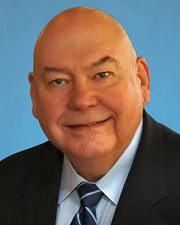
George Grace - Thoughts on ownership versus leasing: What is the right solution for your organization?
Nonprofits contemplating a lease versus the purchase of real estate should consider the strategic implications and the life-cycle of real estate ownership. It is easy to determine the financial aspects of a lease versus owning. Quantifying the differences is the easy part and is what most real estate consultants focus upon because it is quantifiable. Over a long period of time (10 plus years), ownership tends to outweigh leasing on a financial basis. However, periodic disruptions in the real estate market have produced precipitous declines in value. Consultants like to produce spreadsheets analyzing future value but using conservative assumptions for appreciation is wise.
Assessing the non-financial aspects of a purchase can be challenging. Donors like ownership because it provides a substantive basis for their gifts. Boards like ownership because it is brings visibility to the organization. But what happens in the long run?
Our experience illustrates some of the problems that occur. In advising clients, we start by asking: Does the organization plan to grow over time? Have they grown over the last 10, 15 or 20 years? Has the service they provided changed over time? Are the sources of income changed over time? Have the people being serviced changed over time? There may be many other questions to ask to determine the best strategies, but the questions like these provide a starting point to establish the strategic planning aspects of owning versus leasing.
When an organization purchases or develops a site for its own use, it starts with the present day programs and estimates its future needs at that time. Allowing for flexibility and estimates of growth, it designs its building. In the beginning, there is a tremendous amount of energy and excitement. Donors are easier to approach because they have a tangible asset that the world can see and touch. They know where their money is going. The building shapes the destiny of the organization.
As time passes, programs, funding sources, and clients change. Now the building that provided the source of excitement and growth may become a limitation on what an organization can do because it has a fixed size and utility. Then sclerosis sets in. No one wants to sell the building or move because they have owned the building for so many years and it was the building that instigated the growth of the organization. Perhaps many of the board members were involved in its development or programs within it and cannot comprehend that it could even be considered for a possible sale. It's a sacrilege. Now the building that was the source of the entity's blossoming has become its bane.
As consultants, we often tell our clients not to fall in love with their real estate. It can be a great source of value or it can be a hindrance to growth. Look at it like any other asset with a view to its value as part of a strategic plan. Does it fit into your present programs? Is it flexible enough to support the organization's mission? Can you use the property efficiently and effectively? Is there a creative re-use of the property?
One value of leasing is that it provides flexibility. It can be sublet. More space can be leased. It does not tie up capital and it can be less expensive over the short term. If the organization is subject to changing funding sources, program structures, and demographics, then leasing often provides a more rational and efficient use of resources. If, on the other hand, the organization is stable over long periods of time, owning makes more sense.
We find that organizations that have owned real estate for long periods of time find it very difficult to give up ownership, not only from the internal resistance of management and the board, but also from neighbors who do not want to see change in their environment.
Good leadership is able to make these changes and sell assets that "no longer work." CEOs and executive directors have to make the case for a sale and convince their skeptics of the value. Having a much appreciated asset makes the transition less painful.
In sum, ownership of property can be extremely beneficial, but it has limitations. As discussed, these constraining nonfinancial aspects need to be carefully assessed before investing.
George Grace is the founder of GE Grace & Co., Inc., New York, N.Y.
Tags:
Spotlight Content
MORE FROM Spotlight Content
The commercial classroom: Capital gains taxes - by Edward Smith
Generally, when you sell the home you live in and any commercial property you own, it may be subject to capital gains taxes. Always, before you take a listing, advise your client to speak to their accountant about



.png)

Quick Hits
 (2).gif)

Columns and Thought Leadership

CRE Guide Featured Company: Merritt Environmental Consulting Corp.
Merritt Environmental Consulting Corp. (MECC) was established in June of 2009 after being part of a larger engineering firm for almost 20 years. The focus of the company is to assist lending institutions, attorneys, real estate investors, and property owners with environmental concerns. Today, MECC has offices in New York, Florida, and Vermont and has grown into a regional consulting firm serving clients along the East Coast.

2026 Developing Queens: Long Island Board of Realtors advances commercial growth and advocacy in Queens
The Long Island Board of Realtors (LIBOR) Commercial Network continues to play a key role in advancing opportunities and strengthening the commercial real estate landscape across Queens. Through targeted programming and global outreach

From vacancy to vitality: How adaptive reuse is reshaping Long Island’s CRE landscape - by Andrea Tsoukalas Curto
Adaptive reuse has become one of the most important conversations in commercial real estate today. Long Island has a large inventory of aging retail, office and industrial

2026 Developing Long Island: ERG Commercial Real Estate launches its new Retail Leasing division
North Hempstead, NY ERG Retail Leasing is the dedicated leasing division of ERG Commercial Real Estate, an established full-service commercial real estate brokerage for over 35 years.