


News:
Owners Developers & Managers
Posted: May 9, 2008
Firewall your phones: Protecting real estate businesses from do-not-call violations
For those who work in the real estate industry - building developers, property and facility managers, realty agents, contractors, and construction workers - telemarketing is a vital marketing tool for raising customer awareness, landing bids, and boosting sales and rentals. Real estate employees can't just "phone it in," however, when it comes to do-not-call list (DNC) legislation compliance: inadvertently placing calls to numbers on these lists can result in fines of up to $11,000 per call, thousands in legal fees, tarnished brands, and even revoked business licenses.
DNC difficulties are a massive concern since both federal and state governments maintain their own lists. Forty-three states have DNC legislation and the Federal Registry currently has more than 140 million numbers. Given that telemarketing is a lifeblood of the realty industry, DNC list compliance has become a crucial aspect of conducting real estate transactions in America. While the cost and effort involved in implementing software upgrades, training personnel, and constantly cleansing lists (amending and/or removing database information that is incorrect, incomplete, improperly formatted, or duplicated) can be daunting, the chances of dialing one of those numbers without a comprehensive solution in place remain high.
Take for example the $2.2 million settlement imposed on ADT Security Services and its distributors, or the $4.4 million settlement agreed to by Craftmatic Industries, Inc. With one company reportedly having called more than 900,000 numbers on the DNC registries, it isn't difficult to appreciate how DNC fines and penalties can do irrevocable damage. Moreover, consumers have the ability to bring civil actions against companies that violate DNC regulations and potentially recover civil penalties inclusive of court costs, attorney fees, and monetary fines. (DNC violations and in-process cases can be found at: http://www.ftc.gov/bcp/edu/microsites/donotcall/cases.html.)
Those who practice telemarketing in the real estate industry must therefore do three things in order to secure the success of their business as it relates to DNC compliance: (1) protect their brand, (2) ensure against potential liability, and (3) document that good-faith efforts were made to comply with federal DNC legislation under the Federal Communication Commission's (FCC) safe harbor provision. Even calls made by outside field agents or freelancers that are in violation of do-not-call regulations can have an immense impact on the home office, both in terms of legal action and negative brand image.
It would seem logical, then, that businesses that use telemarketing should require their agents to use a standard DNC blocking service, especially one that provides independent third party verification. Fortunately, providers have stepped in to fill this gap and provide innovative technology that address the challenges discussed above at an affordable price.
Attorney general Steve Carter of Indiana, architect of the most stringent DNC program in the United States, praised our technology-based solution, Teleblock. In comments to the FCC, attorney general Carter said, "With services such as Teleblock that provide automatic blocking of restricted numbers, companies should no longer have to monitor each state's laws, their own campaigns, or the actions of their vendors because the service already does that for them at very little cost. Teleblock has yet to see one of its customers fined." He further elaborated, "The TeleBlock service... is remarkably inexpensive and highly effective."
TeleBlock, seamlessly meets DNC control objectives by automatically screening and blocking outbound calls in real-time against federal, state, and in-house do-not-call lists. The service is sold as a central office feature by major telecommunication providers including Verizon Business, Qwest, and PaeTec Communications, and other Tier 1 and 2 telephone carriers; other products may require software or hardware installations.
Do not get caught making bad calls, especially during a slowing economy that finds the real estate industry particularly vulnerable. Property and facility managers, real estate agents, and construction workers, remember - protecting your realty concerns extends beyond adhering to building code and installing security systems. Firewall your phones.
Dean Garfinkel is chairman and CEO of Compliance Systems Corporation, Glen Cove, N.Y.
MORE FROM Owners Developers & Managers
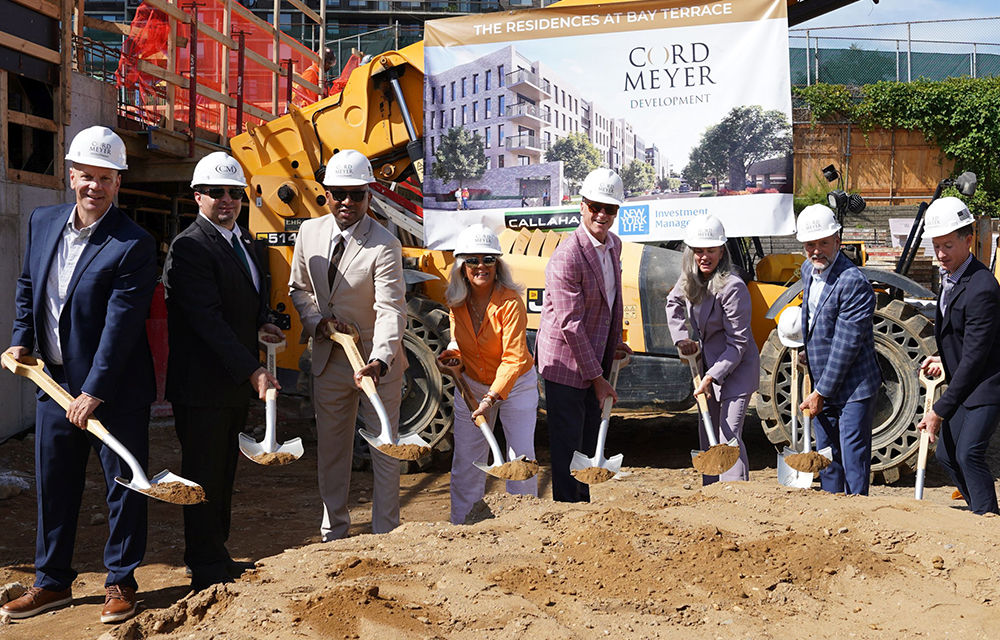
Cord Meyer Development breaks ground on new residential community at the Bay Terrace Shopping Center
Queens, NY On September 10, Cord Meyer Development celebrated the groundbreaking of its new residential community at the Bay Terrace Shopping Center, marking a major investment in new housing and the continued evolution of one of





Quick Hits


Columns and Thought Leadership

Hunt Commercial Real Estate Q&A: Location, location, location? - by David Hunt
In working with our clients, we break down our search objectives into two categories. The first category involves the specific needs of your business such as warehouse height, amount of office space and number of loading

NYC's Community Opportunity to Purchase Act is back - and multifamily owners should pay attention - by Ron Cohen
New York City’s Community Opportunity to Purchase Act (COPA) is back, and this latest version could have a much better chance of becoming law. The proposal would give qualified nonprofit organizations

Don’t leave severance damages behind - by Sebastian Jablonski
When the government takes a portion of a landowner’s property, most assume just compensation stops at the value of the land taken. However, in partial takings, that is only half of the equation.

IREON Insights: Research and development tax credit: Very important deadline for amendments is July 6 - by Richard Levychin
If you are a company that either claimed or qualify for the research and development tax credit you need to be aware of the following update resulting from the One Big Beautiful Bill Act (OBBBA).
September Promotion
