


News:
Owners Developers & Managers
Posted: July 8, 2025
Do these 6,500 New York City buildings deserve property management services? - by Yotam Cohen

Across New York City, more than 6,500 condo and co-op buildings have fewer than 20 units. That’s over 50% of our total housing stock. Small residential buildings are the backbone of neighborhoods from the brownstones of Park Slope to the prewars of the Upper West Side. They may be small, but their role in the city’s housing ecosystem is enormous. Yet when it comes to property management, these buildings are routinely overlooked.
The issue isn’t that they don’t need management. It’s that the standard, legacy model doesn’t fit. Small buildings face the same responsibilities as larger ones: filing boiler inspections, managing vendors, keeping reserves healthy, communicating with residents. But they don’t need round-the-clock staffing or concierge services.
Traditional firms sell one-size-fits-all packages with minimum annual fees starting at $20,000. Spread across 50 units, that’s manageable at $400 per unit. But in an eight-unit building, that same fee jumps to $2,500 per unit, and the experience for those boutique buildings? They get deprioritized service because they don’t bring enough revenue to the property management company. So now they’re paying a lot and getting very little support, if any.
The result is predictable and painful: many boutique buildings decide to forgo the services of a property management company. That’s when the trouble begins: Buildings struggle to stay compliant, fall behind on maintenance, and watch residents grow frustrated with poor communication. Volunteer board members shoulder an impossible load, trying to navigate one of the most regulated real estate markets in the world without professional support. This isn’t just an inconvenience – it’s a structural flaw in how our industry operates.
This problem is getting worse, not better. Yet the solution doesn’t lie in creating a smaller, cookie-cutter solution of the legacy models of property management companies. The old model of overworked managers manually juggling dozens of properties simply can’t keep up. Meanwhile, thousands of buildings are left to fend for themselves.
We’re at a moment where technology can finally solve this. The digital solutions transforming every other industry are ready for real estate. AI can automate routine tasks, smart platforms can centralize communication, and intelligent monitoring can catch problems before they become crises.
Picture this: A board member gets real-time alerts about permit deadlines. A resident submits a maintenance request that gets automatically routed to the right vendor with updates sent along the way. AI tracks performance and flags issues early.
This isn’t about replacing human service with robots. It’s about amplifying human expertise with smart tools so that professional management becomes accessible to buildings of every size. Small buildings don’t need watered-down service. They need service designed for their reality.
And here’s the bigger opportunity: when these buildings operate on connected platforms, they gain collective power. Imagine 6,500 buildings working as a network, negotiating better vendor rates, sharing performance data, leveraging combined purchasing power. A 10-unit building alone has no leverage, but a network of thousands creates unprecedented bargaining power.
Property management is about trust, service, and reliability. We now have new ways to deliver on those values at scale to smaller buildings. If we want to future-proof New York City’s housing stock and provide equitable quality of life for all residents, whether they live in a 200-unit tower or a 10-unit walk-up, we need to make professional management accessible to every building. The technology exists. The need is urgent. The opportunity is massive.
These 6,500 buildings deserve better than patchwork solutions. They deserve professional service that’s right-sized, technology-powered, and built for the future. It’s time to create a system that treats small buildings with the same seriousness as large ones and ensures no building gets left behind.
Yotam Cohen is the co-founder and CEO of Daisy New York, N.Y.
MORE FROM Owners Developers & Managers
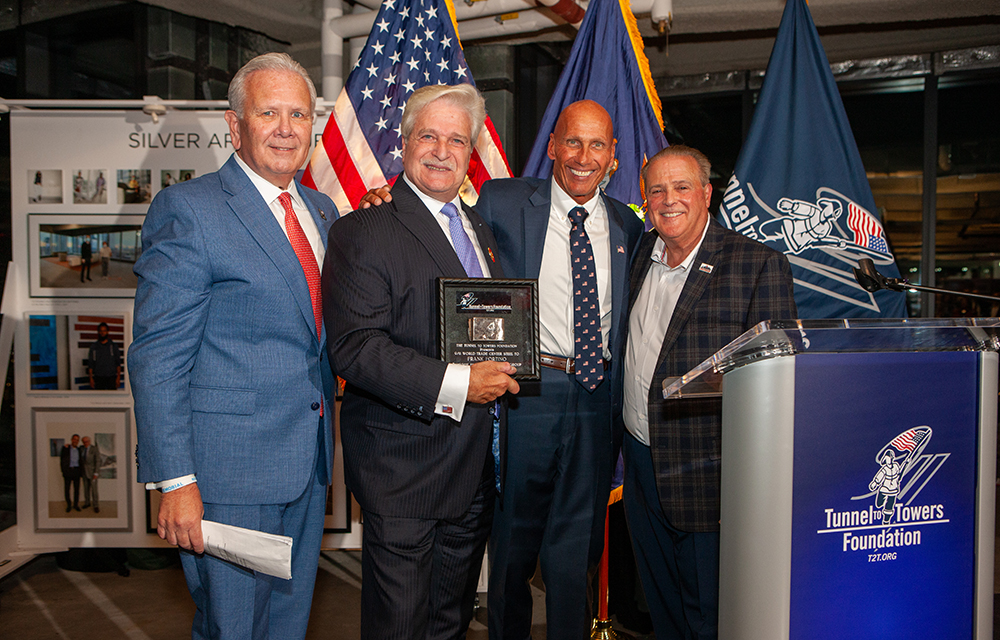
New York Commercial Real Estate & Contractors for Tunnel to Towers hosts sixth annual tribute in remembrance of 9/11
Manhattan, NY Twenty-five years after September 11, an extraordinary gathering took place high above the very ground where New York endured its darkest day. On October 15, more than a quarter-century of remembrance, resilience, and renewal came together on the 80th floor of 3 World Trade Center, where the New York Commercial Real Estate & Contractors for Tunnel to Towers (T2T) hosted its sixth annual cocktail tribute.



Quick Hits


Columns and Thought Leadership

Hunt Commercial Real Estate Q&A: Location, location, location? - by David Hunt
In working with our clients, we break down our search objectives into two categories. The first category involves the specific needs of your business such as warehouse height, amount of office space and number of loading

New York City’s historic rent freeze now rests with the courts - by Ron Cohen
New York City’s first-ever two-year rent freeze is now in the hands of a state Supreme Court judge, and the decision could reset income for owners of roughly one million rent-stabilized apartments housing some 2.4 million residents.
NYC's Community Opportunity to Purchase Act is back - and multifamily owners should pay attention - by Ron Cohen
New York City’s Community Opportunity to Purchase Act (COPA) is back, and this latest version could have a much better chance of becoming law. The proposal would give qualified nonprofit organizations

Don’t leave severance damages behind - by Sebastian Jablonski
When the government takes a portion of a landowner’s property, most assume just compensation stops at the value of the land taken. However, in partial takings, that is only half of the equation.