


News:
Owners Developers & Managers
Posted: February 5, 2010
Developing contaminated land can be beneficial to both the environment and your wallet
When purchasing and developing it is important to consider the environmental quality of the land. If soil and groundwater are not properly addressed during building construction the environmental issues may cause building occupants to become sick. Additionally, the New York City Department of Health can stop the occupation of buildings constructed on contaminated land since it is not uncommon for vapors from contaminated soil and groundwater to enter into occupied spaces. Fortunately, both New York City and New York State offer incentives for the remediation of land during development. The NYC program is referred to as the Local Brownfield Program and the New York State program is referred to as the State Brownfield Program.
Brownfields are properties which are undeveloped because of environmental issues. Left undeveloped Brownfields can pose an environmental, legal and financial burden on the community. However, New York State and New York City view these properties as powerful engines for economic vitality that can breed new jobs and life into communities once remediated and developed. Therefore, the New York State Department of Environmental Conservation (NYSDEC) and the New York City Mayors Office of Environmental Remediation (OER) offer incentives for the remediation and development of Brownfield Sites.
As a developer you may not realize that the vacant lot you are considering purchasing is considered a Brownfield site by New York City. However, most properties within New York City contain contaminated urban fill material and this contaminated fill material will quality the site for the City's Local Brownfield Program. Your basic Phase II Environmental Site Assessment can determine if your site has urban fill material. Furthermore, if your site has additional environmental issues it may also qualify for New York State's Brownfield Program. Entering into the State Brownfield Program may be more complicated and additional investigation may have to be completed; however, the State's Program can prove cost efficient. Both Brownfield Programs are associated with the development of a property.
Another benefit to Brownfield Development is that New York City or State will hold environmental liability. Mortgage holders, of course, love the benefits that come with the environmental liability since they can be assured they are not funding a contaminated site. The developer in turn is benefited because their environmental due diligence responsibilities are greatly decreased. Additionally, the future tenants or units owners can live comfortably knowing their health and safety is not being compromised by contaminated land.
The NYC Brownfield Program can easily be coordinated with development being conducted under the City Environmental Quality Review (CEQR) process. This includes properties that have received a Restrictive Declaration, "E" Designation or that are receiving funding from the NYC department of Housing Preservation and Development (HPD). Additionally, other funding sources such as United States Department of Housing and Urban Development (HUD) require a local agency to oversee environmental work. This local agency should be the NYC OER under the Local Brownfield Program since remediation can be coordinated with the development.
Contaminated land should not always defer the developer from purchasing properties. If properly coordinated Brownfield programs will positively impact your development. Contact Hydro Tech today to see how we can help you.
Rachel Ataman, LEED AP, is the vice president of technical services for Hydro Tech Environmental Corp., Commack, N.Y.
MORE FROM Owners Developers & Managers
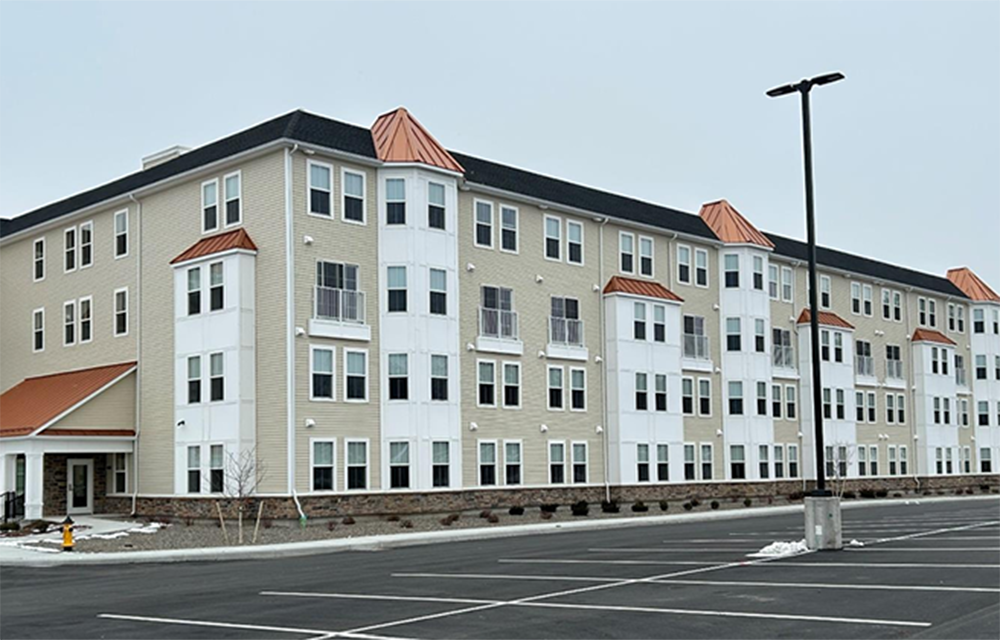
New York State Homes and Community Renewal finish $32 million affordable development
Union, NY New York State Homes and Community Renewal commissioner RuthAnne Visnauskas have completed the Homesteads on Grand, a $32 million, 72-unit mixed-use affordable and supportive development in Johnson City, Broome County.



Quick Hits


Columns and Thought Leadership

New York City’s historic rent freeze now rests with the courts - by Ron Cohen
New York City’s first-ever two-year rent freeze is now in the hands of a state Supreme Court judge, and the decision could reset income for owners of roughly one million rent-stabilized apartments housing some 2.4 million residents.

Don’t leave severance damages behind - by Sebastian Jablonski
When the government takes a portion of a landowner’s property, most assume just compensation stops at the value of the land taken. However, in partial takings, that is only half of the equation.

Hunt Commercial Real Estate Q&A: Location, location, location? - by David Hunt
In working with our clients, we break down our search objectives into two categories. The first category involves the specific needs of your business such as warehouse height, amount of office space and number of loading
NYC's Community Opportunity to Purchase Act is back - and multifamily owners should pay attention - by Ron Cohen
New York City’s Community Opportunity to Purchase Act (COPA) is back, and this latest version could have a much better chance of becoming law. The proposal would give qualified nonprofit organizations
September Promotion
