



News:
Spotlight Content
Posted: February 22, 2010
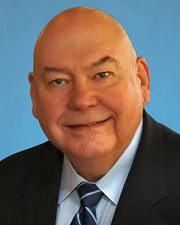
Decade Answers: David Livshin
David Livshin is the president/CEO of The Dagar Group LTD., Fishkill, N.Y.
What was one of your corporate or career highlights of the decade?
It's really not one experience, but a sequence of several merged together. We have helped countless individuals through the process of looking for space, lease negotiations and finally opening. It's rewarding to see somebody with an idea or dream and being able to help them fulfill their vision. We have worked with so many people like this who never imaged that they would actually be in business for themselves. Many times we have almost had to hold someone's hand through the process of finishing a lease, arranging financing, receiving approvals, designing a sign, finishing an interior and then finally having a ribbon cutting. Just the other day, I walked into a daycare center at one of our properties and the owner greeted me with a big hug. Her smile made the effort all worthwhile.
What are your predictions for commercial real estate in the new decade?
Over the next decade, I see a shift specifically in retail where properties will be become more focused on individual owner operators as tenants with a mix of regional chains. These centers in the 20,000-30,000 s/f range serving middle markets will become more the focus than the larger centers on major roadways anchored by nationals. This shift started in the last 24 months and I see it as a trend that will continue. In the Hudson Valley these smaller mixed use centers located where people actually live have been enormously successful in terms of lease up.
Tags:
Spotlight Content
MORE FROM Spotlight Content

The commercial classroom: 1031 tax-deferred exchanges - by Edwad Smith Jr.
The sale of real estate may trigger capital gains taxes on the net profits of that sale. These taxes may be deferred by participating in a 1031 tax exchange, in essence, by purchasing property(s) to replace the



.png)

Quick Hits


Columns and Thought Leadership

From vacancy to vitality: How adaptive reuse is reshaping Long Island’s CRE landscape - by Andrea Tsoukalas Curto
Adaptive reuse has become one of the most important conversations in commercial real estate today. Long Island has a large inventory of aging retail, office and industrial

CRE Guide Featured Company: Merritt Environmental Consulting Corp.
Merritt Environmental Consulting Corp. (MECC) was established in June of 2009 after being part of a larger engineering firm for almost 20 years. The focus of the company is to assist lending institutions, attorneys, real estate investors, and property owners with environmental concerns. Today, MECC has offices in New York, Florida, and Vermont and has grown into a regional consulting firm serving clients along the East Coast.

2026 Developing Queens: Long Island Board of Realtors advances commercial growth and advocacy in Queens
The Long Island Board of Realtors (LIBOR) Commercial Network continues to play a key role in advancing opportunities and strengthening the commercial real estate landscape across Queens. Through targeted programming and global outreach

2026 Developing Long Island: ERG Commercial Real Estate launches its new Retail Leasing division
North Hempstead, NY ERG Retail Leasing is the dedicated leasing division of ERG Commercial Real Estate, an established full-service commercial real estate brokerage for over 35 years.