



News:
Spotlight Content
Posted: October 27, 2014
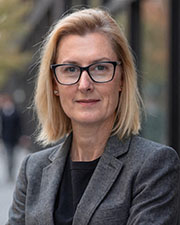
Countryman of FXFOWLE: Sense of validation in chosen career
Name: Alissa Bobrow Countryman, AIA, LEED AP
Title: Associate
Company Name: FXFOWLE Architects
Years in Commercial Real Estate: 5
In the last 12 months, which project, transaction, honor or accomplishment are you most proud of and why?
Becoming a licensed architect. Unlike other professions, it takes an incredible amount of inertia to become licensed in the field of architecture, given that it is possible to practice and to be successful without it. For me, it not only gave me the opportunity to learn about some unfamiliar aspects of building systems, it has given me a sense of validation in my chosen career.
What were your biggest fears when you started out in your profession?
I thought that I would not be able to be an architect and a parent at the same time. I knew that architecture can be an all-consuming profession which I thought would not allow room for a family. What I realized, eventually, is that architecture does not dictate my work/life boundaries - I do. I am also fortunate to work for a firm that is sensitive to the needs of working parents. And one that gives me the ability to work remotely from my home computer. A real life-saver!
Who are three women- living or dead - that you would like to have drinks with and why?
1. Golda Meir - Especially given that the US has never had a woman president, I am awed by women heads of state in other countries. I think that she was a particularly amazing leader at a difficult time in a challenged region of the world.
2. Marilyn Monroe - She seems like a very complex and fascinating person; I'd love to know what made her tick. Also, she went to my high school, which is a fun fact.
3. Jane Goodall - One of the most accomplished individuals in the world of science. I am very inspired by people who devote their lives to understanding the non-human world, because I believe it impacts us so much more than we tend think about or acknowledge.
What is your favorite quote?
Stress is an ignorant state. It believes that everything is an emergency. ~Natalie Goldberg, Wild Mind
Tags:
Spotlight Content
MORE FROM Spotlight Content
2026 Women in Commercial Real Estate: Deborah Smith, The CenterCap Group
What leadership lesson has made the greatest impact on your career? Leadership isn’t about being the smartest person in the room; it’s about creating an environment where the best ideas win.



.png)

Quick Hits
 (2).gif)

Columns and Thought Leadership

Properly serving a lien law Section 59 Demand - by Bret McCabe
Many attorneys operating within the construction space are familiar with the provisions of New York Lien Law, which allow for the discharge of a Mechanic’s Lien in the event the lienor does not commence an action to enforce following the service of a “Section 59 Demand”.

From vacancy to vitality: How adaptive reuse is reshaping Long Island’s CRE landscape - by Andrea Tsoukalas Curto
Adaptive reuse has become one of the most important conversations in commercial real estate today. Long Island has a large inventory of aging retail, office and industrial

2026 Developing Queens: Long Island Board of Realtors advances commercial growth and advocacy in Queens
The Long Island Board of Realtors (LIBOR) Commercial Network continues to play a key role in advancing opportunities and strengthening the commercial real estate landscape across Queens. Through targeted programming and global outreach

CRE Guide Featured Company: Merritt Environmental Consulting Corp.
Merritt Environmental Consulting Corp. (MECC) was established in June of 2009 after being part of a larger engineering firm for almost 20 years. The focus of the company is to assist lending institutions, attorneys, real estate investors, and property owners with environmental concerns. Today, MECC has offices in New York, Florida, and Vermont and has grown into a regional consulting firm serving clients along the East Coast.
September Promotion
