



News:
Construction Design & Engineering
Posted: September 12, 2011
Celebrating the past, present and future of the built environment in NYC
As New Yorkers settle back into regular autumn routines and the leaves on our urban trees turn from green to brown, the AIA New York Chapter is not dwelling on memories of summer days past; rather, architects are looking forward into the future of "Green." This Archtober, the October 2011 month-long festival of architecture and design in New York City, the Center for Architecture is opening two exciting exhibitions: Buildings=Energy, and Smarter Living - the 2,000 Watt Society. Both exhibitions are a view to the cutting- edge sustainability and carbon footprint reduction strategies that architects are incorporating in building design, specifically here in New York and in Zurich, Switzerland, respectively.
As winter begins in the Northern Hemisphere, these examinations of two major globally-oriented cities' efforts to ameliorate environmental impact are as timely as they are important. Both Buildings=Energy and Smarter Living will educate practitioners and the public about the measures undertaken by architects, engineers, landscape architects, urban planners, elected officials, and civic activists that aim to improve building performance and the environment. For our part in the United States alone, over 50% of energy consumption is attributable to buildings. All stakeholders must collaborate to help change the way our buildings are designed and constructed, which is essential to ensuring our buildings will perform. Whether we are referring to ground-up construction or adaptive reuse, the design of buildings must consider new technologies and methods of integrating systems that improve the efficiency of our built environment.
The Buildings=Energy exhibition uses full-scale installations, models, and interactive diagrams to highlight practices already used in New York, including energy code compliance, embodied energy analysis in resource selection, the benchmarking of buildings, use of renewable energy systems, methods of energy harvesting, and lifecycle cost and operations management. The importance of the proactive approach that architects are taking in improving building systems from start to finish, and well into the life of the structures, cannot be emphasized enough. Everyone stands to benefit from these sustainability initiatives, and there are incalculable advantages available to developers as they improve both their footprints and bottom lines. Energy-saving design ultimately adds up to lucrative tax incentives and reduced energy costs for tenants and management, in addition to helping save the environment.
Our colleagues in Switzerland are responding to the call to arms set forth by the citizenry of Zurich, a metropolitan area of nearly two million people. In 2008, a referendum was approved that set the goal of reducing the energy consumption of each person from the current 6,500 watts to 2,000 watts by 2150. Smarter Living - the 2,000 Watt Society, brought to the United States by ThinkSwiss - Brainstorm the Future in collaboration with Cleantech Switzerland and the City of Zurich, illustrates the impact of this significant goal by presenting the diverse range of design solutions underway, and is intended to give architects, developers and contractors the courage and desire to accept the 2,000 watt vision. The exhibition is based on 18 case studies that demonstrate different approaches to sustainable architecture - some with complex technical solutions and some with clever references to traditional construction methods, with small and large projects, on both retrofitted housing stock and new construction. All of these designs are creating a real, lasting sustainable future for Zurich, where "green" is no longer an option, but the law.
As AIA New York Chapter architects continue to work toward the future of design here and around the world, I remind our colleagues in the real estate community to come out and help celebrate the exhibitions, events, and programs that are taking place throughout Archtober. As well, I encourage all to download the Archtober calendar at www.archtober.org, where an AIANY Design Award-winning Building of the Day is listed every day, with many fine examples of New York architects' innovative responses to making this city an arbiter of sustainability and style. The historian Kenneth Jackson, quoted in the September issue of Architectural Record, said: "What New York City does successfully is adaptive reuse. Look at the High Line or Chelsea Market. They show how you shift from being a manufacturing center to basing a new economy on quality of life. People can move anywhere these days...quality of life matters. Architecture is a big part of that." Archtober is the opportunity to show the whole world what the New York built environment is made of: literally, figuratively, and sustainably.
Margaret Castillo, AIA, LEED AP, is the 2011 president of the N.Y. chapter of the AIA, New York, N.Y.
MORE FROM Construction Design & Engineering
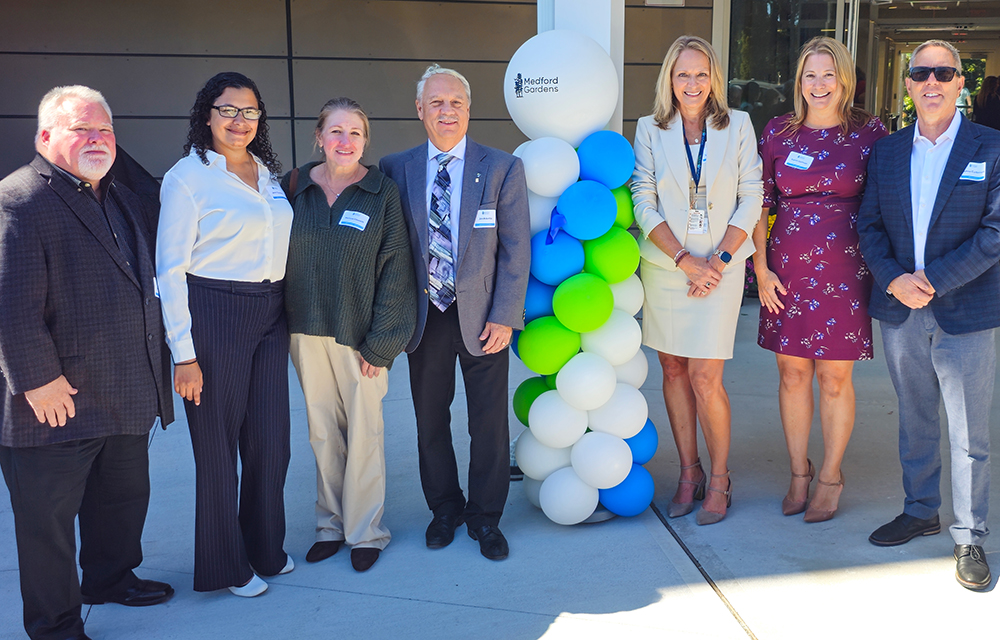
WellLife and H2M celebrate new senior housing Medford Gardens provides affordable housing for renters 55 and older
Medford, NY H2M architects + engineers (H2M) joined WellLife Network, along with state and local officials, housing advocates, and project partners, to celebrate the grand opening of Medford Gardens, a new affordable and supportive

Quick Hits

Columns and Thought Leadership

We support green construction. Just not this kind - by Tammy Smith
Most people think of St. Patrick’s Day as a fun footnote on the calendar. In construction logistics, however, it’s a full-scale operational variable — especially if your work touches major metro areas with major parades and, let’s call it what it is, enthusiastic celebrants.
Premium experiences, proven returns: The New revenue playbook for sports venues - by Terry McIntyre
Investing in the Fan Experience as a Revenue Strategy The sports and entertainment venues that bet on premium experiences years ago are now seeing those investments pay off in packed seats, increased revenue, and industry recognition.

The Façade is no longer just a finish. It’s a risk strategy. - by Bentley Zhao
Twelve-billion-dollar weather disasters have already hit the U.S. through the first half of 2026, causing at least $31.9 billion in damage, according to Climate Central, the nonprofit that now maintains the disaster database NOAA discontinued.
