



News:
Construction Design & Engineering
Posted: September 30, 2025
Building spaces for MRIs and X-Ray machines means added expertise and planning to ensure safety - by Steve Corletta

Construction always relies on meticulous planning, but building or renovating a space for sensitive, high-tech medical imaging equipment requires another level of care and expertise to complete the project efficiently – and safely.
X-rays have aided health care since the 1890s, but in recent decades medical imaging has advanced exponentially. Computerized tomography (CT) scanners can compile multiple images into 3D depictions. Magnetic resonance imaging (MRI) machines have become ubiquitous since their introduction in the 1980s. But the many vital functions they perform in ever more innovative healthcare settings come with potential hazards and other considerations that must be top of mind before starting a project.
For example, installing an MRI machine, even when it’s not yet operable, requires working near a magnet strong enough to yank a hammer from a hand or turn nails or even belt buckles into dangerous projectiles. X-ray and CT machines, which emit powerful radiation, must be surrounded by well-sealed, protectively lined walls that shield hospital staff and others in the area. Replacing an imaging machine in an existing space requires even more coordination to work adjacent to patient care and administrative areas.
Handling such projects responsibly means closely collaborating and communicating with experts who specialize in implementing the relevant safety standards and regulations. The process also requires partnering with consultants from a device’s manufacturer, in addition to the usual development team. These specialized experts will help identify and strategize how to meet the particular demands of the equipment being installed.
It is also imperative to fully understand the project being undertaken before the first planning meeting.
Some considerations:
Know the requirements. The installation and use of imaging machines are governed by industry-specific standards and rules that specialized consultants and manufacturers’ experts can provide. For example, with an MRI machine, it is important to know the gauss line. This is the border that marks where the magnetic pull drops to 5 gauss, which is considered safe. An operating MRI exerts a magnetic pull of 5,000 to 30,000 gauss. (By contrast, the Earth’s magnetic pull is .5 gauss.)
Check utilities capacity. Ensure that utility services such as power and water are adequate to serve the equipment. If using existing utilities, be sure they have sufficient capacity. Where new utility feeds are needed, they often must be run through occupied spaces, which requires careful coordination.
Plan for equipment placement. The room needs an extra-large opening to place and install the machine. It is easiest to use a room near an outer wall or a top floor or wing where a large object can be lowered by crane – and lifted out when it needs to be replaced. Planning also involves carefully securing wires and other utilities in walls or ceilings to leave a clear space large enough for the machine to pass through. That could mean, for example, ensuring that no wiring, vents or other elements run through the ceiling directly above the machine, allowing a hole to be cut at a later time to lift out an older piece of equipment and lower in its replacement.
Fortify floors. The floor underneath an MRI or other imaging machine must be strong enough to support the equipment’s considerable extra weight. MRI machines can weigh anywhere from 10,000 lbs. to 30,000 lbs. Further, the machine must sit on a concrete isolation slab installed independent of the surrounding floor and separate from any metals. This allows it to absorb the machine’s inherent vibrations, which can interfere with the clarity of the images produced. Fortifying a floor often requires accessing the space underneath the imaging suite – adding another layer to the planning. If the room sits atop active office or medical space, operations there must relocate until crews complete the work.
Exercise care around MRI magnets. Even when not in use, an MRI’s magnet operates at a lower level, which is still strong enough to be a hazard. That helps the machine ramp up to full strength when required. Crews working around such a machine must ensure they do not wear or carry objects made of ferrous metals – that is, metals containing iron – which are attracted to magnets. Screws, nails and other hardware must be made of non-ferrous materials, such as aluminum.
Use proper seals and ducts. The loss of superconductivity in the MRI’s magnet can cause liquid helium used in the machine to boil and expand rapidly. The rooms holding the machines require quench vents that allow helium to safely escape in case of a mishap. Rooms holding X-ray machines require lead-lined walls and doors and shielding around the pass-throughs in the walls for wiring, plumbing and vents.
Optimize the schedule. With an MRI, X-ray or CT machine installation, precise timing is crucial. An early delivery will leave the expensive, sensitive equipment lingering before installation. A late delivery will leave the space partially completed waiting for the main equipment to be installed. When planning, also factor in time for a complete architectural refresh of the space. Many healthcare centers seize the opportunity when replacing equipment to update surroundings to a contemporary look. Ideally, the machine will be delivered precisely when crews have built everything they can to prepare, leaving as little work as possible to be done after the machine is set in its place.
With this additional planning, and a solid understanding of the sensitive nature of high-tech medical imaging equipment, construction teams can enable health providers to efficiently and safely begin providing upgraded services for their patients.
Steve Corletta is regional operations manager at LeChase Construction Services, Armonk, NY.
MORE FROM Construction Design & Engineering
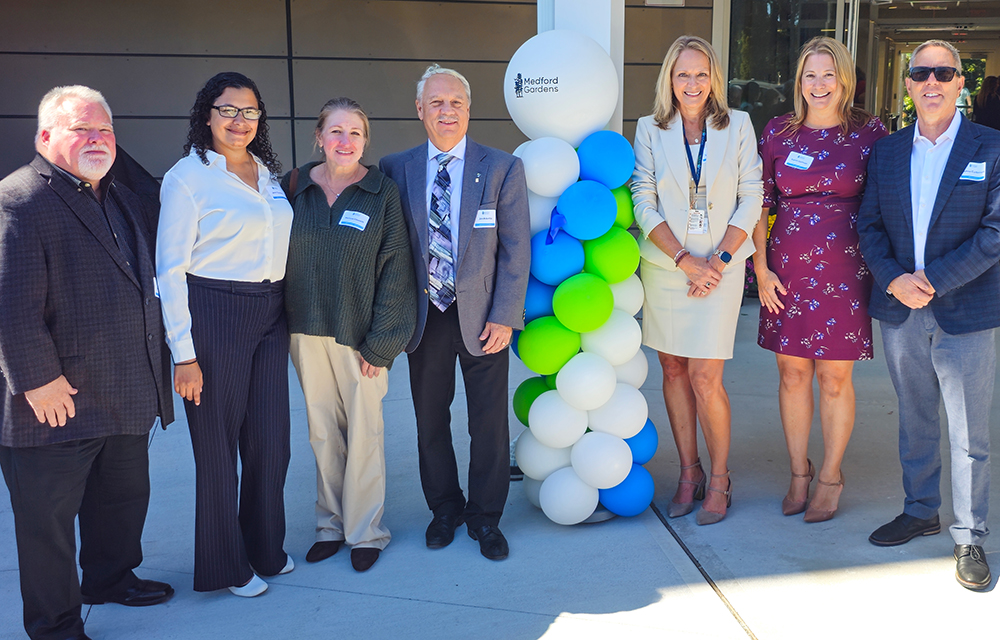
WellLife and H2M celebrate new senior housing Medford Gardens provides affordable housing for renters 55 and older
Medford, NY H2M architects + engineers (H2M) joined WellLife Network, along with state and local officials, housing advocates, and project partners, to celebrate the grand opening of Medford Gardens, a new affordable and supportive




Columns and Thought Leadership

We support green construction. Just not this kind - by Tammy Smith
Most people think of St. Patrick’s Day as a fun footnote on the calendar. In construction logistics, however, it’s a full-scale operational variable — especially if your work touches major metro areas with major parades and, let’s call it what it is, enthusiastic celebrants.

Premium experiences, proven returns: The New revenue playbook for sports venues - by Terry McIntyre
Investing in the Fan Experience as a Revenue Strategy The sports and entertainment venues that bet on premium experiences years ago are now seeing those investments pay off in packed seats, increased revenue, and industry recognition.

The façade is no longer just a finish. It’s a risk strategy. - by Bentley Zhao
Twelve-billion-dollar weather disasters have already hit the U.S. through the first half of 2026, causing at least $31.9 billion in damage, according to Climate Central, the nonprofit that now maintains the disaster database NOAA discontinued.
