


 (2).gif)
News:
Spotlight Content
Posted: December 18, 2009
Builders Group completes green dynamometer installation for DSNY
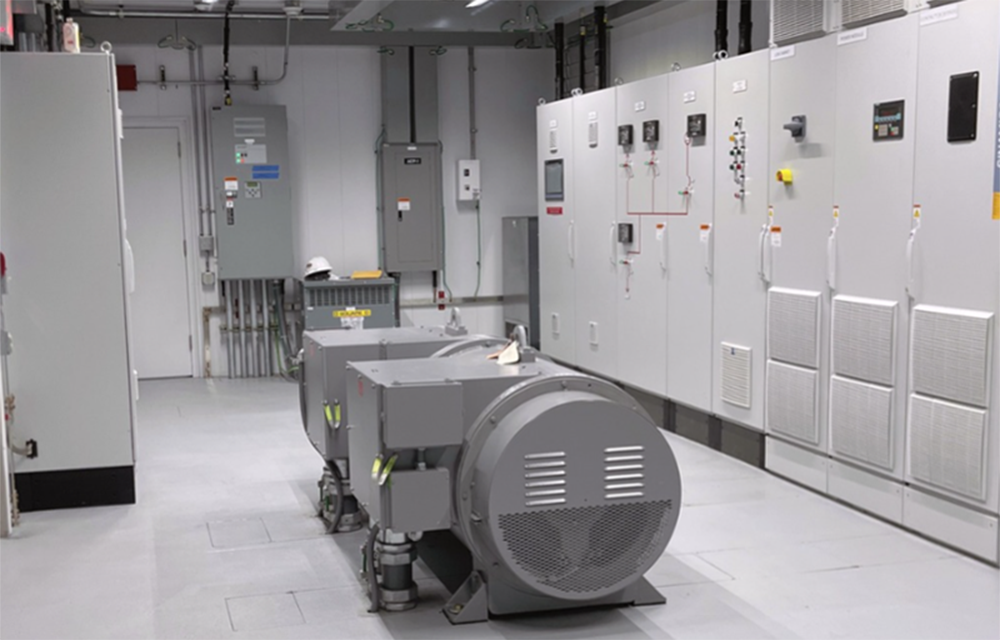
Builders Group has completed the installation of a heavy-duty-vehicle emissions testing laboratory - including a 25-ton chassis dynamometer with seven-foot single-axle rollers and exhaust gas analyzers - in a special 40,000 s/f facility at the New York City Department of Sanitation (DSNY) garage and maintenance complex in the Woodside section of Queens.
The facility is the first of its kind erected in the Northeast and the only one in the nation operated by a municipal agency. The other installations, which may number as few as three or four, are at research and education facilities around the country.
Builders Group served as design build/construction manager for the project under a joint venture with architect Alta Indelman, who designed the facility. Harley Ellis served as consulting engineers. The dynamometer itself was developed by Horiba Corp., based in Kyoto, Japan.
"This has been a complex project that presented many challenges, but the end result provides the city and the Department of Sanitation with an important advantage in energy efficiency while making the air we breathe as clean as possible," said George Figliolia, president of Builders Group. "We're proud to have been a part of this important green initiative."
Rocco DiRico, DSNY deputy commissioner for support services, whose staff will manage the facility, says the laboratory and dynamometer will play a vital role in decision-making as the department gradually converts its fleet of some 6,000 trucks and other vehicles to use new transportation technologies.
Tags:
Spotlight Content
MORE FROM Spotlight Content

NYREJ's 2026 Developing Long Island Spotlight is here!
This spotlight showcases projects completed and currently under construction across Long Island as well as highlights improvements made to the region through Industrial and Economic Development Agencies and BIDs.



.png)

 (2).gif)

Columns and Thought Leadership

From vacancy to vitality: How adaptive reuse is reshaping Long Island’s CRE landscape - by Andrea Tsoukalas Curto
Adaptive reuse has become one of the most important conversations in commercial real estate today. Long Island has a large inventory of aging retail, office and industrial

Properly serving a lien law Section 59 Demand - by Bret McCabe
Many attorneys operating within the construction space are familiar with the provisions of New York Lien Law, which allow for the discharge of a Mechanic’s Lien in the event the lienor does not commence an action to enforce following the service of a “Section 59 Demand”.

CRE Guide Featured Company: Merritt Environmental Consulting Corp.
Merritt Environmental Consulting Corp. (MECC) was established in June of 2009 after being part of a larger engineering firm for almost 20 years. The focus of the company is to assist lending institutions, attorneys, real estate investors, and property owners with environmental concerns. Today, MECC has offices in New York, Florida, and Vermont and has grown into a regional consulting firm serving clients along the East Coast.

2026 Developing Queens: Long Island Board of Realtors advances commercial growth and advocacy in Queens
The Long Island Board of Realtors (LIBOR) Commercial Network continues to play a key role in advancing opportunities and strengthening the commercial real estate landscape across Queens. Through targeted programming and global outreach