


 (2).gif)
News:
Spotlight Content
Posted: May 2, 2017
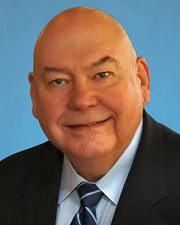
Ayles of Antinozzi Associates elected to AIA College of Fellows

Antinozzi Associates
Bridgeport, CT Michael Ayles, FAIA, NCARB, principal of business development at Antinozzi Associates, has been elevated to the College of Fellows by the American Institute of Architects (AIA). Fellowship is the AIA’s highest membership honor, awarded to professionals for exceptional work and contributions to architecture and society. Three percent of the AIA’s 90,000+ members have received this distinction.
Ayles joined Antinozzi Associates in 1994 and has led the firm’s business plan/strategy, marketing efforts, and staff recruitment and retention since 2006. In addition, he is assigned as principal-in-charge/project manager for selective client projects.
Ayles has been involved with AIA for over 25 years, serving at local, regional, and national levels on numerous committees and constituency groups. Having chaired many of these efforts, he most recently has focused on leading the AIA Center for Civic Leadership, which advocates for architects to use their knowledge to become civic leaders and enhance the quality of life in our communities.
As a member of the National Council of Architectural Registration Boards (NCARB), he serves as Connecticut’s architect licensing advisor. He is an active member of the Society for Marketing Professional Services, University of Hartford Construction Institute, Connecticut Building Congress, and ACE Mentor Program of Connecticut. Over 20 years, Ayles has participated as a panelist, moderator, facilitator, and speaker at numerous conferences regarding emerging professionals, the architectural licensing process, business development, leadership development, mentoring, and civic/community leadership.
Tags:
Spotlight Content
MORE FROM Spotlight Content

The commercial classroom: 1031 tax-deferred exchanges - by Edwad Smith Jr.
The sale of real estate may trigger capital gains taxes on the net profits of that sale. These taxes may be deferred by participating in a 1031 tax exchange, in essence, by purchasing property(s) to replace the



.png)

Quick Hits


Columns and Thought Leadership

2026 Developing Queens: Long Island Board of Realtors advances commercial growth and advocacy in Queens
The Long Island Board of Realtors (LIBOR) Commercial Network continues to play a key role in advancing opportunities and strengthening the commercial real estate landscape across Queens. Through targeted programming and global outreach

From vacancy to vitality: How adaptive reuse is reshaping Long Island’s CRE landscape - by Andrea Tsoukalas Curto
Adaptive reuse has become one of the most important conversations in commercial real estate today. Long Island has a large inventory of aging retail, office and industrial

2026 Developing Long Island: ERG Commercial Real Estate launches its new Retail Leasing division
North Hempstead, NY ERG Retail Leasing is the dedicated leasing division of ERG Commercial Real Estate, an established full-service commercial real estate brokerage for over 35 years.

CRE Guide Featured Company: Merritt Environmental Consulting Corp.
Merritt Environmental Consulting Corp. (MECC) was established in June of 2009 after being part of a larger engineering firm for almost 20 years. The focus of the company is to assist lending institutions, attorneys, real estate investors, and property owners with environmental concerns. Today, MECC has offices in New York, Florida, and Vermont and has grown into a regional consulting firm serving clients along the East Coast.