


 (2).gif)
News:
Spotlight Content
Posted: May 17, 2016
Athenica Environmental Services completes another E-Designation project: The Lanes
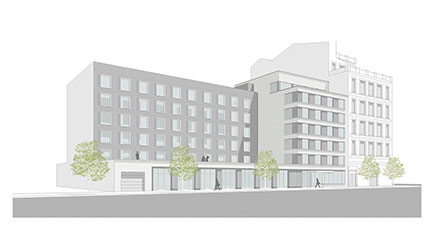 Rendering, The Lanes, 37-10 Crescent Street - Queens, NY
Queens, NY According to Athenica Environmental Services, Inc., they have completed another E-Designation project: The Lanes in the Long Island City area. Prior to the demolition of an 18,000 s/f warehouse at the site, the building was occupied by a bowling alley called “Crescent Lanes” in the mid 1960’s. The site, 37-10 Crescent St., is currently being developed as a mixed-use building which will be named “The Lanes” after the former bowling alley. Athenica has completed all environmental-related investigations at this property, including a Phase I Environmental Site Assessment, a remedial investigation, and has submitted associated reports to the mayor’s Office of Environmental Remediation for approval. As a result of Athenica’s expedited support, the client managed to meet the 421-a tax abatement deadline and, by completing the project successfully through Voluntary Cleanup Program (VCP), was also able to qualify for two Brownfield Incentive Grants. Following the receipt of Notice of Completion for the site, the Hazardous Materials E-Designation has been removed from the lot. This project is unique in offering ground floor manufacturing space unlike most new mixed-use residential developments. Upon completion of the mixed-use building at the end of 2016, the building will also house 57 rental apartments.
Athenica is an award winning boutique environmental consulting firm located in New York City. Since 1987, it has been providing a multi-sensory approach to comprehensive industrial hygiene and hazardous material services to both the public and private sectors.
Tags:
Spotlight Content
MORE FROM Spotlight Content

NYREJ's 2026 Developing Long Island Spotlight is here!
This spotlight showcases projects completed and currently under construction across Long Island as well as highlights improvements made to the region through Industrial and Economic Development Agencies and BIDs.


.png)

Quick Hits
 (2).gif)

Columns and Thought Leadership

Properly serving a lien law Section 59 Demand - by Bret McCabe
Many attorneys operating within the construction space are familiar with the provisions of New York Lien Law, which allow for the discharge of a Mechanic’s Lien in the event the lienor does not commence an action to enforce following the service of a “Section 59 Demand”.

2026 Developing Queens: Long Island Board of Realtors advances commercial growth and advocacy in Queens
The Long Island Board of Realtors (LIBOR) Commercial Network continues to play a key role in advancing opportunities and strengthening the commercial real estate landscape across Queens. Through targeted programming and global outreach

From vacancy to vitality: How adaptive reuse is reshaping Long Island’s CRE landscape - by Andrea Tsoukalas Curto
Adaptive reuse has become one of the most important conversations in commercial real estate today. Long Island has a large inventory of aging retail, office and industrial

CRE Guide Featured Company: Merritt Environmental Consulting Corp.
Merritt Environmental Consulting Corp. (MECC) was established in June of 2009 after being part of a larger engineering firm for almost 20 years. The focus of the company is to assist lending institutions, attorneys, real estate investors, and property owners with environmental concerns. Today, MECC has offices in New York, Florida, and Vermont and has grown into a regional consulting firm serving clients along the East Coast.