



News:
Brokerage
Posted: August 4, 2008
What is art title insurance and how can it benefit your investment in fine art?
You would never buy real estate without the assurance that the property has a clear legal title. You'd want the same level of assurance in acquiring fine art, but until now that was practically impossible to obtain. As the news headlines have made all too clear, in the unregulated world of fine art a sale's reliability often depends on the firmness of a handshake and sometimes that grip's just not good enough.
In 1989 Stephen Spielberg bought Norman Rockwell's painting "Russian Schoolroom" from a legitimate dealer in St. Louis. Last year the FBI reported that the painting had actually been stolen decades ago—another illustration of what the bureau estimates is a $6 billion market in stolen art. The dealer wasn't at fault, nor was the famous filmmaker to blame. However, Spielberg had no choice but to relinquish the painting and suffer the consequences of not buying the art from its rightful owner.
Here's where a tool common to the real estate industry can benefit the art world thanks to a welcome new business development. Art title protection insurance (ATPI) is a sophisticated underwriting system recently licensed in New York State that insures the ownership of art against title defects in the same way property title insurance protects ownership of a home. Liberty Art Title Agency, formed by the Liberty Title Agency, LLC, is proud to provide ATPI as an authorized independent agent of the ARIS Corp., backed by Lloyd's of London.
We insure that the person who is selling the work of art has the legal right to sell it free and clear of any encumbrance.
When I first heard of ATPI, I immediately recognized that it offers a risk-management solution that our clients need. Commercial real estate developers and owners are, by nature, accumulators. They often collect real estate in the same way that they collect art, and they devote a significant amount of their personal assets to the acquisition of fine art. We firmly believe we can help our real estate clients navigate the title issues they face with their art collections.
Fine art is a worthwhile investment as well as a joy to behold. And part of the allure is the artwork's background. But that background can be cloudy the further back it goes, raising the possibility that a fine art portfolio may face future challenges to its rightful ownership. Other hurdles for collectors are liens due to divorce, judgments, taxes, bank loans, or consignment issues that can prove to be both significant and costly. Savvy collectors and world-renown museums have found themselves embroiled in these disputes. ATPI helps manage the risk.
Emotions play a part in collecting art but so does business acumen, and one shouldn't preclude the other, especially if personal assets are at stake. Whether collecting is a passion or a pastime, it makes sense to safeguard an investment in works of fine art with this new underwriting system. ATPI is available to individual, institutional and corporate collectors as well as to museums, art investment funds, dealers and auction houses. The premiums are determined as a percentage of the artworks' appraised value. Among art title insurance's many advantages as a damages-plus defense cost policy are the following features:
* covers works of art, whether already owned or currently being purchased, indefinitely until sold or otherwise transferred;
* coverage automatically extends to the insured's successors in interest at law, e.g., heirs;
* facilitates art-gifting transactions, exhibition, and lending against art as the collateral as well as tax-based art transactions;
* reimburses policy owners for the insured value of the work of art lost to a title claim;
* covers the cost to defend against an ownership claim; and
* allows coverage for increases in the art's value.
Art as an investment has gone up more than any other investment you could have had over the last 20 years. And with any appreciating asset, there's going to be claims against it. The timing is right for art title protection insurance (ATPI) because this is the first time it's been available in the marketplace. And for our clients and us, it's a natural fit."
Brian Madden is the president of Liberty Art Title Agency, Manhattan, N.Y.
Tags:
Brokerage
MORE FROM Brokerage

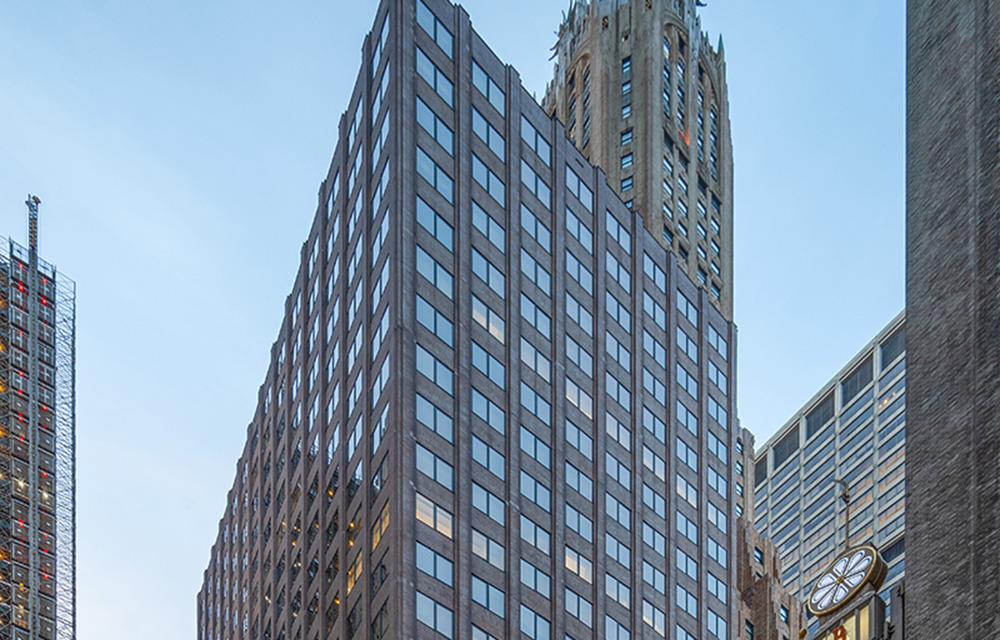
AmTrustRE secures 5,754 s/f lease with GKV Architects at 360 Lexington Avenue
Manhattan, NY AmTrustRE has executed a 5,754 s/f lease at its premier boutique Midtown East office tower, 360 Lexington Ave., with longtime partner GKV Architects. The award-winning firm will occupy a portion of the 14th floor. >“GKV Architects has been a trusted partner to AmTrustRE for over two decades, playing an integral role in shaping and elevating several






Columns and Thought Leadership

A fresh start - by Shallini Mehra and Amit Doshi
For the past several years, the New York City multifamily housing market has been defined by disruption. The combined impact of the HSTPA rent laws and a sharply higher interest rate environment has fundamentally reduced

The anticipated effect of Basel III and ISO 20022 implementation on commercial real estate - by Michael Zysman
July 1, 2025 is the deadline for US banks to begin to adopt Basel III banking standards and July 14, 2025 is the deadline for U.S. banks to adopt ISO 20022 messaging standards. Both will have a significant effect on the banking and commercial real estate (CRE) finance sectors.

The death of the generic offering memorandum: What buyers expect in 2025 - by Kimberly Zar Bloorian
There was a time when an offering memorandum (OM) was pretty bare bones, some photos, a few bullet points on income, and a rent roll thrown in at the back. That used to get the job done. Not anymore. In 2025, buyers are sharper, faster, and more selective. They’re looking

Tri-state capital migrates nationally amid regulation pressure - by Reese Weaver
New York tri-state multifamily investors are increasingly reallocating capital to less-regulated markets across the U.S. as rent control and legislative risk erode returns at home. With over 60% of New York City’s rental housing stock classified as rent-stabilized, the traditional value-add model — buying under-performing buildings,
