


 (2).gif)
News:
Spotlight Content
Posted: December 31, 2024
2024 Year in Review:
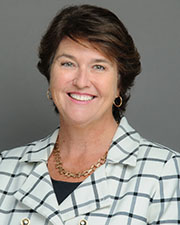
Adelaide Polsinelli, Compass

Vice Chairman
Compass
What was your greatest professional accomplishment or most notable project, deal, or transaction in 2024?
2024 was undeniably the year of the Big City Short, as we witnessed values plummet to lows not seen since the early 2000s. As vice chairman, my responsibility was to chart new paths for my brokers amidst these challenging conditions. This led us to expand our services beyond traditional sales to include note sales, retail, office, and industrial leasing.
The results speak for themselves: we proudly closed 59 transactions that would not have been possible had we limited our scope. By adapting to market dynamics and broadening our expertise, we not only weathered the storm but thrived in an unpredictable market.
What emerging trends will drive investment and development in 2025?
In 2025, sustainability and adaptive reuse will drive investment and development as developers prioritize energy-efficient buildings and repurposing underutilized spaces. The rise of hybrid work will fuel demand for flexible office layouts and mixed-use properties. Logistics and last-mile delivery hubs will expand, driven by e-commerce growth. Multifamily housing will remain strong, with emphasis on affordability and co-living concepts to meet urban demand. Additionally, AI and proptech innovations will enhance decision-making, streamlining acquisitions and property management. Investors will also explore emerging markets and sectors, such as life sciences and data centers, capitalizing on their resilience and long-term growth potential.
Tags:
Spotlight Content
MORE FROM Spotlight Content

2026 Women in Commercial Real Estate: Deborah Smith, The CenterCap Group
What leadership lesson has made the greatest impact on your career? Leadership isn’t about being the smartest person in the room; it’s about creating an environment where the best ideas win.



.png)


Quick Hits
 (2).gif)

Columns and Thought Leadership

CRE Guide Featured Company: Merritt Environmental Consulting Corp.
Merritt Environmental Consulting Corp. (MECC) was established in June of 2009 after being part of a larger engineering firm for almost 20 years. The focus of the company is to assist lending institutions, attorneys, real estate investors, and property owners with environmental concerns. Today, MECC has offices in New York, Florida, and Vermont and has grown into a regional consulting firm serving clients along the East Coast.

Properly serving a lien law Section 59 Demand - by Bret McCabe
Many attorneys operating within the construction space are familiar with the provisions of New York Lien Law, which allow for the discharge of a Mechanic’s Lien in the event the lienor does not commence an action to enforce following the service of a “Section 59 Demand”.

From vacancy to vitality: How adaptive reuse is reshaping Long Island’s CRE landscape - by Andrea Tsoukalas Curto
Adaptive reuse has become one of the most important conversations in commercial real estate today. Long Island has a large inventory of aging retail, office and industrial

2026 Developing Queens: Long Island Board of Realtors advances commercial growth and advocacy in Queens
The Long Island Board of Realtors (LIBOR) Commercial Network continues to play a key role in advancing opportunities and strengthening the commercial real estate landscape across Queens. Through targeted programming and global outreach

September Promotion
