


 (2).gif)
News:
Spotlight Content
Posted: March 28, 2023
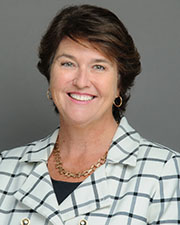
2023 Women in Construction: Frances Graham, Newmark

Senior Managing Director
Newmark
In the past year, what project or accomplishment are you most proud of? Our relocation of the Central Park Conservancy (CPC) to its new space on Fifth Ave. was a monumental transition. The firm occupied 14 E 60th St. as their ‘home base’ for the past 30 years and it was time for something new as they had outgrown that environment. We worked collaboratively to find their new, bright and understated open-concept office. They took to the space and enjoyed putting their personal touch by incorporating graphics of the park throughout the office. It was perfect for the CPC.
What was a pivotal point in your career? Following my design of an office addition for a pharmaceutical company in Central New Jersey, I was approached with an opportunity to go into the field as a project manager, overseeing the construction process. Unbeknownst to me at the time of acceptance–I had found my calling. Being out in the field was eye an opening experience. I was especially drawn to our role – bringing a concept to fruition, from paper to ground-up construction. Perhaps what made this most memorable to me was being the only female project manager working for a New Jersey construction firm at the time.
How can AEC companies recruit more women? To start, having equal pay for women and men within the construction industry should be a top priority; it’s one of the first aspects of any career that one considers. I also think offering a program that provides multiple touch points to varying industry work is essential, especially for young professionals starting their careers. This starts from the top down, with leadership prioritizing diversity and implementing goals for women in construction and a plan for how to achieve them.
What is your favorite building in New York? While taking my New Jersey Architectural Board Exams at Stevens Institute, I had a sweeping view of the Manhattan skyline. Since taking the exams, the Chrysler Building has remained my favorite building in New York –glimmering amidst the city’s skyscrapers; it commands your attention.
Tags:
Spotlight Content
MORE FROM Spotlight Content

2026 Women in Commercial Real Estate: Deborah Smith, The CenterCap Group
What leadership lesson has made the greatest impact on your career? Leadership isn’t about being the smartest person in the room; it’s about creating an environment where the best ideas win.



.png)



Columns and Thought Leadership

2026 Developing Queens: Long Island Board of Realtors advances commercial growth and advocacy in Queens
The Long Island Board of Realtors (LIBOR) Commercial Network continues to play a key role in advancing opportunities and strengthening the commercial real estate landscape across Queens. Through targeted programming and global outreach

Properly serving a lien law Section 59 Demand - by Bret McCabe
Many attorneys operating within the construction space are familiar with the provisions of New York Lien Law, which allow for the discharge of a Mechanic’s Lien in the event the lienor does not commence an action to enforce following the service of a “Section 59 Demand”.

CRE Guide Featured Company: Merritt Environmental Consulting Corp.
Merritt Environmental Consulting Corp. (MECC) was established in June of 2009 after being part of a larger engineering firm for almost 20 years. The focus of the company is to assist lending institutions, attorneys, real estate investors, and property owners with environmental concerns. Today, MECC has offices in New York, Florida, and Vermont and has grown into a regional consulting firm serving clients along the East Coast.

From vacancy to vitality: How adaptive reuse is reshaping Long Island’s CRE landscape - by Andrea Tsoukalas Curto
Adaptive reuse has become one of the most important conversations in commercial real estate today. Long Island has a large inventory of aging retail, office and industrial
September Promotion
