



News:
Spotlight Content
Posted: December 28, 2021
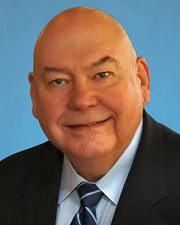
2021 Year in Review: Robert Horvath, Horvath & Tremblay
 Name: Robert Horvath
Job Title: Executive Vice President
Company Name: Horvath & Tremblay
How has your working environment changed over the last year?
We learned that our company was very portable—we were able to pivot very quickly, most of our brokers were very efficient working from home. We did miss the collaborative nature of our trading floors—there is an energy and information flow that does not happen at home. The pandemic reinforced that office collaboration is key to our long-term success as a firm. We are fully back in our offices in the U.S.—in-person collaboration is back—our decisions and results are better as a collective unit.
What was your greatest professional accomplishment or most notable project, deal, or transaction in 2021?
In 2021, our biggest accomplishment was the continuation of our expansion throughout the U.S. In 2021 we continued to rapidly expand, opening three new offices, and adding great people to our organization and support teams throughout the US. It is very clear that we are in the people business – we have to continue to find honest, hardworking people that are client centric.
What are your predictions for your industry in 2022?
Investor demand was high throughout 2021, we anticipate 2022 being a very active year. Interest rates remain low, with a continued product supply issue. Buyers need to be very aggressive when competing on quality assets.
What is the best advice you have received, and who was it from?
Stop using the phone while driving – My wife.
Tags:
Spotlight Content
MORE FROM Spotlight Content

Participate in Developing New York Featuring Westchester County - November 24, 2026
Choose how you’d like to participate in this edition of NYREJ’s Developing New York series featuring Westchester County.



.png)

Quick Hits


Columns and Thought Leadership

2026 Developing Queens: Long Island Board of Realtors advances commercial growth and advocacy in Queens
The Long Island Board of Realtors (LIBOR) Commercial Network continues to play a key role in advancing opportunities and strengthening the commercial real estate landscape across Queens. Through targeted programming and global outreach

2026 Developing Long Island: ERG Commercial Real Estate launches its new Retail Leasing division
North Hempstead, NY ERG Retail Leasing is the dedicated leasing division of ERG Commercial Real Estate, an established full-service commercial real estate brokerage for over 35 years.

From vacancy to vitality: How adaptive reuse is reshaping Long Island’s CRE landscape - by Andrea Tsoukalas Curto
Adaptive reuse has become one of the most important conversations in commercial real estate today. Long Island has a large inventory of aging retail, office and industrial

CRE Guide Featured Company: Merritt Environmental Consulting Corp.
Merritt Environmental Consulting Corp. (MECC) was established in June of 2009 after being part of a larger engineering firm for almost 20 years. The focus of the company is to assist lending institutions, attorneys, real estate investors, and property owners with environmental concerns. Today, MECC has offices in New York, Florida, and Vermont and has grown into a regional consulting firm serving clients along the East Coast.