



News:
Spotlight Content
Posted: April 16, 2019
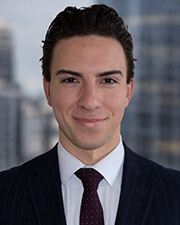
2019 Ones to Watch: James Ashley Johnston, Metropolis Property Group
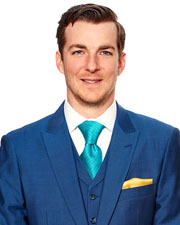 Name: James Ashley Johnston
Title: President
Company Name: Metropolis Property Group
Year that you entered your current field? 2004
List up to three CRE organizations that you are currently a member of:
- Commercial Industrial Brokers Society of Long Island
What do you consider to be your greatest professional accomplishment in the past 12 months?
I launched Metropolis Property Group (MPG) with a goal to create a full-service development company with a strategic business plan that provides real estate services correlated to varied roles across numerous asset classes. To support MPG’s immediate growth, I added consulting and brokerage services to the development company. MPG now offers a suite of services–brokerage, consulting, and development–to support clients and the company vision. Balancing and building all three arms as a start-up company is my greatest accomplishment over the past 12 months. In 2018, MPG’s brokerage arm sold the 170-key Plainview Residence Inn by Marriott for the conversion to a senior housing community for $20.25 million and represented Hippeas in their HQ relocation to Long Island. MPG’s consulting arm provided financial and capital markets consulting, market research, and business development consulting services to public and private companies in CA, GA, VA, SC, NY, and NJ. MPG’s development arm has begun work to co-develop more than 500 units of senior housing in NJ, NY, and RI.
Who or what do you attribute to your success?
The many places I’ve lived and worked and the people I most admire were formative. When I was a child, my family moved bi-annually to a new city and state which taught me to be adaptive, brave in the face of adversity, accepting of change, and willing to take risks, which has benefited me in life and career. My parents modeled these traits in our family and their fields. They encouraged me to follow my passion, but in different ways: my father worked hard for a Fortune 250 company and said, “there might be people who are smarter than you, but they can’t outwork you,” while my mother, an entrepreneur who worked in design, taught me that you don’t have to conform to the corporate standard to be successful in business. In business, my mentor Donald Eversoll taught me to educate myself in three facets of real estate development: Finance, legal, and construction, and he supported me in building a strong rolodex and maintaining relationships with good people.
What advice can you offer to someone who is interested in a career in your industry?
Real estate is a competitive field, and there is a lot to learn that requires both book smarts and street smarts and the ability to relate to and communicate effectively with all kinds of people. The perception is often that real estate developers are wealthy, but for every success story there are 100 failures. There are many people who are fly-by-night successes but to build a sustainable company that can be passed down requires hard work and learning every aspect of the business. You must constantly learn from the past, live in the now, and prepare for the future.
Who are some leaders that you admire and why?
William Zeckendorf was a respectful disrupter in the real estate capital markets. He was a visionary in financing real estate and very conscious of the architectural design and the character of the NYC skyline. Robert Moses was a visionary of urban and suburban land planning. He was motivated by aesthetically appealing functional land planning that juxtaposed nature and the city.
What was your favorite thing to do as a kid?
I loved sports and exploring. When I lived in Plano, Texas, everything in walking distance was a construction site or vacant land: perfect for hide and seek and exploring construction areas and half-built homes. Also, I loved visiting my uncle, a developer in the southeast, and touring his projects, ranging from golf courses to mountain and beach resorts. It was exciting to see a tangible product as it grew from conception to reality. When I wasn’t exploring, I was playing competitive sports such as tennis, basketball, baseball, football, snowboarding, and soccer. I played in college and have never lost my competitive drive.
Tags:
Spotlight Content
MORE FROM Spotlight Content
Participate in Developing New York Featuring Westchester County - November 24, 2026
Choose how you’d like to participate in this edition of NYREJ’s Developing New York series featuring Westchester County.


.png)

Quick Hits
 (2).gif)

Columns and Thought Leadership

From vacancy to vitality: How adaptive reuse is reshaping Long Island’s CRE landscape - by Andrea Tsoukalas Curto
Adaptive reuse has become one of the most important conversations in commercial real estate today. Long Island has a large inventory of aging retail, office and industrial

2026 Developing Queens: Long Island Board of Realtors advances commercial growth and advocacy in Queens
The Long Island Board of Realtors (LIBOR) Commercial Network continues to play a key role in advancing opportunities and strengthening the commercial real estate landscape across Queens. Through targeted programming and global outreach

CRE Guide Featured Company: Merritt Environmental Consulting Corp.
Merritt Environmental Consulting Corp. (MECC) was established in June of 2009 after being part of a larger engineering firm for almost 20 years. The focus of the company is to assist lending institutions, attorneys, real estate investors, and property owners with environmental concerns. Today, MECC has offices in New York, Florida, and Vermont and has grown into a regional consulting firm serving clients along the East Coast.
2026 Developing Long Island: ERG Commercial Real Estate launches its new Retail Leasing division
North Hempstead, NY ERG Retail Leasing is the dedicated leasing division of ERG Commercial Real Estate, an established full-service commercial real estate brokerage for over 35 years.