


 (2).gif)
News:
Spotlight Content
Posted: May 16, 2017
2017 Women in Professional Services: Vivian Martinez of Marks Paneth LLP
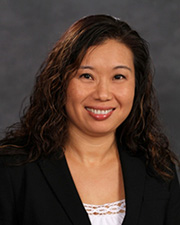
Marks Paneth LLP
Name: Vivian Martinez, CPA
Title: Partner, Real Estate Group
Company Name: Marks Paneth LLP
Years in real estate: 17
What real estate associations or organizations are you a member of? Asian Real Estate Professional Association (AREPA); Long Island Real Estate Group (LIREG); Association of Women Accountants in Real Estate Co-Chair, Real Estate Committee, Nassau Chapter of the New York State Society of CPAs
How have you navigated obstacles to achieve success in your career? Breaking into any professional industry, especially one as male-dominated as accounting and tax, will bring its own unique set of obstacles. For me, I found it was essential to face my challenges head-on, be willing to put in the long hours and hard work expected of me, and continually embrace the passion and dedication that brought me down this career path in the first place. In addition, I was very fortunate at Marks Paneth to have partners and mentors come alongside me and open so many doors to knowledge, experience and professional development over the past 16 years.
How do you play your strengths to your advantage in your career? Emigrating to the U.S. from China as a teenager, I learned early on the importance of being adaptable and forward-thinking. I focused on developing strong communication and interpersonal skills as I learned this new language and way of life. These are skills that continue to serve me well in my diverse, client-facing role as a real estate CPA. Furthermore, I’ve been able to use this experience and heritage to the advantage of my career and clients, applying my knowledge of the Mandarin Chinese language and culture to my position on the Marks Paneth China Desk.
What trends are you seeing so far this year? In New York City, we are seeing real estate deals becoming increasingly more complex and lengthy, due in part to the investment capital growth across borders, uptick in contingency clauses and environmental concerns. In addition, less regulated, private funds are playing an increasingly significant role in the NYC commercial real estate market, fueled by buyout firms, real estate investment trusts and hedge funds loosening their lending restrictions.
What do you do for fun? When not crunching numbers and helping my clients succeed, I enjoy traveling, exploring new cultures and visiting historical sites.
Tags:
Spotlight Content
MORE FROM Spotlight Content
The commercial classroom: 1031 tax-deferred exchanges - by Edwad Smith Jr.
The sale of real estate may trigger capital gains taxes on the net profits of that sale. These taxes may be deferred by participating in a 1031 tax exchange, in essence, by purchasing property(s) to replace the



.png)

Quick Hits


Columns and Thought Leadership
2026 Developing Long Island: ERG Commercial Real Estate launches its new Retail Leasing division
North Hempstead, NY ERG Retail Leasing is the dedicated leasing division of ERG Commercial Real Estate, an established full-service commercial real estate brokerage for over 35 years.

2026 Developing Queens: Long Island Board of Realtors advances commercial growth and advocacy in Queens
The Long Island Board of Realtors (LIBOR) Commercial Network continues to play a key role in advancing opportunities and strengthening the commercial real estate landscape across Queens. Through targeted programming and global outreach

From vacancy to vitality: How adaptive reuse is reshaping Long Island’s CRE landscape - by Andrea Tsoukalas Curto
Adaptive reuse has become one of the most important conversations in commercial real estate today. Long Island has a large inventory of aging retail, office and industrial

CRE Guide Featured Company: Merritt Environmental Consulting Corp.
Merritt Environmental Consulting Corp. (MECC) was established in June of 2009 after being part of a larger engineering firm for almost 20 years. The focus of the company is to assist lending institutions, attorneys, real estate investors, and property owners with environmental concerns. Today, MECC has offices in New York, Florida, and Vermont and has grown into a regional consulting firm serving clients along the East Coast.