


 (2).gif)
News:
Spotlight Content
Posted: December 20, 2016
2016 Year in Review: Michael Romer, Romer Debbas LLP
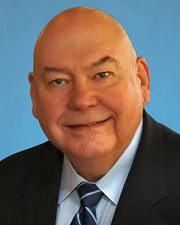
 Michael Romer, Romer Debbas LLP
Name & Title: Michael Romer, Esq., Managing Partner
Company Name: Romer Debbas LLP
What project, transaction, market trend or product had the greatest impact on your industry this year?
Simply put, record low interest rates and continued foreign investment helped drive the 2016 real estate market. It is quite possible that we may never see mortgage rates this low ever again.
2016 provided willing investors and property owners with a real opportunity to obtain inexpensive financing and many took advantage of the opportunity.
As for foreign investment, the trend certainly continued in 2016 and helped support the ever growing condominium market as well as the small to large scale commercial market.
How will you be supercharging your productivity in 2017?
As a firm, we are committed to continued growth in 2017. Our vision since inception in 2011 was to create a full service real estate firm handling commercial and residential acquisitions/sales, office and retail leasing, offering plans and development, co-op/condo board representation, immigration/EB-5, estates/trusts, and real estate related litigation. We have successfully completed all pieces of the puzzle and look to bolster each group with like-minded attorneys in 2017.
What emerging trends will drive investment and development in 2017?
Now that the election is over, we are finding that investors have taken a breath and are realizing that the world goes on. Regardless of one’s political views and affiliations, it is hard to imagine that having a New York real estate developer in the White House will be bad for business. Although cost of financing is likely to continue to increase over time, continued confidence (both domestic and foreign) in the New York real estate market as a safe investment should help make 2017 a successful year.
Tags:
Spotlight Content
MORE FROM Spotlight Content
Participate in Developing New York Featuring Westchester County - November 24, 2026
Choose how you’d like to participate in this edition of NYREJ’s Developing New York series featuring Westchester County.



.png)

Quick Hits
 (2).gif)

Columns and Thought Leadership

From vacancy to vitality: How adaptive reuse is reshaping Long Island’s CRE landscape - by Andrea Tsoukalas Curto
Adaptive reuse has become one of the most important conversations in commercial real estate today. Long Island has a large inventory of aging retail, office and industrial

CRE Guide Featured Company: Merritt Environmental Consulting Corp.
Merritt Environmental Consulting Corp. (MECC) was established in June of 2009 after being part of a larger engineering firm for almost 20 years. The focus of the company is to assist lending institutions, attorneys, real estate investors, and property owners with environmental concerns. Today, MECC has offices in New York, Florida, and Vermont and has grown into a regional consulting firm serving clients along the East Coast.

2026 Developing Long Island: ERG Commercial Real Estate launches its new Retail Leasing division
North Hempstead, NY ERG Retail Leasing is the dedicated leasing division of ERG Commercial Real Estate, an established full-service commercial real estate brokerage for over 35 years.

2026 Developing Queens: Long Island Board of Realtors advances commercial growth and advocacy in Queens
The Long Island Board of Realtors (LIBOR) Commercial Network continues to play a key role in advancing opportunities and strengthening the commercial real estate landscape across Queens. Through targeted programming and global outreach