News: Spotlight Content

2015 Year in Review - James Ricca

James Ricca, Forchelli,  Curto, Deegan, Schwartz, Mineo & Terrana, LLP James Ricca, Forchelli,
Curto, Deegan, Schwartz, Mineo & Terrana, LLP
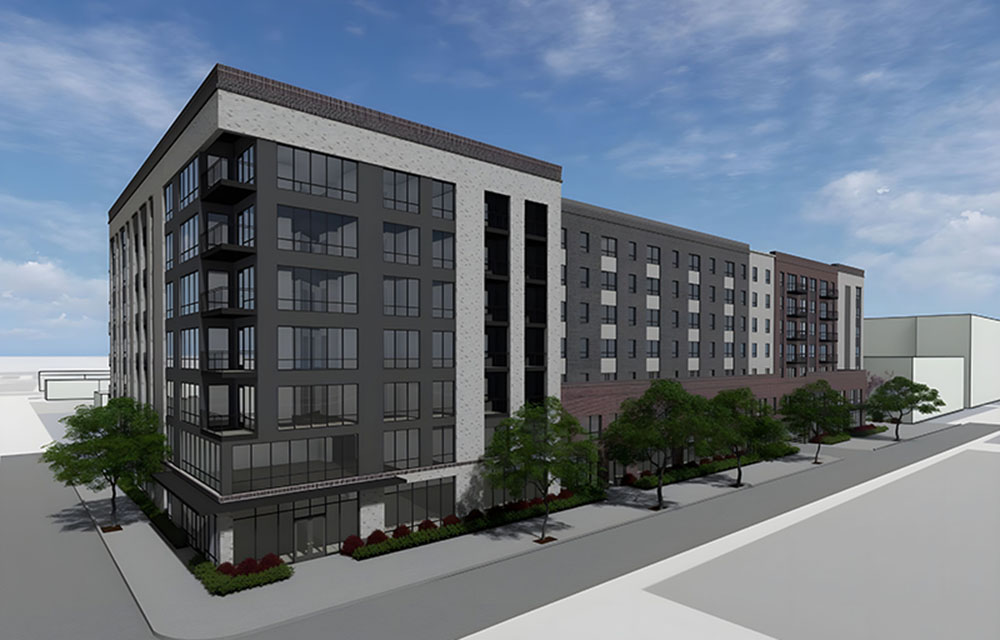
What was your most notable project, deal, transaction or professional achievement in 2015? Representing a major commercial lender, we negotiated and closed a $37.25 million first mortgage acquisition loan accompanied by a $15 million second mortgage construction loan for a commercial/industrial property located in Suffolk County, that was dependent on receiving IDA benefits. The loan was also cross-collateralized by two unencumbered Queens industrial properties. The property, comprised of 419,265 square feet of  research & development/office space and located at 500 Commack Road, Commack, New York, is already being leased by a major pharmaceutical company, a major technology company and a major hospital.  The deal was complicated and challenging on a number of levels, but represents an important economic trend for Long Island and I believe will have a significant impact on the local economy. In addition, a very exciting and positive event that I was involved with and am particularly proud of was the merger of the law firm Dornfeld & Nasis, LLP with Forchelli, Curto, Deegan, Schwartz, Mineo & Cohn.  Dan Dornfeld and Elbert Nasis bring with them enormous talent and expertise in real property law, as well as other areas of their practice. What real estate project, transaction, market trend or product had a significant impact on your industry in 2015? We saw an increase in refinancing activity.  Large numbers of commercial real estate owners and operators refinanced existing mortgage loans in an effort to lock-in low interest rates, in anticipation of interest rate hikes by the Federal Reserve. How will you be supercharging your productivity in 2016? By focusing on growth and taking the time to work with and mentor our younger associate  attorneys.  It is important to bring along the next generation by giving them increased exposure and responsibility.  I believe those two things energize a firm. What emerging trends will drive investment and development in 2016? Redeveloping and repurposing stagnant and underutilized industrial properties on  Long Island and in the boroughs. Similar to the Commack Road project, the Long Island real estate industry and economy will continue its climb out of the doldrums and grow, led by real estate professionals with vision.
MORE FROM Spotlight Content

Over half of Long Island towns vote to exceed the tax cap - Here’s how owners can respond - by Brad and Sean Cronin

When New York permanently adopted the 2% property tax cap more than a decade ago, many owners hoped it would finally end the relentless climb in tax bills. But in the last couple of years, that “cap” has started to look more like a speed bump. Property owners are seeing taxes increase even when an
READ ON THE GO
DIGITAL EDITIONS
Subscribe
Columns and Thought Leadership
Properly serving a lien law Section 59 Demand - by Bret McCabe

Properly serving a lien law Section 59 Demand - by Bret McCabe

Many attorneys operating within the construction space are familiar with the provisions of New York Lien Law, which allow for the discharge of a Mechanic’s Lien in the event the lienor does not commence an action to enforce following the service of a “Section 59 Demand”.

The strategy of co-op busting in commercial real estate - by Robert Khodadadian

The strategy of co-op busting in commercial real estate - by Robert Khodadadian

In New York City’s competitive real estate market, particularly in prime neighborhoods like Midtown Manhattan, investors are constantly seeking new ways to unlock property value. One such strategy — often overlooked but
Oldies but goodies:  The value of long-term ownership in rent-stabilized assets - by Shallini Mehra

Oldies but goodies: The value of long-term ownership in rent-stabilized assets - by Shallini Mehra

Active investors seeking rent-stabilized properties often gravitate toward buildings that have been held under long-term ownership — and for good reasons. These properties tend to be well-maintained, both physically and operationally, offering a level of stability
How much power does the NYC mayor really have over real estate policy? - by Ron Cohen

How much power does the NYC mayor really have over real estate policy? - by Ron Cohen

The mayor of New York City holds significant influence over real estate policy — but not absolute legislative power. Here’s how it breaks down:

Formal Legislative Role

Limited direct lawmaking power: The NYC Council is the primary