
Manhattan, NY 200E20TH, the CetraRuddy-designed architectural masterwork that brought a curved, contemporary sensibility to Gramercy’s Beaux-Arts streetscape, has sold out. All 52 condominium residences at the corner of 20th St. and Third Ave. are now spoken for, culminating with the contract on the Sky Garden Penthouse. Developed by The Tidhar Group in partnership with Yoel Shargian and with Douglas Elliman Development Marketing leading sales, the boutique condominium stands as an example of the neighborhood’s evolution.
“New Yorkers love Gramercy for its history and its charm, and that holds true even for buyers who appreciate contemporary design,” said Yoel Shargian, head of development for 200E20TH. “We saw the opportunity to bring something new to a neighborhood that treasures its past, and I couldn’t be prouder that 200E20TH is now part of that legacy.”
“Buyers came to us looking for the character of Gramercy and a home that felt fresh and inspiring — they found both at 200E20TH,” said Elena Sarkissian, director of sales with Douglas Elliman Development Marketing, who led a team of top agents including Jane Powers and Ariel Tirosh. “From our sales launch to selling the magnificent Sky Garden Penthouse, the response has been tremendous from day one. Working on this project has been a highlight of my career.”
The final home to sell is the Sky Garden Penthouse (also known as Penthouse A), a full-floor, three-bedroom, three-and-a-half-bathroom with 2,231 s/f of appointed interiors, surrounded by views of the garden and skyline. The home’s private rooftop terrace is made for entertaining and relaxing with a fireplace, barbecue, dining area, and lounge seating. The residence is in contract for $7.22 million.
Long defined by its historic low-rises and a private park, Gramercy has welcomed 200E20TH as a new kind of neighbor. CetraRuddy’s design pairs lines and metalwork that echo the neighborhood’s Beaux-Arts roots with a thoughtful approach to sustainability in a new 19-story building. A high-performance curtain wall, custom in-swing casement windows, and a modulated façade bring natural light and fresh air into every home, and recycled materials were used throughout construction.
Residents enjoy a collection of curated amenities, including a doorman lobby, a fitness center, a landscaped rooftop terrace, a children’s playroom, and a secret garden. The building’s corner retail space is home to [solidcore], strength-training studio.
Now fully sold, 200E20TH comprises a collection of 52 residences ranging from one- to three-bedroom homes, including three full-floor penthouses with private terraces.
]]>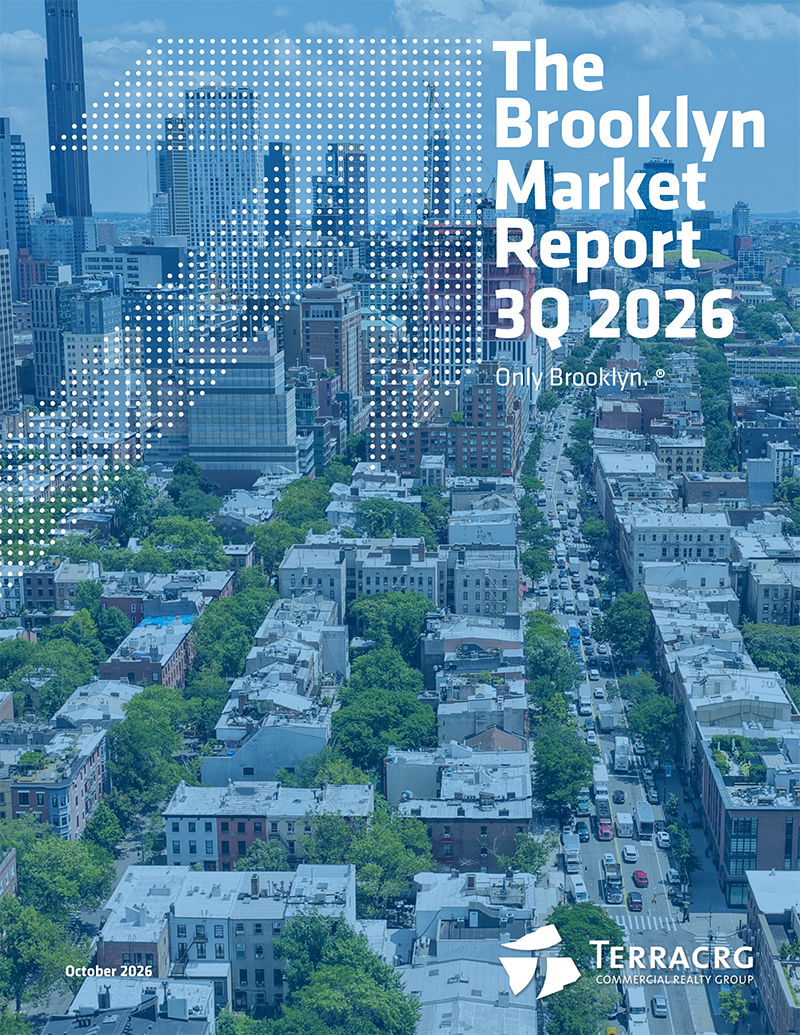 Brooklyn, NY TerraCRG released its 3Q 2026 Brooklyn Market Report. Through the first three quarters of 2026, TerraCRG verified 1,036 commercial investment sales in Brooklyn totaling $5.88 billion. That is a 21% increase in dollar volume and a 13% increase in transactions over the same period of 2025 (914 transactions, $4.84 billion).
At its current pace, Brooklyn is on track to close roughly 1,381 transactions and $7.8 billion in 2026, well above the borough’s 10-year average of approximately 1,177 transactions and $6.7 billion. The average deal size rose to $5.67 million, up from $5.3 million in the first three quarters of 2025.
Activity steadied in the third quarter after an exceptionally strong first quarter. Q3 2026 closed $1.72 billion across 316 transactions, up 12% in dollar volume from Q2 2026 ($1.54 billion, 317 transactions). Q3 dollar volume was 12% below Q3 2025’s $1.96 billion, while the number of transactions held flat.
Development and industrial properties led year-to-date growth. Asset class highlights for 2026 year-to-date compared with the same period of 2025:
• Development: $1.37 billion across 154 transactions, up 53% in dollar volume, led by 47 Hall St. ($121.4 million).
• Industrial: $807 million across 69 transactions, up 244% in dollar volume, led by 72 Caton Pl. ($145.5 million).
• Office: $356 million across 35 transactions, up 37% in dollar volume and 35% in deal count, led by 101 Pennsylvania Ave. ($89.9 million).
• Retail: $495 million across 95 transactions, up 31% in dollar volume and 28% in deal count.
• Multifamily: $1.21 billion across 277 transactions. Deal count rose 14% while dollar volume declined 15%; 118 Hope St. ($122.5 million) is the year’s largest multifamily sale.
• Mixed-use: $1.2 billion across 383 transactions, the most of any asset class. Deal count rose 14% while dollar volume dipped 4%.
The year’s largest transaction was the $161.5 million sale of 4915 10th Ave. in Borough Park. The 10 largest trades of 2026 totaled $1.09 billion. Four of them closed in the third quarter: 118 Hope St. in Williamsburg ($122.5 million), 409 Eastern Pkwy. in Crown Heights ($109 million), 101 Pennsylvania Ave. in East New York ($89.9 million) and 485 Fulton St. in Downtown Brooklyn ($83.5 million).
Greater Downtown Brooklyn led all regions with $1.51 billion in year-to-date volume. By neighborhood, Williamsburg led the borough with $743 million across 46 deals and was again the top neighborhood in Q3, with $223 million. Crown Heights ($502 million) and Borough Park ($400 million) followed, while East Flatbush recorded the most transactions, with 71 deals.
“What we’re seeing across Brooklyn reinforces our confidence in the depth and strength of this market,” said Dan Marks, CEO of TerraCRG. “Year-to-date dollar volume is up 21%, and following a strong first quarter, activity in the second and third quarters returned to historical averages. Development sites and industrial properties have attracted the most capital this year, while multifamily transaction counts have increased even as dollar volume trails last year. With the borough on pace to finish well above its 10-year average, we expect a busy close to 2026.”
TerraCRG has been tracking all commercial real estate transactions in Brooklyn for more than 15 years.
Methodology: The report analyzes Brooklyn investment sales recorded from January through September 2026 across multifamily, mixed-use, retail, industrial, office, development and special use properties. It includes only commercially zoned, investment-grade properties over $500,000. Data is sourced from NYC.gov and PropertyShark and verified by the TerraCRG team.
]]>
Three brothers own two walk-ups in Queens. Their father bought the first in 1978. Rent regulation changed the math in 2019, the youngest brother is 68, and none of their kids wants a building. They sell.
A DST broker arrives with a solution. Complete a 1031 exchange into a Delaware Statutory Trust. Defer the tax, keep the income, drop the tenants. Everyone at the table nods. The listing broker nods. The attorney nods. The CPA nods.
Six years later the DST sells. The brothers are 74, 76 and 79. They have 45 days to identify replacement property. The DST broker arrives with another solution. He is paid again.
He will arrive again at 80. And at 86.
Why the broker keeps coming back
DSTs became 1031 eligible in 2004 and a sales model grew up around them. Sell the DST, earn a commission, wait five to seven years, sell another. The commission and fees on a traditional DST run several percentage points of the equity. On $1 million, that is tens of thousands of dollars every cycle. Over a retirement, the same dollars get sold three or four times.
That is why every DST article in this paper ends at the closing. The writer is paid at the closing. The investor’s life continues.
The exchange that ends the exchanges
A 721 DST starts the same way. The seller completes a 1031 exchange into a DST that owns real property. After a holding period, the DST contributes that property to the operating partnership of an established REIT and the investor receives operating partnership units. Section 721 keeps the tax deferred.
Then the cycle stops. The investor owns a slice of hundreds of properties instead of one building in one submarket. The REIT buys and sells inside the portfolio. There is no identification deadline, ever again. Most programs offer a redemption window, so the investor can sell a piece when cash is needed instead of waiting for a building to trade. When the investor dies, the heirs receive a stepped-up basis and can redeem units for cash. They get the value without the building. In our practice that is what the kids want every time.
So why would anyone not do a 721? There is one reason. Operating partnership units cannot be exchanged again under Section 1031. The 721 is the last exchange. An owner who still wants to buy buildings should stay with a traditional DST. An owner who is done should not be sold another one.
Why we can say this
Our practice began with traditional DSTs, and we still sell them when they fit. We stopped recommending them to investors who told us they were done. This is not a competitor attacking a product it cannot offer. It is a firm that offers both telling you which one it recommends, and why.
The other difference is how we are paid. We are a fee-only fiduciary. We credit 100% of the DST commission and broker-dealer fees back to the client as additional investment equity. On that $1 million exchange, the tens of thousands of dollars go into the investment instead of to a salesman. Beyond that, clients can keep their own advisor, work with us directly, or hire us. That decision belongs to our clients.
That structure is why other advisors, including some of the largest firms in the country, send their clients to us to execute the exchange. A commission model cannot do it.
For the professionals at the table
If you are the listing broker, the attorney or the CPA, your seller will ask you about DSTs. Give them two questions for whoever is selling one.
What happens when this property sells?
How are you paid when it does?
If the answer to the second is another commission, they have their answer to the first. The DST broker will be back in six years. So will the deadline.
Your seller spent a lifetime building a portfolio in the hardest real estate market in the country. The exit should take one transaction, not four.
Carl Sera, CMT, is president and managing principal of Sera Capital Management, LLC, Annapolis, MD.
]]>
Choose how you’d like to participate in this edition of NYREJ’s Developing New York series featuring Westchester County.
Share Your Industry Perspective
Highlight trends, challenges, and opportunities facing the Westchester County real estate industry by participating in our Industry Outlook.
ONLINE
Basic Profile
One response published on NYREJ.com
FREE
- One response published on NYREJ.com
- Headshot, name, title, and company
Want guaranteed print placement?
Have your response included in print and digital edition. View Example
$95 for Corporate Connect members · $195 for non-members
PRINT · DIGITAL · ONLINE · SOCIAL MEDIA
Enhanced Profile
Branded profile with expanded editorial coverage. View Example
$395 for Corporate Connect members · $495 for non-members
- Two responses published in print and digital edition
- Four responses published on NYREJ.com
- Branded profile with headshot, name, title, logo, and website
- Digital Boost included (dedicated social media post promoting your profile)
Featured Firm Profile
A larger branded presentation of your firm. View Example
$595 for Corporate Connect members · $795 for non-members
- Four responses published in print, the digital edition, and on NYREJ.com
- Expanded branded feature with headshot, logo, and website
- Firm details including headquarters, services, and markets served
- Digital Boost included (dedicated social media post promoting your feature)
Byline & Advertising
Your bylined article with an advertisement below. View Example
$795 for Corporate Connect members · $1,095 for non-members
- 700–900-word bylined article featuring headshot, name, title, and company
- Article published in print, the digital edition, and on NYREJ.com
- Article in the upper portion, with your full-color half-page advertisement below
- Digital Boost included (dedicated social media post promoting your article)
Showcase Your Project
Showcase projects under construction or recently completed and recognize the firms helping bring them to life.
ONLINE
Basic Project Profile
FREE
- 150-200 words published online only
- 1 Image
Want guaranteed print placement?
Have your project included in NYREJ print and digital edition. View Example
$295 for Corporate Connect members · $495 for non-members
PRINT · DIGITAL · ONLINE· SOCIAL MEDIA
Enhanced Project Profile
Branded project profile with expanded editorial coverage. View Example
$495 for Corporate Connect members · $695 for non-members
- 350-450 words published in print and digital edition
- 2 images
- Branded project profile with company name, contact information, website, and logo
- Digital Boost included (dedicated social media post promoting your project)
Premium Project Profile
A larger branded presentation for your project profile. View Example
$895 for Corporate Connect members · $1,095 for non-members
- 650-750 words published in print and digital edition
- 3-4 Images
- Branded project profile with company name, contact information, website, and logo
- Digital Boost included (dedicated social media post promoting your project)
Advertising Opportunities
Promote Available Space
Market buildings, parks, available space, and development opportunities in Westchester County to a targeted audience.
Who Should Participate:
Property Owners • Developers • Brokers • Leasing Teams • Industrial Park Operators
Promote Products and Services
This spotlight also offers a targeted opportunity to promote products, services, and capabilities to decision-makers in the design-build sector and align their brand with some of the region’s most active projects.
Who Should Participate:
Project Team Members • Subcontractors • Building Product Manufacturers • Professional Service Providers
Advertising Rates
Quarter page (4.67 w x 5.77 h)
$495 Non-member | $395 Connect Member
Half page (9.5 w x 5.8 h)
$895 Non-member | $795 Connect Member
Full page (9.5 w x 12.375 h)
$1,195 Non-member | $995 Connect Member
For advertising reservations or questions, please contact [email protected]
Deadline for Ad Materials: November 20, 2026
View the Fall 2026 Developing Long Island Spotlight Here
]]>
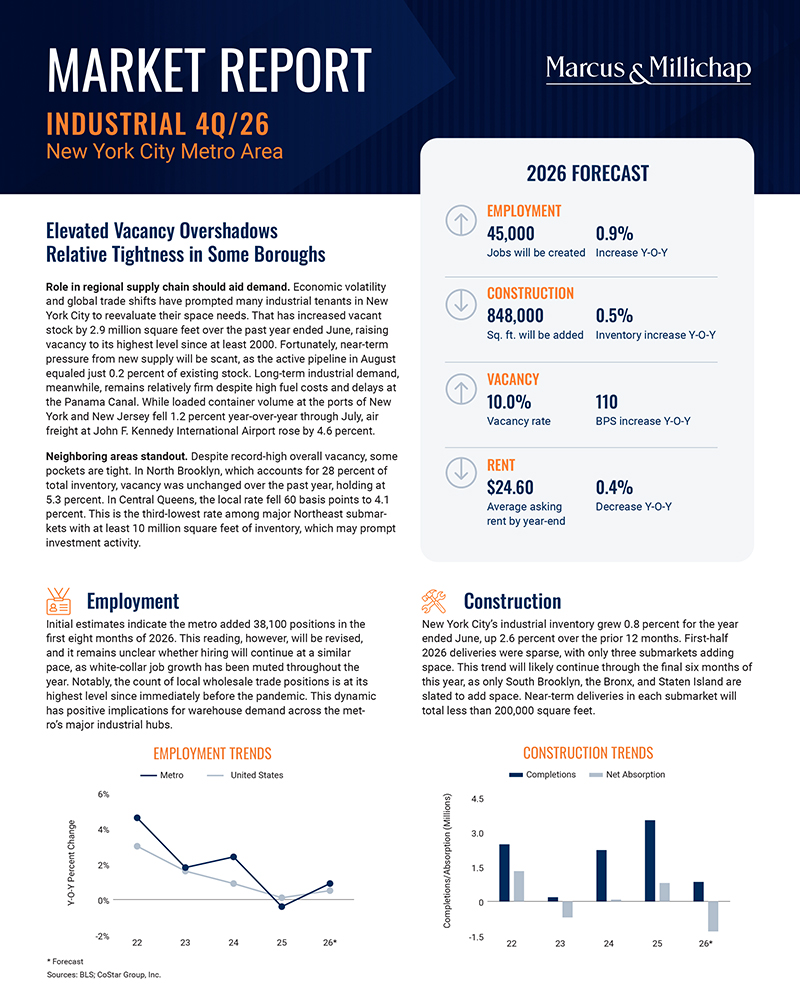 Manhattan, NY Marcus & Millichap has published its fourth-quarter 2026 New York City Industrial Market Report.
“New York City’s industrial market is showing a clear split between elevated overall vacancy and much tighter conditions,” said Jason Moskowitz, managing director, market leader. “North Brooklyn and Central Queens remain strong, showing how sharply performance varies by location as the broader market adjusts to higher availability. Multistory industrial vacancy remains the number one culprit of vacant space in the NYC marketplace.”
Key findings include:
• Metro industrial vacancy reached 9.7% in June, after tenants gave up more than 1.1 million s/f during the second quarter, the second-worst quarterly total in 24 years.
• Select submarkets remain notably tight, with North Brooklyn vacancy holding at 5.3% and Central Queens falling 60 basis points to 4.1%.
• New development remains near non-existent, with only three submarkets adding industrial space during the first half and the active August pipeline equal to just 0.2% of existing inventory.
• Average asking rents declined to $24.56 per s/f in June, returning to year-end 2023 levels, although rents increased in Northwest Queens and South Brooklyn.
• Investment activity strengthened, with deal flow rising 26% year-over-year in the 12 months ended June and the first-half transaction count reaching its strongest six-month level since the second half of 2022.
“Owner/users are the main driver of transaction activity, particularly in smaller deals,” said Moskowitz. “At the same time, institutional players have an almost insatiable demand for the rare 50,000 s/f plus sites that become available, creating activity across multiple investment strategies.”
]]>These growth plans are in line with strong occupancy levels recorded in flex offices around the world, with global occupancy reaching a record high of 85% in 2026 according to Workthere’s report. San Francisco recorded the highest occupancy at 97%, followed by other mature flex markets including Madrid (91%), London (90%) and New York (90%).
Occupancy was also robust outside of global business centres. The majority (86%) of markets reported occupancy levels above 80% including Bengaluru, Ho Chi Minh City and Mexico City, as well as more traditional hubs like Singapore and Hong Kong.
Part of the strong occupancy levels can be attributed to the increasing adoption of flex by corporates. Their requirements are generally larger, with half (48%) of them seeking more than 50 desks, compared to start-ups and SMEs where 85% seek fewer than 20 desks. Multinationals have the largest requirements, with a quarter (23%) looking for more than 200 desks.
Corporates also tend to stay in situ longer than other occupier types, at 3.9 years compared to 2.6 years for start-ups and SMEs. The longer commitment brings greater income but also the potential of longer void periods. Three quarters (74%) of flex spaces with up to 25 desks are re-let within three months, while half (53%) of suites over 26 desks take longer than four months to re-let.
Cal Lee, global head of Workthere, said, “The global flexible workspace market is proving its growing maturity as a sector, with occupancy reaching record levels and operators looking to expand in an effort to meet growing demand. Historically, take-up has been dominated by established operators like IWG and WeWork expanding but recently there has been a proliferation of growing operators coming through and establishing themselves in the global market such as The Executive Centre and Industrious. Clearly, the best performing cities are the ones that have strong business ecosystems, but smaller hubs are also performing well. Businesses of all sizes continue to recognise the value that flex offers them.”
This research analysed 199 survey responses from operators in 39 countries spanning Europe, the Americas and Asia Pacific. Data collected between 9th June and 31st July 2026.
]]>The expansion comes as South Florida continues to emerge as a major business hub, attracting new corporate headquarters, regional offices and companies expanding their presence across the market. Based in Boca Raton, TMA’s new office will serve organizations throughout Palm Beach, Broward and Miami-Dade counties, allowing the firm to work more closely with existing clients while developing new relationships across South Florida’s growing business and real estate communities.
“South Florida is already an important market for TMA, and opening a dedicated office is a natural next step for our firm,” said Ted Moudis, AIA, senior principal and founder of Ted Moudis Associates. “We’re proud of the work we’re already doing and the relationships we’ve built across the region, and we’re excited to be closer to those clients while expanding our reach and serving more organizations as they establish and grow their presence here.”
Leading TMA’s South Florida office is Jennifer Adams, associate and studio design principal, who recently returned to the firm. An accomplished workplace designer with extensive experience in the South Florida market, Adams brings a vast array of knowledge of the region’s business, real estate and design communities, as well as established relationships and a strong track record leading complex workplace projects for clients across industries. Drawing on this experience and expertise, Adams will lead TMA’s work throughout the region, partnering with both existing and new clients to help shape the continued evolution of the firm’s South Florida practice.
“I’ve spent a significant part of my career working in South Florida and have seen firsthand how much the business and workplace landscape has evolved,” said Adams. “There’s a tremendous amount of energy in the market, with both established organizations and new companies thinking differently about what they need from their workplaces. I’m excited to be back at TMA and to build on the relationships I’ve developed across the region as we continue to serve our existing clients and create new opportunities for the firm throughout South Florida.”
“Our approach has always been rooted in understanding our clients, their businesses and how their people work,” said Christopher Savoglou, senior principal at Ted Moudis Associates. “Having a team on the ground allows us to bring that approach to South Florida in a much more meaningful way, combining local knowledge and relationships with the resources and expertise of the broader firm. We see this as an important market for TMA for the long term.”
]]>Through the TAP program, ULI NY assembles multidisciplinary teams of experienced real estate and land use professionals from its membership to provide independent, actionable recommendations to public agencies, nonprofits and community stakeholders. Participants gain access to expertise in planning, architecture, development, finance, engineering and related disciplines to address challenges involving housing, neighborhood revitalization, infrastructure, climate resilience and underutilized properties.
“ULI New York occupies a unique position in the region’s economic development and land use landscape, bringing together public and private sector leaders in an independent, nonpartisan forum dedicated to exchanging ideas and expertise,” said Felix Ciampa, executive director of ULI New York. “Through our TAP program, we draw on this deep network of professionals to provide communities with multidisciplinary expertise and actionable recommendations to address their most pressing land use challenges. For over a decade, this collaborative approach has helped shape communities across New York.”
Key dates for the 2027 TAP program include:
• Call for Proposals Opens: October 22, 2026
• Applicant Information Sessions: November 4 and November 16, 2026
• Application Deadline: December 16, 2026
• Selected Applicant Notifications: January 2027
• Technical Assistance Panels Conducted: Spring and summer 2027
• Recommendations Delivered: Fall 2027
Connecting Expertise with Community Needs
ULI NY Technical Assistance Panels are intensive, two-day workshops addressing specific challenges identified by sponsoring organizations. Each panel draws on senior-level professionals with expertise tailored to the project, which may focus on a property, neighborhood, redevelopment opportunity or broader planning and policy issue.
Following briefings on the scope at hand, panelists tour the study area, interview stakeholders and evaluate potential solutions. Preliminary recommendations are presented at the workshop’s conclusion, followed by a comprehensive written report. The process provides sponsors with independent guidance to inform planning decisions, evaluate development alternatives and establish priorities for future action.
TAP Program Helps Address Critical Challenges Facing New York Communities
ULI NY’s TAP program has supported public agencies and community organizations in addressing complex land use, infrastructure and sustainability challenges. Recent engagements include:
Decarbonizing New York City’s Affordable Co-ops (2025): Working with the NYC Mayor’s Office of Climate & Environmental Justice, ULI NY convened real estate, sustainability, finance and housing experts to examine how large limited-equity housing cooperatives can comply with Local Law 97 while preserving affordability. The resulting report outlined a phased, 25-year decarbonization strategy, recommending stronger interagency coordination, accessible financing, expanded educational resources and solutions to regulatory barriers. The roadmap offers policymakers and housing stakeholders strategies to reduce emissions while protecting affordable housing.
Addressing Environmental Inequities Along the Cross Bronx Expressway (2024): At the request of the Reimagine the Cross Bronx study team (the New York City Department of City Planning, New York City Department of Health and Mental Hygiene, as well as the City’s and State’s Departments of Transportation), ULI NY assembled a multidisciplinary panel to explore solutions to longstanding environmental and community impacts associated with the Cross Bronx Expwy. Recommendations included reconnecting neighborhoods divided by the highway, improving pedestrian access, reducing traffic-related pollution and noise, and mitigating flooding and extreme heat. The report provides a framework for investments to improve public health, environmental conditions and neighborhood livability.
Reimagining Montefiore Einstein-Morris Park as a Transit-Connected Campus (2024): ULI NY partnered with Montefiore Health System to develop recommendations for transforming its Morris Park campus in the Bronx into a regional healthcare, wellness and employment destination. With a new Metro-North station planned for 2027 and a proposed rezoning that could support six million to nine million s/f of development and an estimated 15,000 jobs, the panel identified strategies to improve connectivity, integrate the campus with surrounding neighborhoods and expand economic opportunities. The resulting report provides a framework to inform Montefiore’s master planning and help stakeholders capitalize on major transit and development investments.
These engagements demonstrate how ULI NY connects public-sector decision-makers with specialized industry expertise to develop practical solutions to challenges involving housing affordability, environmental sustainability, infrastructure and community development.
How to Apply
Organizations interested in participating are invited to submit proposals identifying a specific land use, planning or development challenge. Selected sponsors work with ULI NY’s TAPs Steering Committee to refine the panel’s central questions and are responsible for preparing background materials, coordinating site visits and identifying stakeholders for interviews.
The fee for a two-day TAP is $25,000 in New York City and generally $35,000 outside the city, depending on travel requirements. This fee supports staff, administrative and operational expenses. Volunteer consultation from ULI NY experts as part of the TAP program offers an estimated value of more than $100,000 to communities.
For information about the program, application requirements and past engagements, visit https://newyork.uli.org/get-involved/taps/. Questions may be directed to Chris Karakul at [email protected].
]]>
The 1031 exchange is potentially one of the most powerful wealth-building tools in real estate. It allows investors to sell a property, defer capital gains taxes, and roll every dollar of equity into a new, like-kind asset. Simple enough on paper. But in practice, the timeline can be often be brutal.
Under Section 1031 of the Internal Revenue Code, Congress established two non-negotiable deadlines for investors that govern every 1031 exchange. The first is the 45-day identification period, which begins the day you close on the sale of your relinquished property. From that moment, you have exactly 45 calendar days including weekends and holidays to formally identify your potential replacement property in writing. The identification must be unambiguous, signed by you, and delivered to an Exchange Accommodator.
The second deadline is the 180-day exchange period, which runs concurrently with the 45-day window and gives you a hard stop at 180 calendar days from the sale to close on your replacement property.
Miss either of these deadlines, and the IRS treats the exchange as failed, and that your deferred capital gains come due immediately.
1031 Exchange Timeline and Failed Exchanges
Unfortunately, it is not uncommon for 1031 exchange investors to try and chase down potential replacement properties on their own, only to have the deal collapse at the end of the 1031 exchange deadline. The potential reasons for this are limitless.
For example, maybe the seller gets a better offer at the eleventh hour and walks away, leaving the exchange investor stranded with days — not weeks — to regroup. Maybe the inspection comes back with a laundry list of nightmares like foundation cracks, a roof leak, or even toxic mold. Maybe the appraisal comes in low and the lender pulls the plug, or the zoning board throws a last-minute curveball that turns the investor’s exchange dream deal into a regulatory minefield.
Or maybe there’s just nothing worth buying. The investor has combed through every listing within a fifty-mile radius; they’ve driven past boarded-up duplexes and overpriced strip malls. They’ve stretched their 1031 exchange search criteria so thin that they’re now considering properties they wouldn’t have glanced at six months ago. And still, nothing pencils out. The numbers don’t work, the assets unappealing, or the cap rates are so compressed that they’d be lucky to break even after factoring in property taxes, maintenance costs, and management fees (let alone if a tenant skipped on paying rent as is so often the case in the multifamily/residential world these days).
It’s in these moments that the clock starts to feel less like a countdown and more like a ticking time bomb. That’s when the panic really sets in. And panic, as any seasoned investor knows, is the enemy of good decision-making.
Some Dangers of Scrambling for a Replacement Property
When the 45-day window is closing fast, otherwise rational investors start making irrational moves. The pressure to complete the exchange by any means necessary leads to a series of dangerous mistakes.
As of October 2026, Kay Properties & Investments has helped more than 4,000 investors complete over 10,000 1031 exchange Delaware Statutory Trust investments, and so we have seen how panicked 1031 exchange investors can fall into some of these preventable traps.
• Overpaying for a Replacement Property
First, many 1031 exchange investors, in their panicked state, can overpay for an asset. The reason is because desperate buyers often throw logic out the window. They bid over the asking price, waive contingencies, and stretch their budgets beyond what the numbers justify all to avoid giving Uncle Sam a massive tax check.
• Prey for Unscrupulous Sellers
Second, predatory sellers smell desperation from a mile away. Unscrupulous agents and property owners know exactly when an investor is up against a 1031 deadline. They›ve seen it before. They›ll inflate prices, hide material defects, and rush due diligence timelines, banking on the fact that the buyer has no leverage.
We have seen many investors who wish they had consulted with Kay Properties prior to investing in something they wish they hadn’t.
• Little Attention to Due Diligence
A third scenario we have seen involves investors who ignore important due diligence protections. In a normal transaction, you’d take your time with inspections, appraisals, environmental reports, and title searches. In a rushed 1031 exchange, those steps often get compressed into a matter of days. That means overlooked structural issues, undisclosed environmental contamination, zoning surprises, or tenant problems surface after closing. By then, it’s too late. The property is yours, and so are the headaches.
The bottom line is that buying a bad property under the duress of a closing 1031 exchange deadline can cost you far more than an unwanted tax bill.
Enter the Delaware Statutory Trust
So, if scrambling for a replacement property at the eleventh hour isn’t the answer, what is? Enter the Delaware Statutory Trust (DST).
A DST is a legal entity created under Delaware law that allows multiple investors to hold beneficial interest in larger, institutional-grade real estate including multifamily communities, industrial warehouses, small bay industrial centers, or medical offices.
But for 1031 exchange investors, the DST can be an important tool for an exchange that is nearing the 180-day deadline. Why is this? The specific IRS ruling that recognizes Delaware Statutory Trust (DST) interests as a legitimate “like-kind” property under Section 1031 is Revenue Ruling 2004-86. This means an investor can exchange their sold property into a DST and defer their capital gains taxes just as they would with a traditional brick-and-mortar replacement asset.
What makes DSTs an attractive alternative to direct ownership is the passive nature of DSTs. Investors don’t manage the property, chase tenants, or fix leaky roofs. A professional sponsor handles all of that. Instead, investors receive 100 percent of their pro-rata portion of the potential rental income generated by the property’s tenants. In addition, investors also receive 100 percent of their pro-rata portion of any potential net appreciation of the property over the hold period.
However, it is important to note that cash flow from real estate and DST 1031 properties is not guaranteed. As with all real estate, performance is a function of a variety of factors including the overall economy, individual tenant performance, and maintenance expenses. Just as with all real estate, projected cash flows could be lower than anticipated. Therefore, it is very important for you as an investor to believe in the property, its location, and its tenants before investing, as well as carefully reviewing the risk factors of the offering materials in their entirety.
How DSTs Solve the Replacement Property Crunch
Now let’s get to the real details of how Delaware Statutory Trusts help 1031 exchange investors when they’re running out of time?
Speed to Close
First, speed. DST offerings are pre-packaged for 1031 exchange purposes including all of the appraisals, environmental reports, property condition reports, financing, tenant estoppels, etc. have already been completed. As a result, DST properties can be closed on typically within three to five business days, making the DST a great solution for investors in their 45-day “time-crunch” period.
Flexibility and Over-Concentration
Rather than committing all their equity to a single DST, investors can spread their exchange proceeds across multiple trusts and multiple properties.
When investors are running out of time to identify a replacement property in a 1031 exchange, it is not uncommon for brokers to point them toward a net-lease (NNN) property. On the surface, the strategy makes sense because it includes a long-term lease, a single tenant, and minimal landlord responsibilities. It seems like an easy solution to a tight deadline.
But the problem is a NNN property is not a diversified investment. It is a single property with a single tenant. If that tenant runs into financial trouble or files for bankruptcy, your income stream can vanish overnight, and your equity becomes trapped in an underperforming asset. Or maybe you have a strong tenant, but you have binary risk regarding their renewal or not at the end of the primary lease term. An NNN property that the tenant does not renew leaves an investor exposed to a myriad of potential issues such as cash flow disruption, debt service issues and diminished residual value.
Compare this to a DST, which offers fractional ownership in a portfolio of institutional-quality properties across multiple tenants, sectors, and geographic regions. By spreading the risk, DSTs help investors avoid the very real dangers that come with putting all their eggs in one basket. Yes, investors still have risks investing in DSTs (just read each DSTs Private Placement Memorandum or PPM to understand these risks further) however you are not “betting the farm” on one property.
At Kay Properties, many of our investors are in the $2 million to $25 million net worth range and they are keenly focused on reducing their potential risk in real estate via diversification amongst multiple DSTs, multiple tenants, multiple asset classes and multiple geographic locations.
For our investors that have $100 million plus net worth and a large multi-million dollar exchange they also are keenly focused on diversification albeit in much larger chunks than a smaller investor due to their net worth.
Diversification
Third, by being able to invest across multiple asset classes, geographic regions, and even tenant types, DSTs have the potential to create greater diversification for investors.
As always, it is important to note that diversification does not guarantee against losses or guarantee profits. Investors should always speak with their CPAs and attorneys for guidance as to if a DST 1031 property investment is suitable for their situation prior to investing.
DSTs Remove Stress of the 1031 Exchange Time Crunch
Another potential benefit of the DST structure is that it may help remove some of the time pressure often associated with the 1031 exchange process. Instead of scrambling to identify and close on a replacement property within the strict 45-day identification and 180-day exchange periods, investors have access to a pre-structured, professionally underwritten alternative that has already been reviewed for compliance with IRS guidelines. Investors are not forced to waive inspections or rely on a seller who may be aware of their time constraints. With a DST, the due diligence has been conducted in advance, and the offering is available for consideration without the same level of urgency that often accompanies a traditional property search.
Conclusion
The truth is that the 1031 exchange process is stressful enough without the clock working against you. But the real danger isn’t missing the deadlines, rather it’s in making a terrible decision in a desperate attempt to complete your exchange. Overpaying for a direct real estate purchase, skipping due diligence, and falling prey to opportunistic sellers are all too common when investors feel cornered.
Delaware Statutory Trusts offer a way out of that trap. They provide speed, flexibility, diversification, and professional management—all while keeping your tax deferral intact.
So, the next time you’re in a 1031 exchange and the properties aren’t materializing, take a breath. You have options. And sometimes, the smartest move isn’t buying something fast, it’s buying something smart.
At Kay Properties, our team of DST specialists has helped thousands of investors navigate the 1031 exchange process with confidence. We can help you evaluate whether a DST is the right solution for your specific situation. Contact us today to learn more about how a DST could help you meet your exchange deadlines, preserve your legacy, and achieve your investment goals.
Dwight Kay, CEO and founder of Kay Properties and the Kay Properties Team, New York, N.Y.
]]>
After years of acquiring properties, managing tenants, and navigating the operational maze of rental real estate, there comes a time when most investors eventually face a new set of questions. Should they step away from active management? What legacy will they leave behind? And how will they pass their hard-earned wealth to the next generation?
Interestingly, this is a conversation that most families rarely have — yet from which every single one could potentially benefit. The Kay Properties team has heard from countless investors who wish they’d addressed these issues years earlier. Because once they finally did, they were met with a response that caught them completely off guard. It’s not an uncommon reaction, but that doesn’t make it any easier to hear.
“My heirs aren’t actually interested in my rental properties.”
The conversation few have — but everyone should
As of October 2026, Kay Properties has helped more than 4,000 investors complete more than 10,000 1031 exchanges, DSTs and 721 UPEIT investments, so we know first-hand that discussing asset management, legacy and estate planning with heirs is difficult. After all, change is never easy, and most people don’t want to address the potential for life changes until they have no choice. Instead, they wait — often until a health event or a sudden passing, which can leave families scrambling to manage assets, taxes, and timelines with little preparation or guidance. Unfortunately, by then the options are limited, and the tax consequences can be severe.
Every day, our team of Delaware Statutory Trust experts hear stories of investors who were forced to make decisions under pressure when they wish they had addressed these issues sooner.
That conversation can be worth hundreds of thousands of dollars or even millions to a family, and even more importantly, this conversation is far easier to have when there are no immediate deadlines, no health crises, and no pressure to make hasty decisions.
Why heirs say “no” to inherited real estate
Now, one of the realities when addressing this topic is that it is not uncommon for heirs to have a very different perspective of investment real estate than those of their elders. In fact, it is not uncommon to hear that many adult children, upon hearing the potential for inheriting rental real estate, do not perceive it as a gift, but rather a burden. There are many reasons for this reaction, including:
• They have their own careers and families and do not want the added responsibility of managing tenants, toilets, and trash
• They live in different states, making local property management impractical
• They lack real estate expertise and feel unequipped to make informed decisions about operations or capital improvements
• They have different financial goals — one sibling may want to keep the property for sentimental reasons, another may want to sell immediately
• They simply do not want the headaches
Not surprisingly, the situation can become even more complicated when there are multiple heirs involved with competing priorities. Maybe one sibling wants to sell, another wants to hold, and a third wants to exchange.
Preserving wealth across multiple generations requires strategic planning, foresight, and the right investment vehicles. Without a plan, these important decisions can strain family relationships for years — and potentially lead to costly legal actions.
Kay Properties & Investments can help in several ways. Our team of 1031 exchange DST experts offer an extensive library of educational resources designed specifically for investment real estate owners, along with a diverse range of investment offerings from our industry leading online marketplace so families can make informed decisions about their investments and future legacy.
Enter the Delaware Statutory Trust
For families committed to preserving their financial legacy, Delaware Statutory Trusts (DSTs) can potentially provide a powerful estate-planning vehicle. This structure enables real estate investors to build a flexible, durable framework for potentially transferring property wealth seamlessly to the next generation.
Let’s explore exactly how DSTs can possibly anchor your multi-generational real estate strategy — with the goal of potentially ensuring your assets are structured to endure, while unlocking continued growth potential for your heirs.
A Delaware Statutory Trust (DST) is a legal trust structure that allows multiple investors to own a beneficial interest in institutional-quality commercial real estate. The IRS approved this structure for 1031 exchanges in Revenue Ruling 2004-86, treating DST interests as real property for tax purposes.
How DSTs can Anchor Your Multi-Generational Real Estate Strategy
Here’s how investors can utilize a Delaware Statutory Trust to help with their wealth planning.
First, an investor can relinquish their rental property and enter a Delaware Statutory Trust as part of their 1031 exchange.
By entering a Delaware Statutory Trust property or portfolio, the 1031 deferral is preserved, and the investor moves from an active management position to a purely passive one while also collecting potential monthly income distributions.
When the investor passes, their heirs inherit their interest in the DST at a stepped-up fair market value. This stepped-up basis resets the taxable gains to the current fair market value of the property on the date of death. As a result, any gain the investor spent decades rolling forward through the 1031 exchange is eliminated permanently.
Like the principal investor, the heirs do not have to manage anything. They do not have to drive to the property. They do not have to keep the DST interest if they do not want it — they can liquidate it with a dramatically reduced tax burden thanks to the step-up basis.
That is not a loophole. That is current tax law, working exactly as written — for exactly the kind of family wealth transfer it was designed to support.
Why investors should involve their children in the conversation — now
DSTs also solve the challenge of dividing assets among multiple heirs with different goals, arguably one of the most difficult scenarios in estate planning.
DSTs are structured so that each investor owns a fractional interest in the trust, which can be split among heirs. By using a DST, proceeds from the sale of real estate can be divided into different trusts and distributed to individual beneficiaries, giving each beneficiary more control over their individual assets.
As a result, one heir can choose to keep their DST interest and receive the potential for passive income distributions. Another heir can exchange their portion into a new DST (if their was a capital gain from the time the initial owner passed and the time the DST sold). A third can liquidate and cash out. Each heir makes their own decision — no family conflict, no forced sales, no partition actions.
The real key here is that heirs do not need to understand 1031 exchanges or owning and operating investment real estate at a technical level. They just need to know that a plan exists and that the plan was built with this outcome in mind.
Ideally, this strategy should be part of a bigger conversation that occurs before a deadline, a health crisis, or an unexpected event forces the decision. Too many families scramble to make choices during grief or under time pressure, but those who plan enjoy the luxury of thoughtful deliberation
Bring your kids to the appointment
When 1031 exchanges and estate planning work together, they create a powerful strategy for preserving wealth. Yet too many investors own appreciated real estate and have never had this conversation — not with their families, and not with a family attorney or CPA who truly understands how DSTs fit into the bigger picture.
The step-up in basis doesn’t care how organized your will is. It cares only whether the right structure is in place when the time comes. Waiting too long can force a family into a decision they never wanted to make — and a tax bill they never should have paid.
Children do not need to inherit management headaches. They do not need to become landlords. They just need a plan that works.
Bring your family attorney and CPA into the conversation. Bring your children to the meeting. Have the conversation. Let them ask questions. And help them understand the strategy that could protect their inheritance from being eroded by taxes.
We are amid a great wealth transfer. Over the next two decades, $124 trillion will be passed to a new generation, and real estate is at the center of it.
Families who plan thoughtfully will preserve their legacy and avoid handing their heirs a tangled mess of disputes, delays, and potential legal fees.
The choice is yours. But make sure your heirs are part of the decision, and don’t wait until it’s too late. At Kay Properties we have helped over 4,000 investors and their families with this exact situation. Visit us at www.kpi1031.com to learn more.
This material does not constitute an offer to sell nor a solicitation of an offer to buy any security. Such offers can be made only by the confidential Private Placement Memorandum (the “Memorandum”). Please read the entire Memorandum paying special attention to the risk section prior investing. IRC Section 1031, IRC Section 1033 and IRC Section 721 are complex tax codes therefore you should consult your tax or legal professional for details regarding your situation. There are material risks associated with investing in real estate securities including illiquidity, vacancies, general market conditions and competition, lack of operating history, interest rate risks, general risks of owning/operating commercial and multifamily properties, financing risks, potential adverse tax consequences, general economic risks, development risks and long hold periods. There is a risk of loss of the entire investment principal. Past performance is not a guarantee of future results. Potential cash flow, potential returns and potential appreciation are not guaranteed.
Nothing contained on this website constitutes tax, legal, insurance or investment advice, nor does it constitute a solicitation or an offer to buy or sell any security or other financial instrument. Securities offered through FNEX Capital, member FINRA, SIPC.
Dwight Kay, CEO and founder of Kay Properties and the Kay Properties Team, New York, N.Y.
]]>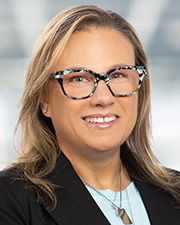
Manhattan, NY Tarter Krinsky & Drogin has appointed Shari Laskowitz as co-chair of the firm’s landlord & tenant practice, effective immediately.
Laskowitz joined the firm in 2024 as part of an 18-member team from Ingram Yuzek that included 13 attorneys.
A seasoned litigator with more than 25 years of experience, Laskowitz represents commercial and residential landlords, owners, co-op and condominium boards, and other real estate stakeholders in landlord-tenant, co-op/condo, business, and partnership disputes. Her work spans high-stakes matters including disputes involving breach of contract, real estate taxes, adjacent properties, community opposition, brokerage agreements, and the Americans with Disabilities Act.
Laskowitz has expansive knowledge navigating the real estate dispute process with complex motion practice and trials in New York State courts. Additionally, she regularly represents clients in negotiation and arbitration before the American Arbitration Association and JAMS.
“Shari has an exceptional ability to quickly identify the key legal and strategic issues in a matter and move directly to what will best serve the client,” said Cory Weiss, co-chair of the firm’s landlord & tenant practice. “That skill is especially valuable in a fast-paced practice where we are managing a high volume of matters, each with its own complexities. As our team has continued to grow, Shari has made a significant impact not only through her client work, but also through her mentorship of our attorneys and her ability to help others develop into stronger leaders.”
“What stands out about Shari is not only the depth of her experience, but the way she brings people along with her,” said Alan Tarter, managing partner of Tarter Krinsky & Drogin. “She reflects the best of Tarter Krinsky & Drogin’s culture, collaborative, client-focused, and committed to helping our professionals grow. Shari’s elevation to co-chair recognizes the leadership she has already demonstrated and the important role she will continue to play in strengthening the practice.”
“I am honored to step into this role at such an exciting time for the landlord & tenant practice,” said Laskowitz. “As the group continues to grow, I see a meaningful opportunity to build on the momentum we have created, particularly with the firm’s new office of AI and innovation, by strengthening how we share knowledge across matters and developing more consistent strategies for recurring client issues. I am especially excited to help develop the next generation of attorneys in this practice and to work with Cory and the team to continue expanding the depth and sophistication of the counsel we provide.”
]]>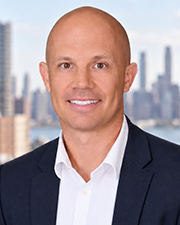
Manhattan, NY Gerard Norcia, a 20-year real estate investment and portfolio management executive, joined RXR as executive vice president and head of its residential business unit. Norcia will lead the next phase of growth of RXR’s national residential business, which spans investment, development, asset management, and capital solutions across major U.S. markets.
Whitney Arcaro has been named COO and will partner with Norcia to lead residential operations.
The structure reflects RXR’s continued investment in the leadership and capabilities required to scale its residential business nationally.
Since 2021, RXR has expanded its residential investment and development activity beyond the New York region into markets including Arizona, Florida, Colorado, Texas, California and North Carolina. The firm’s strategy is grounded in its ‘eds, meds and well-led’ thesis: investing in markets anchored by leading education and healthcare institutions, supported by strong public investment and attracting employers, talent and population growth.
Today, RXR’s vertically integrated investment platform includes approximately $5 billion of GAV within its residential operating portfolio with over 8,000 units; an active residential development pipeline in selective markets across the country comprising 2,800 units. In addition, RXR has invested over $2 billion in structured residential transactions over the last 30 months, with a presence across 11 U.S. gateway and high-growth markets.
“Gerard’s track record investing across markets, managing institutional portfolios and building investment platforms makes him the right leader for the next growth phase of RXR’s residential business,” said Scott Rechler, chairman and CEO of RXR. “For years, we have invested behind a clear thesis: go where talent, employers and public investment are converging. As we scale that strategy nationally, Gerard brings the investment discipline, market perspective and leadership experience to help us expand our residential business and deliver strong outcomes for our investors and partners.”
“We’ve been growing our residential business for a decade, starting in core New York area markets and expanding nationally. Bringing in an executive of Gerard’s caliber, who has invested across the country and managed a fully built-out residential business, will support the next evolution of our growth,” said Michael Maturo, president of RXR. “With Gerard leading the residential business and Whitney Arcaro in charge of operations, we have the team in place to continue our growth initiatives on a national scale.”
Norcia will be responsible for scaling RXR’s residential business, both in its core New York-area markets and in high-growth markets around the country, including Boston, Philadelphia Metro, Greater Miami, Tampa, Raleigh, Charlotte, Dallas, Denver, Phoenix, Los Angeles and Chicago. He will be responsible for setting the strategic direction for the residential business, including identifying new markets, investment and development opportunities, and new ways to expand the portfolio. Additionally, Norcia will oversee the full lifecycle of RXR’s residential investments, from capital allocation, acquisition, and development through stabilization, financing, long-term asset management, and disposition. He will continue to collaborate with RXR’s Investment Management Group on residential opportunities and help further strengthen relationships with capital partners, institutional lenders, and community stakeholders.
Most recently, Norcia served as CEO of Olmstead Properties and EVP, portfolio management at Southern Land Company, where he was responsible for acquisitions, asset management, capital deployment, and dispositions across a national residential, retail, office, and mixed-use platform. He previously spent nine years at J.P. Morgan Asset Management’s global real assets business as managing director; he helped lead strategy and execution across institutional real estate portfolios nationwide, with a focus on the Northeast. Earlier in his career, Norcia spent nine years at Prudential Global Investment Management. Norcia has overseen more than $40 billion in assets under management across all property types.
Norcia holds an MBA from New York University’s Stern School of Business, a Master’s degree in Accounting from Seton Hall University, and a Bachelor’s degree in Finance from Rutgers University.
“I’m excited to join RXR at an important point in the evolution of its residential business,” Norcia said. “The firm has built a strong foundation across investment, development and operations, and I look forward to working with Scott, Mike, Whitney and the broader team to expand the residential business, deepen our capabilities and pursue opportunities across the country.”
RXR’s residential activity this year spans markets across the country. Highlights from the year to date include:
● The groundbreaking of AVE Station House in Denver, a 301-unit residential community in the city’s burgeoning RiNo Arts District.
● The groundbreaking of AVE Horsham, a 274-unit residential community in suburban Philadelphia
● The groundbreaking of Summit House, a 291-unit residential community within Veridea, RXR’s master-planned development in Apex, NC.
● Full delivery of Eighty Nine DeKalb in Downtown Brooklyn, a 324-home, all-electric residential tower that also includes 55,000 square feet of academic and office space for Long Island University.
● The groundbreaking of Arden at Garvies Point, a five-story boutique rental building that will introduce 101 residences and build upon the success of the 56-acre Garvies Point mixed-use community, which has already delivered hundreds of homes while activating the waterfront.
]]>
Manhattan, NY The Real Estate Board of New York (REBNY) will recognize the honorees for the 131st REBNY Annual, the industry’s premier event celebrating the people whose work and leadership have helped shape the city. The celebration will take place on Thursday, January 14, at the Waldorf Astoria New York.
The REBNY Annual will once again bring together leaders of New York’s real estate industry, public officials, labor, and civic stakeholders for an evening of celebration. This year’s honorees will join the iconic REBNY dais alongside a group of exceptional leaders.
“This year’s honorees have each made an extraordinary contribution to New York City,” said REBNY president James Whelan. “Their leadership, service and commitment to New York reflect what the REBNY Annual has celebrated for more than a century, and we look forward to recognizing their achievements.”
2027 REBNY Annual honorees
The John E. Zuccotti Public Service Award
Jessica Tisch, New York City Police commissioner
For exceptional accomplishments and service in the public interest.
The Bernard H. Mendik Lifetime Leadership in Real Estate Award
Gary Barnett, founder and chairman, Extell Development Company
For exceptional accomplishments and invaluable contributions to New York and its real estate industry.
The Harry B. Helmsley Distinguished New Yorker Award
David Arena, head of global corporate real estate, JPMorgan Chase
For a lifetime of exceptional accomplishments in the profession and invaluable contributions to New York’s civic welfare.
The Kenneth R. Gerrety Humanitarian Award
Lisa Silverstein, CEO, Silverstein Properties
For meritorious service to the community.
The Louis Smadbeck Memorial Broker Recognition Award
James Nelson, principal and head of U.S. investment sales, Avison Young
For personal and professional integrity, long-term leadership and prominence in the brokerage community, and contributions to REBNY.
The George M. Brooker Management Executive of the Year Award
Marisa Gadlin, executive vice president, chief administrative officer and head of Core Holdings, Rockefeller Group
For exceptional career accomplishments and service to the profession and broader community.
The Young Real Estate Professional of the Year Award
Caroline Merck, senior vice president, CBRE
For outstanding professional achievements as a rising star in the industry and for civic leadership.
For more information about the 2027 REBNY Annual visit https://www.rebny.com/rebny-annual/.
]]>
Manhattan, NY Discovery Land Company (Discovery), the developer and operator of private residential club communities, appointed Alicia Goldstein as president, Eastern U.S. In this newly created role, Goldstein will oversee Discovery’s Eastern U.S. and Caribbean portfolio and establish the company’s first corporate presence on the East Coast.
“I am extremely pleased to welcome Alicia to Discovery in this important new leadership role,” said Mike Meldman, founder and chairman of Discovery. “I have known Alicia for a decade, and she is highly respected across the real estate industry, with deep relationships and an exceptional track record. She understands both the real estate and the experience that ultimately create enduring value for our members and their families, and I am excited to have her join our leadership team as we continue to grow Discovery.”
“Alicia has already worked closely with Discovery at Playa Grande, so we have seen firsthand the judgment, energy and experience she brings to complex projects,” said Brett White, CEO of Discovery. “As Discovery continues to expand, particularly across the Eastern U.S. and Caribbean, we saw an opportunity to add a senior leader with the experience to help us manage that growth. Alicia will work across our development, sales, marketing and operating teams and help lead the continued expansion of our platform in these important markets.”
Goldstein brings more than 25 years of experience across luxury residential and mixed-use real estate, hospitality, development, marketing and sales. She has held senior leadership roles at Related Companies and Access Industries/Faena Group and is the founder of Chrysos Partners, a development and investment advisory firm through which she has advised developers, institutional investors and property owners, including Third Point, Mack Real Estate Group, Artemis Real Estate Partners and The Farrell Companies. Over the course of her career, Goldstein has been involved in the positioning, development, marketing and commercialization of more than $30 billion of complex residential and mixed-use projects globally.
Most recently, Goldstein led the repositioning of Discovery’s 2,400-acre Playa Grande Golf & Ocean Club and Amanera resort in the Dominican Republic on behalf of Third Point, the investment firm founded by Dan Loeb. She will continue to oversee Playa Grande as part of her new responsibilities at Discovery.
Goldstein’s portfolio will include Silo Ridge Field Club in New York’s Hudson Valley; The Hills and Dune Deck on Long Island’s East End; Moncayo in Puerto Rico; Atlantic Fields in Hobe Sound, Florida, and Playa Grande in the Dominican Republic. Among those projects, she will also oversee Discovery’s high-rise condominium and private club developments in Jupiter, Miami, and West Palm Beach, Fla.
Her appointment comes as Discovery launches a vertical residential offering, anchored by projects in South Florida and following the opening of Atlantic Fields.
Goldstein began her career in entertainment and live experiences, including at Miramax Films and later Anschutz Entertainment Group, before moving into real estate. She is a graduate of Columbia University. She will assume her new role in fall 2026 and will be based in New York.
]]>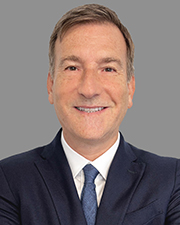
Manhattan, NY According to Barry Levy, managing partner of Rivkin Radler, Spencer Romoff has joined the firm’s corporate, real estate, and tax practice groups, bringing 20 years of in-house real estate transactional experience.
Romoff advises owners, developers, and investors on complex real estate transactions, including development, financing, acquisitions and dispositions, leasing, and other transactional matters. His practice includes joint venture formations and agreements; debt and equity financing, including construction financing, bridge loans, permanent financing, and other term debt; acquisitions and dispositions; real estate development and construction; adaptive reuse and rehabilitation; leasing; distressed debt restructuring and note purchases; development-related agreements; and tax-sensitive ownership and investment structures.
In 2020, Romoff co-founded a New York City real estate investment and development business and served as its managing partner. In that role, he led transactional and operational matters, including strategic partner arrangements, financing, acquisitions and dispositions, development, and asset management. He also spent 15 years as executive vice president and general counsel of a privately held real estate investment and development company, where he oversaw development projects and investments.
“Spencer’s extensive experience as both a real estate executive and transactional attorney gives him a practical, business-minded perspective that is invaluable to our clients,” said Barry Levy, Rivkin Radler’s managing partner. “His deep understanding of complex real estate transactions, development projects, and financing strengthens what is already a pre-eminent real estate group.”
“I couldn’t be more pleased to join Rivkin Radler,” Romoff said. “The firm’s full-service platform will allow me to assist and advise my clients not only on their real estate matters, but also across the full spectrum of their business and personal needs.”
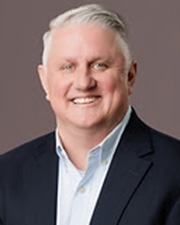
Manhattan, NY Tim Anderson has joined TGM, a vertically integrated real estate investment manager, to lead its institutional business development and capital formation initiatives.
Anderson brings more than 25 years of experience raising institutional capital across the alternative investment landscape. Throughout his career, he has successfully developed and managed relationships with public and corporate pension plans, insurance companies, endowments, foundations, family offices, and other sophisticated institutional investors.
Prior to joining TGM, Anderson held senior capital formation and business development roles at a range of prominent alternative investment firms, including Stark Investments, Trian Credit Partners, 3i Capital, Macquarie, One William Street Capital Management and Marquee Capital, a real estate investment firm within the Marcus Family Office.
His experience spans multi-strategy hedge funds, private credit, real estate, and other alternative investment strategies.
“I see TGM as presenting a compelling opportunity to combine an established, institutional-quality real estate platform with a significant opportunity to expand relationships with sophisticated investors,” said Anderson. “In the process of coming to know the TGM team I have been impressed by the firm’s experience navigating multiple real estate cycles, its disciplined investment approach and its deep sector expertise, which I view as providing a strong foundation for growth. I am excited to help broaden awareness of TGM’s capabilities and develop long-term partnerships with institutional investors.”
TGM has built its reputation through a disciplined and entrepreneurial approach to real estate investing. With extensive experience across market environments, the firm views itself as well positioned to capitalize on evolving opportunities as institutional investors increasingly seek experienced managers with demonstrated cycle-tested investment capabilities.
“Tim is a highly accomplished capital markets professional with a demonstrated ability to build meaningful, long-term relationships with sophisticated investors,” said John Gochberg, CEO & president of TGM. “His breadth of experience across alternative investments, combined with his institutional relationships and strategic approach to business development, will be valuable as TGM continues to expand its institutional presence and pursue new opportunities for growth.”
Anderson’s appointment reflects TGM’s continued focus on expanding its institutional investor base and enhancing its capital formation capabilities as the firm builds upon its established real estate investment platform.
]]>McMahon brings years of experience in commercial real estate finance, with a primary focus on multifamily and mixed-use transactions. During his time with Arbor Realty Trust, he gained experience navigating complex financing transactions and building relationships with banking professionals and other key players throughout the commercial real estate industry.
Over the course of his career, McMahon has reviewed and analyzed thousands of financing opportunities across a broad range of property types and capital structures. His experience includes agency, bridge, construction, FHA/HUD, preferred equity, and other structured financing solutions. Taking a client-focused approach, he has worked closely with lenders, attorneys, brokers, third-party vendors, and internal teams to evaluate opportunities and navigate complex transactions.
“Jake McMahon brings great value to Eastern Union by taking the time to fully understand his clients’ needs,” said Abe Bergman, president of Eastern Union. “He commits himself to his clients and works closely with them through every step of the mortgage process.”
In his new role at Eastern Union, McMahon will work in close cooperation with veteran producers Motti Blau and Mendy Pfeifer. He will leverage his financing expertise and banking relationships to help clients meet their full range of commercial real estate financing needs.
]]>The initiative focuses on giving homeowners practical information. Topics include understanding foreclosure and tax-auction deadlines, requesting accurate payoff statements, communicating with mortgage servicers and taxing authorities, evaluating payment agreements, resolving estate and title issues, and comparing the costs of keeping, renting, listing or selling a property as-is.
“Too many homeowners believe their only choices are to pay everything immediately or lose the house,” said Brett Iwanowicz, owner of Brett Buys Roc Houses. “That is not always the case. Depending on the situation and the amount of time available, there may be payment agreements, lender solutions, financing, legal options or a traditional sale worth exploring. Selling the property should not automatically be the first answer.”
The company’s educational effort also addresses the importance of acting early. Mortgage payments, property taxes, insurance, utilities and maintenance continue while a homeowner or family decides what to do. Deferred taxes can also include interest and penalties, making the amount required to resolve the problem substantially higher than expected. Inherited homes are another major focus. Although an inherited property may appear to represent significant family wealth, the heirs may still need money for probate, insurance, utilities, property taxes, cleanout, maintenance and repairs. When nobody opens the estate or has clear authority to manage the property, these expenses can continue for months while the home deteriorates.
“When a property sits because nobody knows who has the authority to act, the costs do not stop,” Iwanowicz said. “A roof leak, frozen pipe, insurance problem or unpaid tax bill can quickly reduce the value the family hoped to inherit. Our goal is to help people understand the complete cost and timeline before the property makes the decision for them.” The initiative also encourages homeowners who are considering selling during foreclosure to retain independent legal counsel and determine whether New York’s Home Equity Theft Prevention Act applies. Covered transactions can require specific contract language, disclosures and cancellation rights intended to protect the homeowner. A potential buyer who fails to discuss these protections or discourages the seller from obtaining independent legal advice should be treated as a serious warning sign.
Brett Buys Roc Houses LLC emphasizes that every homeowner’s situation is different. Keeping the home may be the best outcome when an affordable solution is available. A traditional real estate listing may be appropriate when the property’s condition and available timeline support it. A direct as-is sale may become a practical option when repairs, financing, title complications or an approaching deadline make other choices difficult.
“We want homeowners to understand every reasonable option,” Iwanowicz said. “We are available as an educational resource first. If the other solutions do not work and selling becomes necessary, we can then determine whether purchasing the property directly makes sense.”

Manhattan, NY Daniel Schnapp has joined Ashurst Perkins Coie’s trademark, copyright, internet & advertising (global) practice within the intellectual property (IP) division.
Schnapp brings more than two decades of experience advising clients in high-stakes IP disputes and complex commercial litigation to the firm. His practice spans a wide range of industries including advertising, media, art, music, technology, financial services, and real estate.
“Dan is a highly skilled, strategic adviser who consistently helps clients navigate nuanced disputes with efficiency and confidence,” said Win Martin, co-head of the trademark, copyright, internet & advertising (global) practice. “His deep experience protecting and defending businesses’ most valuable assets, coupled with his ability to deliver practical, business-minded solutions, makes him an invaluable resource to our clients.”
Schnapp regularly serves as first-chair counsel in high-profile matters involving trade secret misappropriation, copyright and trademark infringement, false advertising, counterfeiting, privacy, defamation, and antitrust, among other complex commercial disputes. He practices before arbitration forums and courts at the federal and state level, and has been lead counsel for 20 trials, including jury, nonjury, and arbitration proceedings. Schnapp also has experience managing government and regulatory investigations involving federal agencies including the FTC, the National Advertising Division, the SEC, and the U.S. Department of Labor.
“Ashurst Perkins Coie is home to an incredibly skilled bench of intellectual property lawyers with deep experience across emerging and cutting-edge technologies,” Schnapp said. “I look forward to continuing to draw on the firm’s global capabilities and helping clients navigate increasingly sophisticated disputes with significant business implications.”
Schnapp earned his Bachelor of Arts degree from George Washington University and his Juris Doctor from Benjamin N. Cardozo School of Law.
]]>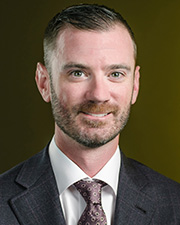
Buffalo, NY HUNT Real Estate Corp. reported that Charlie Hunt, president/COO, has been named a 2026 HousingWire Vanguard, recognizing him among 100 of the most influential executives in the housing industry.
Now in its 12th year, HousingWire’s Vanguards program honors leaders across real estate, mortgage and homebuilding who have demonstrated a lasting impact on their organizations and the industry. Honorees are evaluated on their leadership accomplishments, contributions to organizational growth, influence within the housing economy and ability to drive meaningful change.
As the fourth generation of the Hunt family to lead HUNT Real Estate, Hunt is helping guide a company with a 115-year history through a changing real estate environment while preserving the personal relationships and local market expertise that have long distinguished the organization.
Hunt oversees more than 50 HUNT residential branches across N.Y. and Mass. and has worked at nearly every level of the organization, beginning in the company’s customer service center and later serving as a real estate sales professional and regional general manager. That experience has shaped a leadership style focused on visibility, accessibility and direct engagement with HUNT’s sales professionals and employees.
Under Hunt’s leadership, HUNT has risen to No. 29 nationally in residential transactions while ranking among the Top 10 real estate organizations in the country for ancillary services, including mortgage, title and insurance. HUNT is also the largest ERA-affiliated real estate firm in the world.
“The 2026 HousingWire Vanguards represent the leadership our industry needs for this moment,” said Sarah Wheeler, editor-in-chief of HousingWire. “They are navigating disruption with clarity, bringing bold ideas to the table and executing strategies that create real results. Their influence extends beyond their own organizations, helping move the entire housing ecosystem toward a stronger and more innovative future.”
“I’m honored to be recognized among this year’s HousingWire Vanguards,” said Hunt. “The real estate industry is always changing, and our focus is to ensure HUNT continues to evolve and grow along with it. I’m proud of what we’ve accomplished and excited about the opportunities ahead.”
Hunt’s leadership extends beyond HUNT through his involvement with real estate organizations across New York State, including the New York State Multiple Listing Service board of directors and Realtor associations in Buffalo Niagara, Rochester and Syracuse. He also serves a number of business, charitable and community organizations throughout Western New York.
“Exceptional leadership is defined by the ability to turn vision into meaningful action,” said Clayton Collins, CEO of HousingWire. “The 2026 Vanguards are moving decisively while others remain cautious. They are investing, innovating and building organizations designed to thrive through every market cycle.”
The 2026 HousingWire Vanguards were selected by HousingWire’s editorial team in collaboration with an independent panel of housing industry professionals. The award has become one of the housing industry’s defining honors for leaders whose decisions, achievements and influence are creating a lasting impact on real estate, mortgage and homebuilding.
]]>