



News:
Brokerage
Posted: September 29, 2008
The ultimate tax break: Should commercial real estate owners take advantage of low capital gains?
In today's unpredictable economy, real estate prevails as a solid investment. Real estate undoubtedly commands the highest return on investments. Commercial real estate owners who are thinking of selling their properties must take advantage of the low capital gains taxes before they expire.
In the United States, individuals and corporations pay income tax on the net total of all their capital gains just as they do on other sorts of income. Capital gains are generally taxed at a preferential rate in comparison to ordinary income. This is intended to provide incentives for investors to make capital investments and to fund entrepreneurial activity. The amount an investor is taxed depends on both his or her tax bracket and the amount of time the investment was held before being sold. Short-term capital gains are taxed at the investor's ordinary income tax rate, and are defined as investments held for a year or less before being sold. Long term capital gains, which apply to assets held for more than one year, are taxed at a lower rate than short-term gains.
As a seller, there are several repercussions one must consider when accepting an offer on a property. The costliest one is taxes. The best decisions are the most informed decisions. Capital gains tax is the lowest it has been since 1933. Under Presidents John Kennedy and Johnson, capital gains tax was 25%. Nixon increased that percentage to 36.5%. Ford increased the tax to 37% and Carter later increased it to 39%. Under Clinton's presidency, capital gains tax was 28%, which alleviated some of the burden from taxpayers.
These reduced tax rates were passed with a sunset provision and are effective through 2011, if they are not extended before that time, they will expire and revert to the rates in effect before 2003, which were generally 20%. The reduced 15% tax rate on eligible dividends and capital gains, previously scheduled to expire in 2008, was extended through 2010 as a result of the Tax Reconciliation Act signed into law by President George W. Bush on May 17, 2006. After 2010, the long term capital gains tax rate will be 20%.
Investors have only a short window of time left to take advantage of the Bush administration's low tax rates. The current presidential candidates are both facing economical pressures to reduce the country's debt. Obama is proposing to raise taxes on capital gains dividends by a staggering two thirds, moving the rate up 10 percentage points to 25%.
Our current capital gains tax is lower than it's been in 75 years since it was 12.5% in 1933. Our national debt is $9.4 trillion and rising. Our total deficit is more than $407 billion. It is imperative that owners of real estate capitalize on the current policies. As we learn more about the upcoming presidential plans, the only suitable solution to our financial crisis is to raise taxes which will directly affect the capital gains tax.
The conclusion of the Bush administration brings about many unanswered questions. Who will be president? What policies will be changed? Will the economy improve? In the meantime, one fact prevails, the tax on capital gains is at a 75-year low. The American government is extending it's generosity to all property holders, but not for long. The 15% rate will expire in 2009. If you're considering selling commercial real estate, right now is the best time to sell.
Ron Koenigsberg is president of American Investment Properties, Inc., Garden City, N.Y.
Tags:
Brokerage
MORE FROM Brokerage

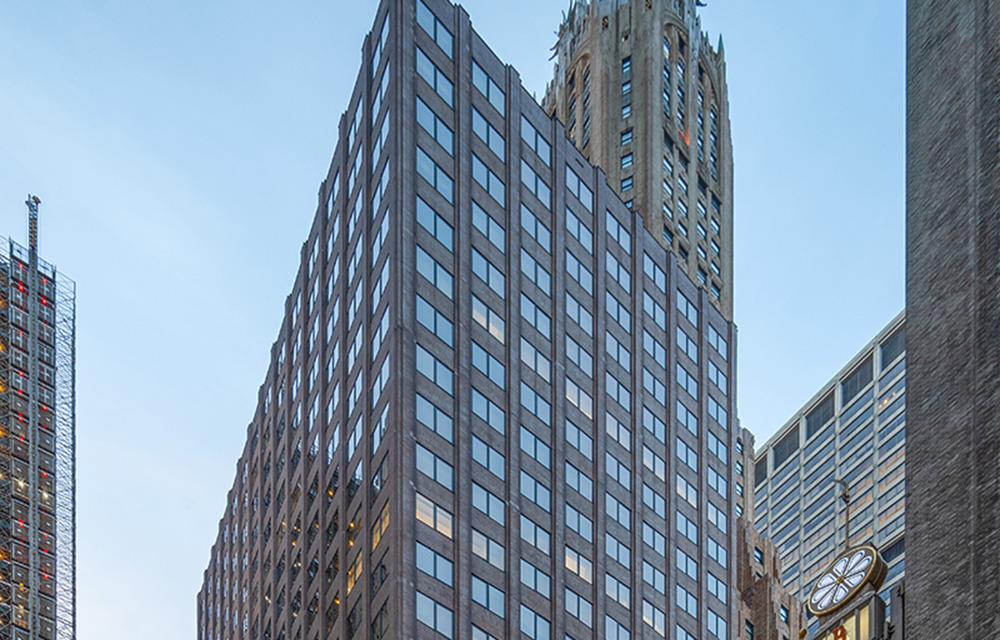
AmTrustRE secures 5,754 s/f lease with GKV Architects at 360 Lexington Avenue
Manhattan, NY AmTrustRE has executed a 5,754 s/f lease at its premier boutique Midtown East office tower, 360 Lexington Ave., with longtime partner GKV Architects. The award-winning firm will occupy a portion of the 14th floor. >“GKV Architects has been a trusted partner to AmTrustRE for over two decades, playing an integral role in shaping and elevating several







Columns and Thought Leadership

Tri-state capital migrates nationally amid regulation pressure - by Reese Weaver
New York tri-state multifamily investors are increasingly reallocating capital to less-regulated markets across the U.S. as rent control and legislative risk erode returns at home. With over 60% of New York City’s rental housing stock classified as rent-stabilized, the traditional value-add model — buying under-performing buildings,

A fresh start - by Shallini Mehra and Amit Doshi
For the past several years, the New York City multifamily housing market has been defined by disruption. The combined impact of the HSTPA rent laws and a sharply higher interest rate environment has fundamentally reduced

The anticipated effect of Basel III and ISO 20022 implementation on commercial real estate - by Michael Zysman
July 1, 2025 is the deadline for US banks to begin to adopt Basel III banking standards and July 14, 2025 is the deadline for U.S. banks to adopt ISO 20022 messaging standards. Both will have a significant effect on the banking and commercial real estate (CRE) finance sectors.

The death of the generic offering memorandum: What buyers expect in 2025 - by Kimberly Zar Bloorian
There was a time when an offering memorandum (OM) was pretty bare bones, some photos, a few bullet points on income, and a rent roll thrown in at the back. That used to get the job done. Not anymore. In 2025, buyers are sharper, faster, and more selective. They’re looking
