



News:
Brokerage
Posted: May 30, 2008
Lighting upgrades
Without a doubt, lighting upgrades involving energy-efficient lamps, ballasts, controls, and other products stand as some of the most attractive investments around and additionally serve to promote green and sustainable design. This special 2008 series offers examples of how real-life commercial, institutional, and industrial properties nationwide have successfully pursued and benefited from lighting upgrades.
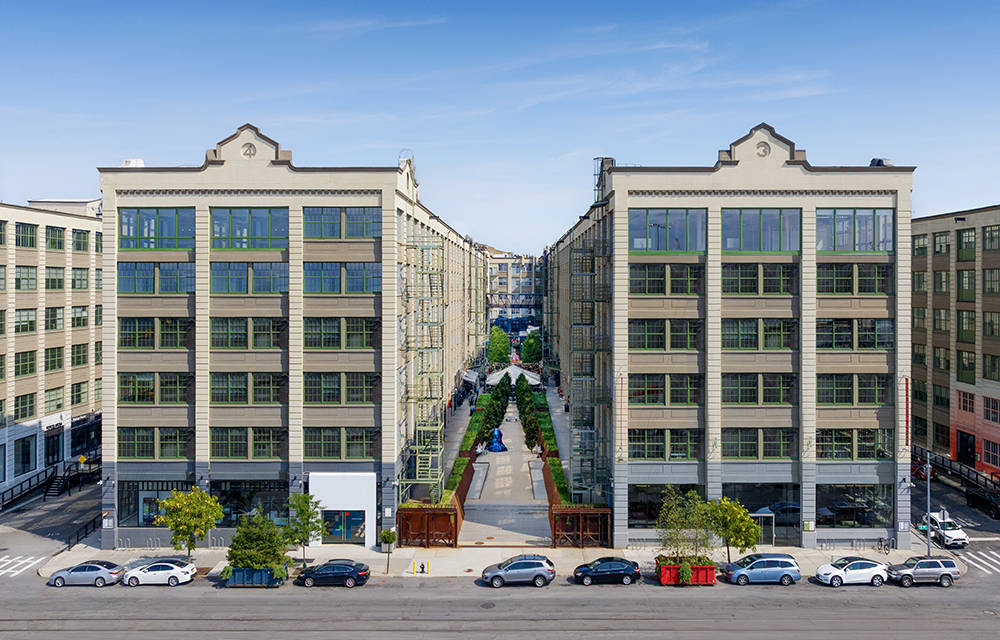
Baltimore's Montgomery Park commercial facility took on a celebrated tenant, the Maryland Dept. of the Environment (MDE), as well as a celebrated cause, when its management team agreed to pursue green building design within the 1.3 million s/f structure's vintage architecture. In addition to installing energy-efficient solutions and sustainable materials, the overhaul involved a lighting upgrade involving dimmable fluorescent systems. To maximize energy efficiency and best utilize the facility's wealth of windows and natural daylight, management opted for a daylight harvesting system using photocell technology, a lighting control configuration which engages dimming based on available daylight levels.
"Continuous dimming with daylight trackers was an effective and affordable approach at Montgomery Park," said property developer Sam Himmelrich, Jr. In the open areas where it was installed, the park's daylight harvesting system is up to 20% more energy-efficient than standard upgrade configurations. A model of green design and energy-efficient lighting control, Montgomery Park stands as a testament to the optimal balance of nature and technology.
For a free upgrade guide, contact Susan Bloom at [email protected].
Susan Bloom is director of corporate communications for Philips Lighting & Advance, Somerset, N.J.
Tags:
Brokerage
MORE FROM Brokerage

NYSCAR June 2026 president’s message - by Mercedes Brien
As I write this letter, we are preparing to be at the Annual Conference being held at the Rivers Casino, Schenectady, New York. I look forward to reporting on the conference in my next letter. We have some great courses coming up via Zoom. Please be sure to keep watch on upcoming courses by visiting nyscar.org/resources and tools/professional development.



Quick Hits

Columns and Thought Leadership

A fresh start - by Shallini Mehra and Amit Doshi
For the past several years, the New York City multifamily housing market has been defined by disruption. The combined impact of the HSTPA rent laws and a sharply higher interest rate environment has fundamentally reduced

Tri-state capital migrates nationally amid regulation pressure - by Reese Weaver
New York tri-state multifamily investors are increasingly reallocating capital to less-regulated markets across the U.S. as rent control and legislative risk erode returns at home. With over 60% of New York City’s rental housing stock classified as rent-stabilized, the traditional value-add model — buying under-performing buildings,

The death of the generic offering memorandum: What buyers expect in 2025 - by Kimberly Zar Bloorian
There was a time when an offering memorandum (OM) was pretty bare bones, some photos, a few bullet points on income, and a rent roll thrown in at the back. That used to get the job done. Not anymore. In 2025, buyers are sharper, faster, and more selective. They’re looking

The anticipated effect of Basel III and ISO 20022 implementation on commercial real estate - by Michael Zysman
July 1, 2025 is the deadline for US banks to begin to adopt Basel III banking standards and July 14, 2025 is the deadline for U.S. banks to adopt ISO 20022 messaging standards. Both will have a significant effect on the banking and commercial real estate (CRE) finance sectors.
