



News:
Brokerage
Posted: April 18, 2008
Implementing sustainability planning: The key to the green empire
The phrase "sustainability" is getting a lot of use these days, and for good reason. With the world's population at 6.6 billion people and rising, raw material costs are increasing every day due to scarcity. It has now become clear to most scientists that the earth is warming, and that human activity is causing it. Industry needs to find a way of making its practices sustainable so that we can maintain the way of life we have become accustomed to.
Commercial building owners and operators can play a role in reducing greenhouse gas emissions and reducing our dependence on fossil fuels. Many commercial real estate ventures are interested in reducing their environmental footprint, but haven't been able to do so in any consistent, meaningful way. An effective method of implementing green business practices is through the use of a sustainability plan. Sustainability planning is done for a number of reasons. One may think that helping the environment is the predominant factor, but frequently that's not the case. Among the other drivers of sustainability planning are:
* Cost-savings: Implementing good sustainability practices can save you money. A study of 120 LEED-certified buildings concluded that they were 25-30% more energy-efficient than comparable non-LEED buildings. In the days of $100 per barrel oil, conserving energy leads to lower operating costs. GE has been able to save $2 million a year in energy costs by replacing inefficient lighting with newer equipment (at an upfront cost of $4 million, for a quick two-year payback).
* Client demands: As sustainability planning becomes more widespread, companies begin to find that clients and business partners that have implemented such plans insist that the companies they do business with do the same. Perhaps the most well-documented example of this is Wal-Mart's insistence that its suppliers reduce overpackaging, and its insistence that electronics suppliers improve their products' energy efficiency. In the commercial real estate context, many companies now have policies that prevent them from entering into leases in commercial buildings unless those buildings are LEED-certified or can otherwise demonstrate that they follow green operating practices. Implementing and following sustainability plans can therefore provide a commercial building owner with a competitive advantage over its competitors.
* Regulatory demands: More regulations and government initiatives are being enacted that either require, or provide significant benefits for, the implementation of good environmental practices. In the N.Y. market, this is best demonstrated by the Dormitory Authority of the State of New York's (DASNY) announcement that it will require a LEED-silver rating for all of its projects beginning in 2008.
Thus, there are compelling commercial reasons for implementing sustainability plans, beyond simply doing what's right for the earth.
So what constitutes a good sustainability plan? Some elements of such a plan for a commercial real estate developer or operator might include:
* In new construction, a commitment to follow green building practices, and where practicable, comply with LEED standards.
* In renovations or retrofitting, a commitment to use the most energy-efficient equipment possible, including the use of Energy-Star or water sense-rated materials and fixtures.
* A commitment to recycling, both with respect to construction and demolition debris and manufacturing or office waste.
* Where practicable and commercially reasonable, a commitment to using re-claimed materials in new or existing applications.
* A commitment to using the most energy-efficient lighting available, including the use of fluorescent lighting or LEDs, combined with the use of motion sensors to eliminate unnecessary electricity use.
* A commitment to the purchase and installation of materials containing the least amount of unnecessary chemicals that can adversely affect indoor air quality.
* A commitment to purchase or lease the most fuel-efficient vehicles available.
* A commitment to use alternative fuels when available, such as biofuels for heating applications.
* A commitment to only enter into supply/distribution agreements with entities that can demonstrate a similar commitment to sustainability practices.
Note the use of the phrase "commitment to." A good sustainability plan commits the company to taking those actions and actually puts procedures in place to verify that it is doing so. Another suggestion is to ensure that employees have the ability to both report instances of non-compliance with the plan, and also make suggestions to management of ways to improve efficiencies.
Although this may seem like a difficult commitment to make, and an even more difficult one to keep, rest assured that practice makes perfect. Once a commercial building owner or developer has bought in to the idea of taking a little extra time to consider the environmental consequences of its actions, it becomes routine, and in many instances, the cost benefits begin piling up.
Peter Trimarchi is of counsel at Whiteman Osterman & Hanna LLP, Albany, N.Y.
Tags:
Brokerage
MORE FROM Brokerage

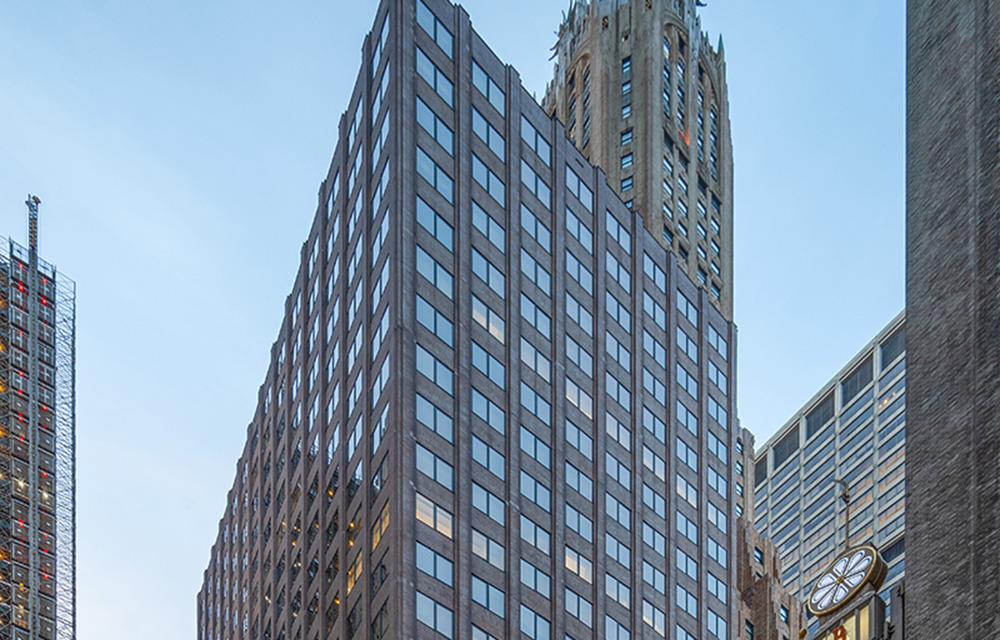
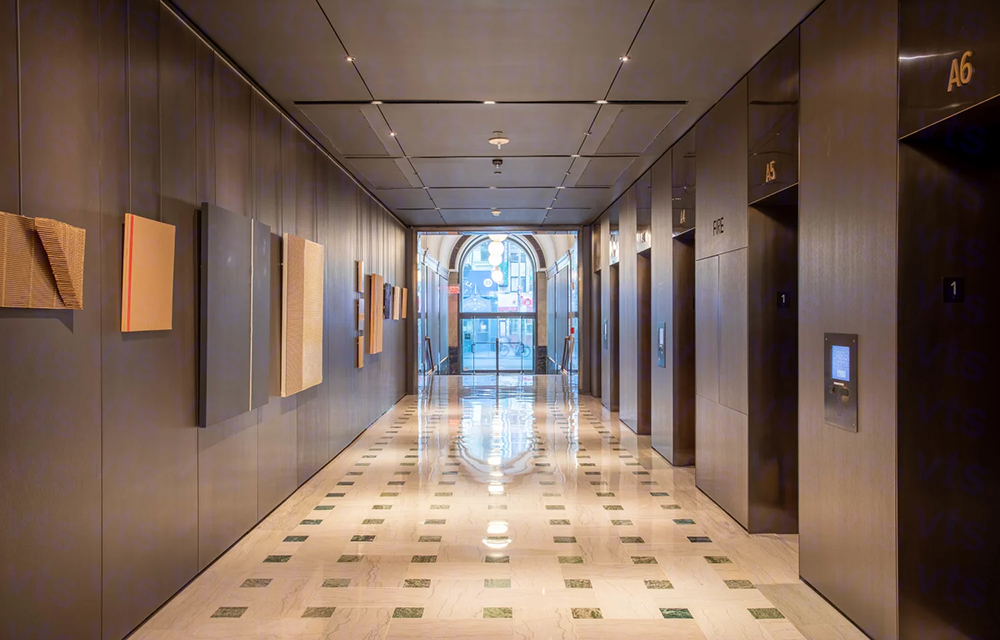
AmTrustRE secures 5,754 s/f lease with GKV Architects at 360 Lexington Avenue
Manhattan, NY AmTrustRE has executed a 5,754 s/f lease at its premier boutique Midtown East office tower, 360 Lexington Ave., with longtime partner GKV Architects. The award-winning firm will occupy a portion of the 14th floor. >“GKV Architects has been a trusted partner to AmTrustRE for over two decades, playing an integral role in shaping and elevating several





Columns and Thought Leadership

The death of the generic offering memorandum: What buyers expect in 2025 - by Kimberly Zar Bloorian
There was a time when an offering memorandum (OM) was pretty bare bones, some photos, a few bullet points on income, and a rent roll thrown in at the back. That used to get the job done. Not anymore. In 2025, buyers are sharper, faster, and more selective. They’re looking

The anticipated effect of Basel III and ISO 20022 implementation on commercial real estate - by Michael Zysman
July 1, 2025 is the deadline for US banks to begin to adopt Basel III banking standards and July 14, 2025 is the deadline for U.S. banks to adopt ISO 20022 messaging standards. Both will have a significant effect on the banking and commercial real estate (CRE) finance sectors.

Tri-state capital migrates nationally amid regulation pressure - by Reese Weaver
New York tri-state multifamily investors are increasingly reallocating capital to less-regulated markets across the U.S. as rent control and legislative risk erode returns at home. With over 60% of New York City’s rental housing stock classified as rent-stabilized, the traditional value-add model — buying under-performing buildings,

A fresh start - by Shallini Mehra and Amit Doshi
For the past several years, the New York City multifamily housing market has been defined by disruption. The combined impact of the HSTPA rent laws and a sharply higher interest rate environment has fundamentally reduced
