



News:
Brokerage
Posted: January 14, 2008
2008 R.E. forecast: Low vacancy to sustain commercial leasing market
The New York commercial real estate market retained its strength in 2007 despite the credit turmoil that shook the real estate world this past summer. While the economy is experiencing indigestion from the sub-prime loan crisis, it is important to remember that the New York City commercial market is unique and still one of the most sought after business locales in the world. With low vacancy, record prices and a small supply of commercial space in the construction pipeline, the New York commercial market will brave the current credit storm and remain strong in 2008. As a result of the financial market instability, some companies may delay commitments for new space and as a result there may be less demand in the market, but I believe this will be offset by the extremely limited availability of commercial space. It is amazing to look across our portfolio and see so many 100 percent-occupied office/showroom buildings and very little available space for those shopping. In the event that new space becomes available in 2008 as existing lease commitments come to an end, I am optimistic that the New York market will experience a leveling off rather than a dip. Record prices seen in recent years may also stabilize. The financial services industry, which has largely fueled the aggressive rent increases of the past few years, will certainly influence the market going forward as this sector is expected to be more conservative in spending. Fortunately, Manhattan's business community is diverse. If all of the existing businesses in New York City grew by a marginal percentage, we would probably not have enough space to accommodate the growth.
As we enter 2008 in a tight-space market, the best advice I can offer landlords is to retain existing tenants and negotiate new contracts prior to existing lease expirations.
This will continue to preserve high occupancy rates for the landlord and also serve the best interest of the tenant. From a cost perspective, investing in a space occupied by an existing tenant is usually less expensive than renovating space for a new tenant and the associated down time that accompanies the change. If you already have a quality tenant, it is important to accommodate the changing needs of the tenant's business because the devil you know is usually better than the devil you don't.
It is always important for landlords and brokers to speak to clients regularly to plan for the future. As the tightness in the market shows no signs of abating, planning ahead is the key to finding deals. Knowing what space is coming onto the market and the state of your tenant's business will pay dividends. We are still seeing tenants paying premium prices to reserve space as much as a year or two in advance. Peace of mind has a real value as most businesses cannot afford a significant interruption in operations.
When planning to relocate in 2008, tenants should choose a location close to customers and clients. While Manhattan addresses command rents like no where else in the country, it is best to choose a strategic location that will foster and promote business. Affordable areas at the start of this year, such as the Fashion District and Midtown South, have seen steep rent increases. Businesses that need to maintain a presence in Manhattan will continue to seek creative alternatives in 2008. With realistic expectations and a quality broker who understands the business' needs, a tenant can find the right alternative.
Predictions for 2008 vary greatly from person to person and I don't believe that anyone can predict with certainty the full impact of the credit crunch. Those who have been in the industry for years know that real estate moves in cycles and like any industry, there will be times of exceptional growth and times of less activity. New York is a unique, resilient market because it is a global player with limited space and high-demand. In the long run, I believe that New York real estate represents value and a strong, reliable investment.
James Buslik is a principal for Adams & Co. Real Estate, New York, N.Y.
Tags:
Brokerage
MORE FROM Brokerage

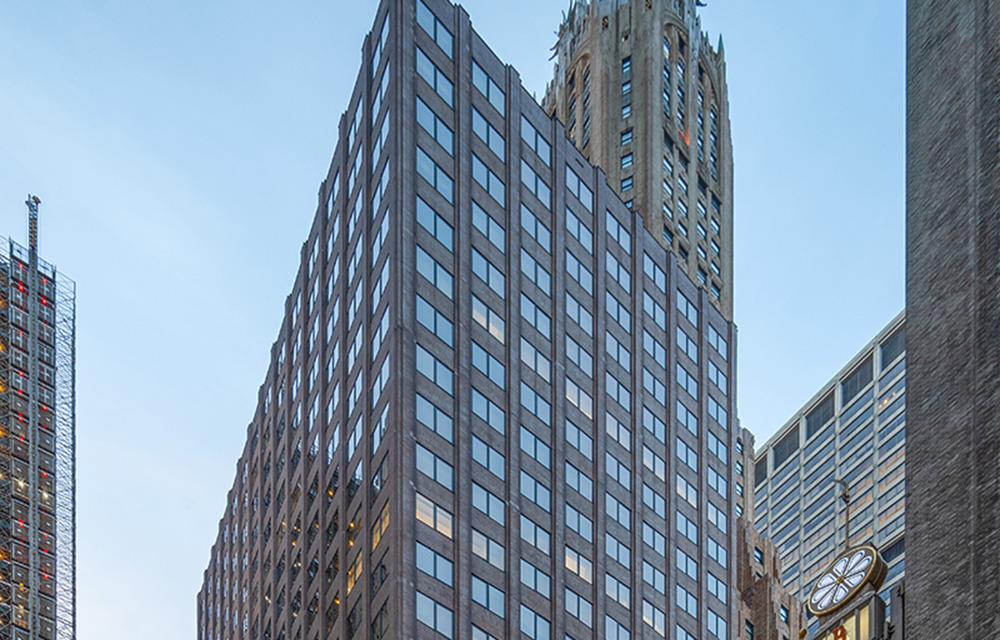
AmTrustRE secures 5,754 s/f lease with GKV Architects at 360 Lexington Avenue
Manhattan, NY AmTrustRE has executed a 5,754 s/f lease at its premier boutique Midtown East office tower, 360 Lexington Ave., with longtime partner GKV Architects. The award-winning firm will occupy a portion of the 14th floor. >“GKV Architects has been a trusted partner to AmTrustRE for over two decades, playing an integral role in shaping and elevating several





Quick Hits


Columns and Thought Leadership

Tri-state capital migrates nationally amid regulation pressure - by Reese Weaver
New York tri-state multifamily investors are increasingly reallocating capital to less-regulated markets across the U.S. as rent control and legislative risk erode returns at home. With over 60% of New York City’s rental housing stock classified as rent-stabilized, the traditional value-add model — buying under-performing buildings,

A fresh start - by Shallini Mehra and Amit Doshi
For the past several years, the New York City multifamily housing market has been defined by disruption. The combined impact of the HSTPA rent laws and a sharply higher interest rate environment has fundamentally reduced

The anticipated effect of Basel III and ISO 20022 implementation on commercial real estate - by Michael Zysman
July 1, 2025 is the deadline for US banks to begin to adopt Basel III banking standards and July 14, 2025 is the deadline for U.S. banks to adopt ISO 20022 messaging standards. Both will have a significant effect on the banking and commercial real estate (CRE) finance sectors.

The death of the generic offering memorandum: What buyers expect in 2025 - by Kimberly Zar Bloorian
There was a time when an offering memorandum (OM) was pretty bare bones, some photos, a few bullet points on income, and a rent roll thrown in at the back. That used to get the job done. Not anymore. In 2025, buyers are sharper, faster, and more selective. They’re looking
